

Egypt’s Possible Role in a New Defense Alliance Raises Major Strategic Questions
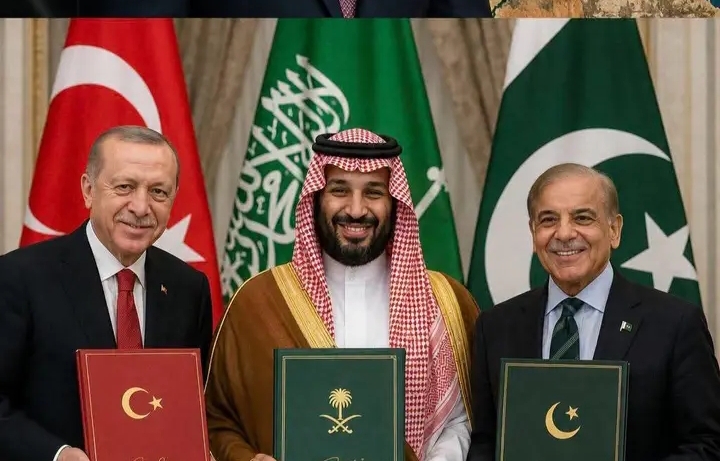
A debate is emerging over whether Egypt could eventually join a proposed trilateral security framework involving Turkey, Pakistan and Saudi Arabia, following remarks attributed to Turkish Foreign Minister Hakan Fidan suggesting that Egypt had not joined for what he described as “technical” reasons.
But according to a strategic assessment circulating in Egypt, the obstacles are far deeper than technical arrangements.
For Cairo, the first question is national security priorities. More than 75% of Egypt’s strategic security concerns are closely connected to the Nile, Libya, Sudan, the Red Sea and Africa. Some potential partners have significant economic and political relationships with Ethiopia, including investments connected to Addis Ababa, while their regional priorities do not necessarily align with Egypt’s position on the Nile and the Grand Ethiopian Renaissance Dam.
A second concern is intelligence and military security. Turkey’s relationship with Islamist political movements, Pakistan’s political landscape and Saudi Arabia’s relationships with various Yemeni factions could create complications for Egypt if sensitive military and intelligence information were shared through a collective-defense structure.
The third issue is Egypt’s relationships with Russia and India.
Turkey is a NATO member and maintains a complicated relationship with Moscow, while Egypt has developed significant defense, economic and diplomatic ties with Russia. Cairo also maintains important relations with India. Egypt would therefore be reluctant to enter an alliance that could potentially force it to take sides in conflicts between countries with which it has established strategic partnerships.
There is also a fundamental question over the nature of the proposed alliance.
Egypt has traditionally avoided defining its national-security policy through sectarian or religious identity. Its military doctrine is officially centered on the Egyptian state and national interests rather than Sunni-Shia or broader religious classifications.
For Cairo to enter a genuine collective-defense pact, therefore, several major issues would likely have to be resolved first:
• A clearly defined common enemy
• A clearly defined common strategic objective
• A genuinely shared national interest
• Rules governing relations with states outside the alliance
• Intelligence-sharing safeguards
• A joint military command structure
• Rotating leadership
• A jointly financed defense budget
• A unified crisis-response mechanism
• A civilian, political and military framework rather than a religious one
• Joint measures against terrorism and extremist organizations
That makes the prospect considerably more complicated than simply signing a political agreement.
There are also questions about the alliance’s ability to respond to an actual crisis.
Recent developments in the Red Sea and Yemen have highlighted the gap that can exist between declaring collective security and actually committing military forces when national interests diverge.
Egypt would therefore likely prefer a broader and more institutionalized framework emerging from the Arab League and the concept of comprehensive Arab national security, rather than joining a military arrangement whose strategic priorities may not fully coincide with Cairo’s.
Egypt could potentially participate in such an alliance in the future but only after major strategic questions are settled.
The underlying Egyptian position can be summarized simply:
Collective defense is not built on religion, money or political symbolism. It is built on a common threat, a common objective, a common interest and a shared willingness to accept the risks of war together.
For Cairo, any future defense arrangement would therefore have to answer one fundamental question:
Would joining strengthen Egypt’s national security or create new strategic obligations that could ultimately put it at risk?