

🇿🇲 EXPLAINER | NAPSA’s Biggest Shake-Up in 30 Years
For nearly three decades, Zambia’s pension system operated on a simple principle: contribute throughout your working life and wait until retirement to access your benefits. That era has now ended.
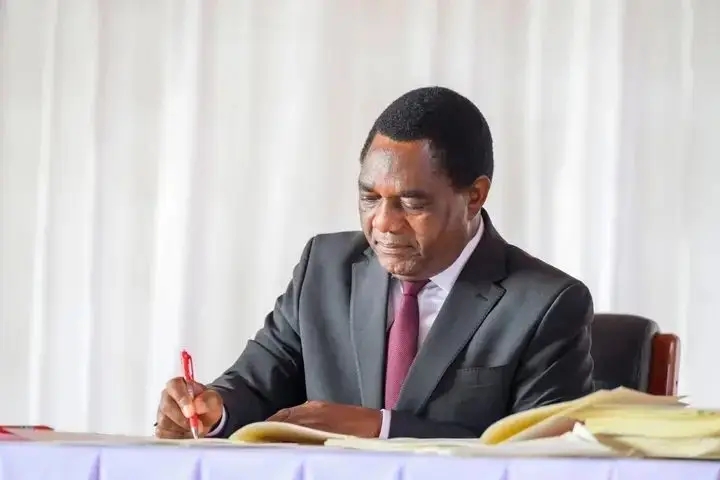
President Hakainde Hichilema’s assent to the National Pension Scheme Act of 2026 marks the most significant reform of NAPSA since its creation in 1996. While much public attention has focused on free education becoming law, the pension reforms may ultimately affect just as many households, workers, employers, retirees, and families across the country.
The headline change is flexibility. Under the previous framework, pension savings were largely inaccessible until retirement. The new law creates room for contributors to access part of their benefits through a lump-sum arrangement while preserving a monthly pension. For many workers, especially those facing financial emergencies, school costs, medical bills, housing challenges, or business opportunities, this represents a fundamental shift in how retirement savings can be used. Supporters view it as empowering workers with greater control over their own money. Critics warn that access today could mean smaller savings tomorrow if the system is not carefully managed.
Retirees are also set to benefit from higher payouts. The minimum pension rises from K1,708 to K2,135 per month, while the pension replacement rate increases from 40 percent to 45 percent of pensionable earnings. On paper, the numbers may appear modest. In practice, they could make a meaningful difference for thousands of elderly citizens who rely on pensions as their primary source of income. For many retirees, an additional few hundred kwacha every month can determine whether medicine is purchased, transport is affordable, or basic household needs are met.
Perhaps the most profound reform lies in what happens when a contributor dies before retirement. Under the old system, surviving family members often received a once-off payment and little else. The new law introduces a Survivors’ Pension, bringing Zambia closer to international pension standards. Instead of a single payout, qualifying dependents may receive ongoing monthly support. The reform recognises a reality often ignored in pension debates: retirement systems are not only about workers. They are about families.
The legislation also reaches beyond Zambia’s borders. For the first time, Zambians living abroad will have a structured pathway to contribute to a national pension scheme through a diaspora arrangement. This is a notable development in a country with a growing population of professionals, entrepreneurs, and workers spread across Southern Africa, Europe, North America, and beyond. The reform acknowledges that citizenship does not end at the airport and that many Zambians abroad still intend to retire at home.
Employers will face greater scrutiny as well. The law strengthens compliance obligations, requiring businesses to properly register workers and remit contributions within prescribed timelines. For years, some employees have discovered late in their careers that deductions were made from salaries but never submitted to NAPSA. Stronger enforcement mechanisms could prove just as important as the benefits themselves because a pension system is only as effective as its collection process.
But an important question remains. How will NAPSA balance immediate withdrawals against the long-term sustainability of the fund? Pension reforms often succeed or fail not because of the law itself but because of how regulations are implemented afterwards. Those details will matter.
The broader significance of the reforms extends beyond pensions. Together with free education and other social protection measures signed into law this week, government is attempting to convert major policy programmes into permanent legal guarantees. Policies can change with administrations. Laws are considerably harder to reverse. Whether one supports or opposes the government politically, that distinction is important.
The debate now shifts from promises to performance. Workers will want to see the withdrawal framework. Pensioners will want to see increased payments reflected in their accounts. Families will want clarity on survivor benefits. Employers will need guidance on compliance obligations. Success will not be measured by the signing ceremony but by the experience of ordinary citizens months and years from now.
What is beyond dispute is that NAPSA has entered a new chapter. The pension system that millions of Zambians knew for the last thirty years is being fundamentally redesigned. The question now is whether the reforms deliver the dignity, security, and financial protection they promise.
—For story tips, opinion submissions, advertising, partnerships, or corrections:
📩 editor.peoplesbrief@gmail.com
Strong journalism depends on informed readers, trusted partners, and community support.
© The People’s Brief | Ollus R. Ndomu
Verified. Contextual. Independent.