

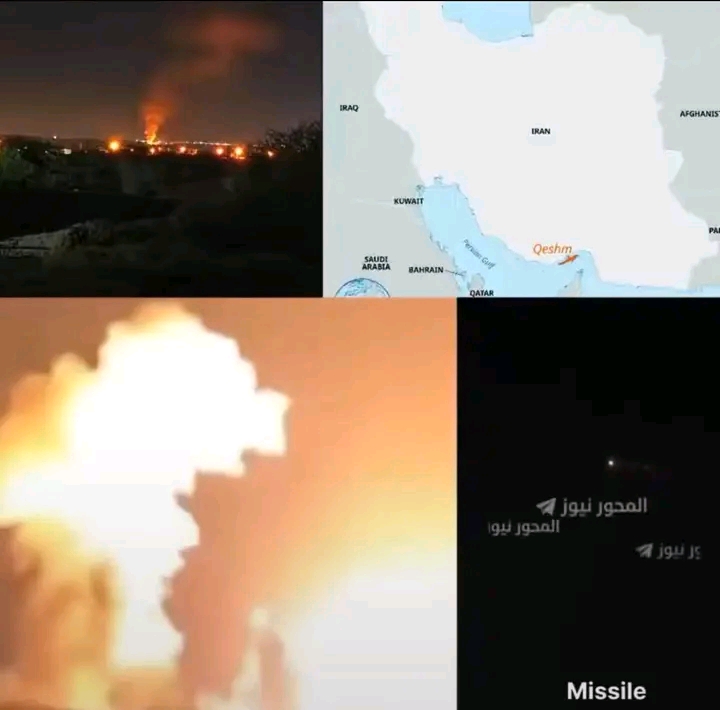
EXPLOSIONS ROCK IRAN’S QESHM ISLAND AS US FORCES HIT BACK IN STRAIT OF HORMUZ
Multiple explosions shook Iran’s Qeshm Island in the Strait of Hormuz for a second straight day, according to Iranian state media IRNA and reports amplified by RT. Locals captured video of bright nighttime blasts, thick smoke plumes rising high enough to be seen from miles away, and what appeared to be missiles streaking out from the island toward an unknown destination.
This is not a one-off. Qeshm sits astride the critical shipping chokepoint that carries a huge share of the world’s oil. For weeks American forces have conducted limited defensive strikes on the island after Iranian units fired surface-to-air missiles at US aircraft and claimed to have downed American drones. US officials described the earlier hits as responses to Iranian aggression against American assets, not the start of a wider campaign.
President Trump confirmed the latest action in plain terms. “They knocked out – they built a little bit of an anti-aircraft device and we knocked it out in about 15 minutes, maybe five,” he told reporters. He called the strikes minor and said the United States is not fighting a full war, while noting that talks with Tehran continue and that Iran wants a deal badly. American military sources have consistently framed the operations as self-defense after Iranian forces targeted US planes or drones.
Iranian outlets, as usual, paint a different picture. They highlight alleged US drone shootdowns and report explosions without detailing damage or casualties. RT’s post leans into the visuals of missiles leaving the island and smoke columns, feeding the narrative of Iranian capability. Independent confirmation of exact targets and results remains thin, as it often does when Tehran controls the information flow from the scene.
The stakes are straightforward. Attacks or the credible threat of them in the Strait of Hormuz drive up energy prices and hit American consumers and allies. Qeshm hosts air defenses, missile sites, and naval facilities that give Iran leverage over the waterway. When Iranian forces fire on US aircraft operating in international airspace or threaten commercial shipping, the response has been measured but clear: knock out the new air-defense gear quickly and keep the pressure on without committing to open-ended operations.
Trump has said a decision on next steps is coming soon, whether that means more strikes, a deal, or sustained economic pressure. In the meantime the pattern is consistent. Iran probes, American forces answer on the spot, and the regime’s propaganda arms broadcast the noise. Strength in the chokepoint deters more of the same. Weakness invites it.