

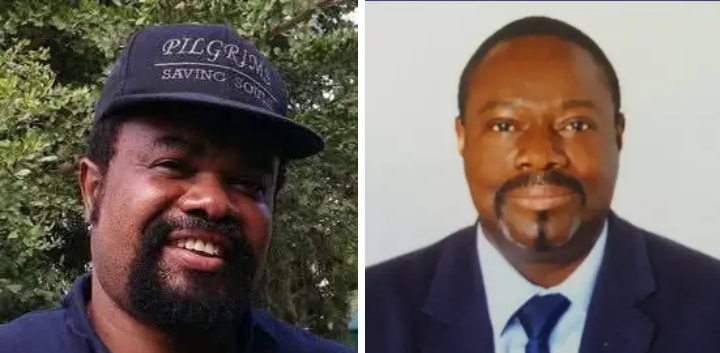
Fackson Banda remembers Canisius Banda
Dr Canisius Banda, a brother I couldn’t really claim
He is no more. A physician with a brilliance and a presence I admired, especially that he looked a little like me. Perhaps a little more handsome than me, but I still reserve judgment on that.
People who knew me called me his brother. So also did people who knew him say that he was my brother.
In a sense, this was because both of us were something of public figures in our own right. He was a columnist on The Post newspaper. So was I. He later became a public relations manager at UTH. Occasionally, I featured on ZNBC as an interviewer.
We were in the public’s eye, well before social media redefined the public sphere.
Our first encounter was at Manda Hill. As soon as we spotted each other, it was as though we had known each other for ages. Brothers in deed, if not in blood.
It was after this initial meeting that he became something of my personal physician. I would visit him at his home. And he visited me as well.
We would joke about how people called us brothers. We swore to each other that things would remain so. We laughed: “Let it be. We are indeed brothers. Brotherhood goes beyond blood. It is a relationship anchored on something much deeper, even thicker, than blood.”
Thus, whenever we met, it was beyond the mundane strictures of blood relations. It was a deeper connection of people who shared not only something of a physical likeness, but an intellectual bond that surpassed everything else, and resulted in a brotherhood that we swore to uphold.
So much so that some people believed we were indeed brothers. Even now, I’m receiving messages of condolences on his tragic demise.
And so, dear Canisius, now that you’re no more, I am left with the unenviable task of disclosing the real nature of our brotherhood.
Indeed, ours was not a blood relationship; it was one built on shared principles about life and living. Admittedly, it was also about a certain physical likeness. I remember one time joking with him as to which one of us was more handsome.
Having Canisius as something of a lookalike had its funny side, you see.
One time, a man greeted me excitedly and with a familiarity I found unnerving, as if he had always known me: “Dr Banda! So good to see you!” Before I could say anything, he was in my vehicle. “I will drop off at the market.”
He started telling me about his health issues, to which I had no answers. I thought to myself medical doctors dealt with so much that we, mere PhDs in the humanities and social sciences, had the slightest inkling about. To the man sitting next to me, I was the venerable Dr Canisius Banda, MD., and not the Dr Fackson Banda, PHD.
There you have it: We were brothers because the price of brotherhood is not blood, but a bond.
If I may open up in generalities that do not disclose much but serve to illustrate an important point, someone once hinted to me that my name had been dropped for a certain government position because I was related to Dr Canisius Banda. Not that I was looking for that position, but this showed me why Zambia, as a national project, could benefit from encouraging citizens to build bridges of brotherhood across our various divides — tribal, social, cultural, educational, economic, etc. We are one people, one nation. We are brothers. And sisters. We are each other’s keeper.
Canisius was political; I am apolitical. That didn’t create any distance between us. We saw each other beyond such narrow, partisan confines.
And, if I may be so bold as to offer a lesson, as we go into this election this August, let us mourn, celebrate and see Dr Canisius Banda, to the extent that he was my brother beyond bloodlines, as a symbol of what Zambia needs: chains of brotherhood and sisterhood that encircle all our people and provinces in an embrace that causes all of us to chant altogether “One Zambia, One Nation.”