

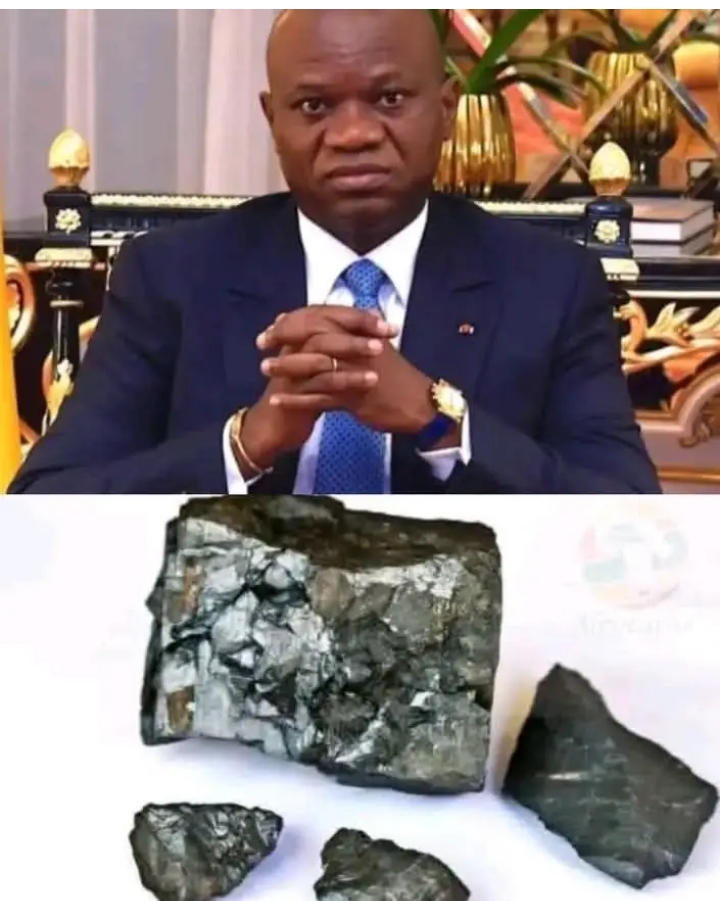
Gabon Moves to End Raw Manganese Exports, Betting on Local Processing
Libreville is moving to break with the traditional African commodity-export model, as Gabon seeks to stop exporting manganese in its raw form and instead expand local processing to retain more economic value inside the country.
The Gabonese government says the policy marks a major shift in how the country manages one of its most important natural resources.
What is changing?
Gabon plans to increasingly prioritize the processing of manganese domestically before export, rather than sending the mineral abroad in its raw form.
The objective is straightforward: capture a larger share of the value generated by the resource inside Gabon, while creating industrial jobs, developing local expertise and encouraging investment in processing facilities.
For decades, many African economies have relied heavily on exporting unprocessed minerals and other raw materials, only to import higher-value finished or semi-finished products at significantly greater prices.
Gabon is now seeking to change that equation.
Why manganese matters
Gabon is one of the world’s major manganese producers, making the mineral a strategically important component of its economy.
By moving further into processing, the country could potentially generate greater value from every tonne of manganese extracted. Instead of primarily exporting raw ore, Gabon aims to develop products and industrial inputs such as manganese alloys and other processed materials that command higher value on international markets.
The policy could also encourage the development of downstream industries, including sectors connected to steelmaking and battery supply chains, although the extent to which Gabon will ultimately produce finished battery materials will depend on future investment, infrastructure and technology.
Industrialization and jobs
The government argues that local processing could create a broader industrial ecosystem around mining.
New or expanded processing plants would require infrastructure, engineers, technicians and skilled workers, while creating opportunities for local businesses to supply equipment, transportation, maintenance and other services.
That could allow Gabon to move beyond simply extracting natural resources and toward a model in which a larger portion of the economic chain from mining to processing is developed domestically.
A potential model for Africa
Gabon’s strategy could have significance beyond manganese.
Across Africa, governments have increasingly pushed for greater local value addition in critical minerals such as cobalt, copper and lithium rather than relying solely on exports of raw ore.
If Gabon succeeds in increasing domestic processing while remaining competitive in global markets, its approach could provide another example for resource-rich African countries seeking to retain more wealth from their natural resources.
The message from Libreville is clear: rather than exporting more raw minerals and importing higher-value products, Gabon wants to process more of its resources at home and keep a larger share of the resulting wealth inside the country.
Source: Gabonese government