

By Hopewell Chin’ono
The much-awaited ZANUPF conference came and went, ending yesterday in Chinhoyi. There is no need for lengthy analysis. Only two things matter.
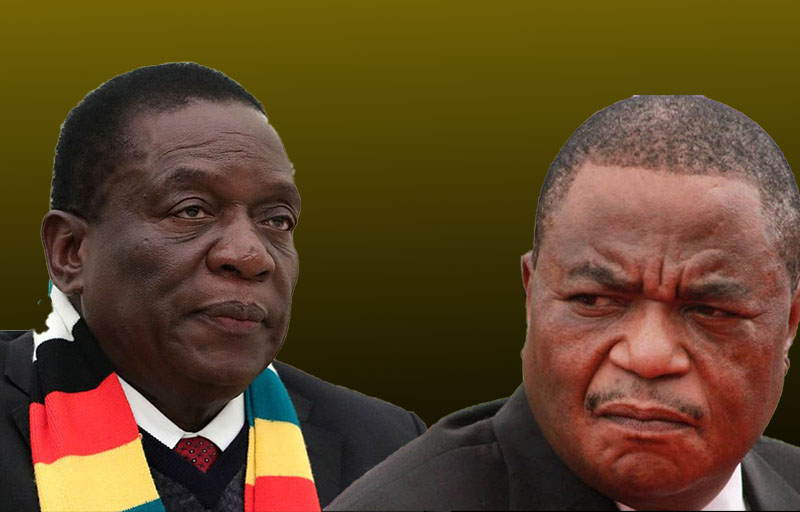
The succession contest is between Vice President General Constantino Chiwenga and President Emmerson Mnangagwa. The President still wants power, is in no hurry to be succeeded, and if the day ever comes, he does not want his deputy to take over. He prefers someone else.
The Vice President succeeded in blocking the resolutions from being discussed at the Politburo. He then delivered a rock star speech at the conference on Friday. But the real question is this: did he win anything?
President Mnangagwa and his allies wanted resolutions that would cement the national constitutional changes made through CAB3, now Constitutional Amendment Act No. 3. The resolutions sought to align the ZANUPF constitution with those changes, to move the party congress from 2027 to 2029, and to make President Mnangagwa the sole, uncontested candidate to lead ZANUPF in 2029.
That would make him the automatic candidate in 2030, when, under the new constitution, the President will be elected by Parliament.
So who won? Politically, President Mnangagwa. General Chiwenga gave a powerful speech that got the media and the country talking, but it earned him nothing, because the very changes he was trying to stop were adopted.
The hostility shown by provincial chairmen and chairwomen, captured in parts of this video, tells you exactly where power lies.
As I have said before, General Chiwenga was outmanoeuvred politically. It began when President Mnangagwa removed the running mate clause. That was the moment the Vice President should have pushed back, knowing beyond any doubt that his boss did not want him as successor and was not ready to go.
Instead, he cheered him on. It was General Chiwenga who championed the 2030 agenda, telling the opposition that President Mnangagwa could rule for as long as he wanted and there was nothing they could do about it. It was General Chiwenga who anointed him as a Munhumutapa, a king. He said all this without realising the ground was shifting beneath his own feet.
Emotionally, he has won the sympathy of many outside ZANUPF, and probably of some inside who are too afraid to be seen backing him. But in politics, where it truly matters, he was outmanoeuvred again in Chinhoyi.
His speech was full of sound and fury, and it resonated across the country. Yet speeches do not win succession battles. President Mnangagwa walked away with the resolutions he wanted, backed by the party, by hook or by crook.
So what can General Chiwenga do now? Realistically, his only remaining leverage is the military. If the army is behind him and willing to act, that is his saving grace. Without it, he is finished. He cannot beat President Mnangagwa politically, because President Mnangagwa controls the ZANUPF political machine.
His only other window is if President Mnangagwa dies and the political ground shifts. But waiting for a rival to die and hoping to outlive him is not a political strategy. It is leaving your fate to nature and to God. And as we saw with former President Robert Mugabe, these men can live well into their nineties.
Who will eventually succeed President Mnangagwa will be decided by the changes being made inside ZANUPF, and he has made it absolutely clear that he does not want General Chiwenga.
Do not be fooled by their empty talk of unity. There is no harmony in that party. They are at war with each other, and so far, President Mnangagwa’s side is winning. They hold power, and they control the money. With money, you can go far. They even brought parts of the opposition on side.
At the time, General Chiwenga supported what was being done to the opposition, failing to see that President Mnangagwa was not acting for ZANUPF or its survival. He was acting for himself. To these men, ZANUPF is simply a vehicle for elections. They do not act for the party. They act for themselves.
Many people on social media believe General Chiwenga could soon be fired as Vice President. I see it differently. President Mnangagwa learned from 2017 that firing your deputy in the middle of a war with him can trigger consequences you never intended.
I do not see him getting rid of General Chiwenga. He will keep him exactly where he is and continue to frustrate him. The reality is that President Mnangagwa keeps getting what he wants, with or without General Chiwenga in the room. Tactically, there is no reason to remove a man who has failed to stop a single thing the President has set out to do.
In fact, I believe the Vice President now wants to be fired. He is growing bolder in what he says. A man with a powerful force behind him does not need to say much. He simply acts. The fact that General Chiwenga is talking so much points to one of two things.
Either he wants to be fired so that it triggers action, or he is desperate, cornered, and speech is the only weapon he has left. I lean towards the first. I believe he wants to provoke action, and his boss knows it.
That is precisely why President Mnangagwa will not fire him. As long as he remains in charge and continues to make the decisions he wants, he has no reason to hand his deputy the trigger he is looking for.
As for a coup, I have said for the past two years that the chances are slim from what I can see. But they are not zero. It cannot be ruled out.
Then there is the region. Much of what Wicknell Chivayo did for President Mnangagwa looked comical at the time, but it was far more than that. He helped bring regional leaders on side, travelling to South Africa, Tanzania, Kenya, Eswatini, Zambia and Mozambique. He also flew into Botswana, though I do not know what came of that.
We saw deals. What we did not see was what those deals were building. Whatever their nature, they strengthened President Mnangagwa’s support base across Southern Africa and into East Africa. Those deals bind these leaders together. Given a choice between President Mnangagwa and General Chiwenga, the region will choose the man they have already done business with.
Internationally, General Chiwenga is believed to have China on his side. How deep that support runs, I honestly do not know, and I would be lying if I claimed otherwise.
What I can say, from my conversations with various diplomats, is that some Western countries are quietly content with President Mnangagwa remaining in power. They see in him stability and predictability, a guarantee that their interests will be protected. They know him. They know that when he strikes a deal, he delivers, as he did with the compensation deal for former white farmers. He understood that continuing those payments would buy him Western support, economic and political.
I have read that President Donald Trump is sending a team to meet him. President Trump has no interest in human rights or democracy. He is interested in trade and deals. If President Mnangagwa delivers what that delegation wants, he will have America’s support.
Britain, too, is focused on investment and trade. The new British Ambassador, Gill Lever, has made it clear that her priorities are trade, investment and people-to-people links. Human rights are not at the top of that list.
And in any case, when it comes to human rights, there is no better candidate within ZANUPF. They are all the same, so it is no longer an issue. There is no opposition to speak of, and none to support. Western countries will simply work with the government of the day.
That is President Mnangagwa’s strength right now, and it is General Chiwenga’s great weakness. The Vice President has made no serious effort to engage these countries. Whether that is by design or through incompetence, one would have to dig deeper to find out.
President Mnangagwa has got everything he wanted. He has elevated his lieutenants, making businessman Kudakwashe Tagwirei a senator and now Minister of Economic Development and Investment Promotion, and keeping Paul Tungwarara close as his investment adviser.
He has sidelined General Chiwenga’s allies, demoting Obert Mpofu from ZANUPF Secretary General and removing Lieutenant General Engelbert Rugeje as the party’s National Political Commissar, and now dumped from the politburo.
He has also reshaped the military, placing his own people in key positions and removing commanders believed to be loyal to General Chiwenga.
The clearest example is Lieutenant General Anselem Nhamo Sanyatwe, who was retired as Commander of the Zimbabwe National Army and moved into Cabinet as Minister of Sport, Recreation, Arts and Culture, taking him away from the troops and into a ministry far from the barracks.
Each move has gone through without resistance. He has proved, beyond doubt, that he controls the party, the state and the army.
In a nutshell, General Chiwenga enjoys wide support outside his own party. Many Zimbabweans, left without an opposition to believe in, are now rallying behind him as the only man who can end President Mnangagwa’s rule.
President Mnangagwa may not have the country behind him, but he has something more decisive. He commands the state machinery, controls the ZANUPF engine, and has deep pockets to drive his political projects through.
And the nation? We are mere spectators to a battle raging inside ZANUPF. Spectators, and nothing more.
The people’s sympathy against the power of the state. Who will win? Time will tell.