

My Reflections
By Miyanda Laiti
There is a point at which political commentary must give way to professional security analysis.
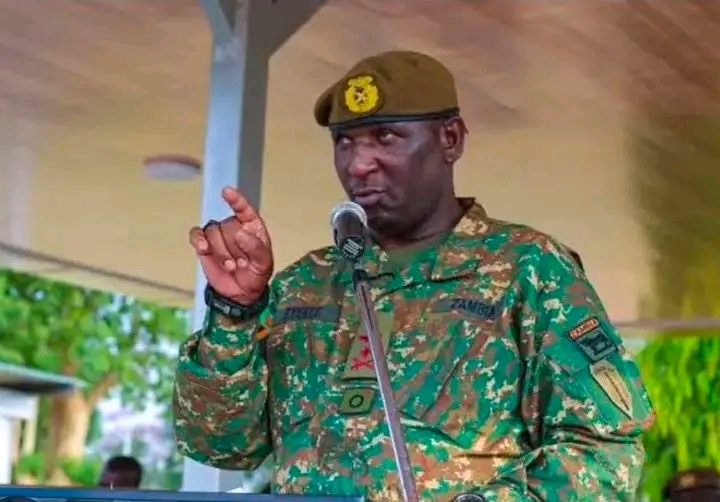
I am increasingly convinced that we should understand why there was such resistance to having Lieutenant General Geoffrey Choongo Zyeele deeply involved in certain aspects of this operation. His approach to national security is fundamentally different from the casual political understanding of security threats.
General Zyeele has demonstrated a willingness to treat illegal mining not merely as an economic or regulatory problem, but as a potential national security problem when criminal networks, weapons, territorial control and organised violence become intertwined.
That distinction is critical.
When the Zambia Army intervened in illegal gold-mining areas, including Rufunsa, Mpika and in Mufumbwe the operation was presented as an effort to restore order, halt illegal activity and address criminality associated with the mining sites. The Army specifically warned about illegal miners, undocumented foreigners and individuals operating with fake licences.
Some people condemned General Zyeele when he used exceptionally strong language in describing the threat posed by illegal mining. Yet, from a security-sector perspective, the important question was not whether his language was politically comfortable. The question was whether the state was confronting an emerging security architecture before it became entrenched.
That is where General Zyeele’s professional instincts matter.
A militia does not normally announce itself on the first day as a fully developed insurgent organisation. Such formations can emerge gradually through the convergence of money, illegal economic activity, weapons, recruitment, intimidation, territorial influence and parallel authority.
The security doctrine is therefore straightforward: identify the network early, disrupt its logistics, remove its capacity to organise and prevent it from acquiring territorial legitimacy.
This is precisely why the Army’s intervention in illegal mining areas deserves to be examined through a national-security lens rather than merely through the politics of illegal mining. Government had already recognised the need for security deployments in areas affected by illegal mining, including Rufunsa, Kasempa, Mufumbwe, Mpika and several other districts.
More importantly, General Zyeele himself has publicly connected illegal mining with criminal activity and warned that such conditions can create broader security risks.
There is another reason his approach deserves respect.
General Zyeele is not a commander operating purely from a parade-ground understanding of security. His career has included international military and peacekeeping exposure, and that experience matters when analysing how armed groups evolve. The history of Sierra Leone demonstrates the devastating consequences that can arise when armed networks, economic interests and weak state control are allowed to converge.
This is why early intervention matters.
The objective is not to wait for a militia to become a rebellion. The objective is to ensure that it never reaches that stage.
And this brings us to the latest security concerns being raised by the Government.
If the Secretary to the Cabinet is now reporting or confirming investigations concerning alleged links between political actors and militia-type activities, together with the recovery of ammunition, then those allegations must be treated with the seriousness demanded by national security. They must also be investigated through evidence, due process and the appropriate security and judicial institutions.
It would be irresponsible to jump from the recovery of ammunition to automatically declaring an entire political organisation responsible. But it would be equally irresponsible to dismiss such discoveries simply because they are politically inconvenient.
Weapons and ammunition are not political rhetoric. They are security indicators.
That is precisely why General Zyeele’s earlier insistence on disrupting organised criminal activity around illegal mining deserves to be reconsidered
The strategic principle is the same: do not allow criminal networks to acquire money, weapons, territory, recruitment structures and political protection simultaneously.
Once those elements converge, the problem ceases to be ordinary law enforcement. It becomes a national-security challenge.
This is where professional military leadership becomes invaluable.
We should therefore thank God for a commander who appears to understand that national security is ultimately about anticipation, prevention and disruption, not merely reaction.
The critics may have seen illegal miners.
A professional security commander has to ask a much more consequential question:
What happens if the network behind them is allowed to organise, arm itself, recruit and establish territorial influence for another five years?
That is the question General Zyeele appears to have understood.
And history repeatedly demonstrates that governments ignore such questions at their peril.
The lesson from Sierra Leone and other conflict theatres is not that every illegal mining camp is a militia. It is that states must prevent conditions in which armed groups can evolve from criminal enterprises into organised political or insurgent structures.
That is not politics.
That is national-security doctrine.