

GLOBAL ANALYSIS | Who Owns Democracy?
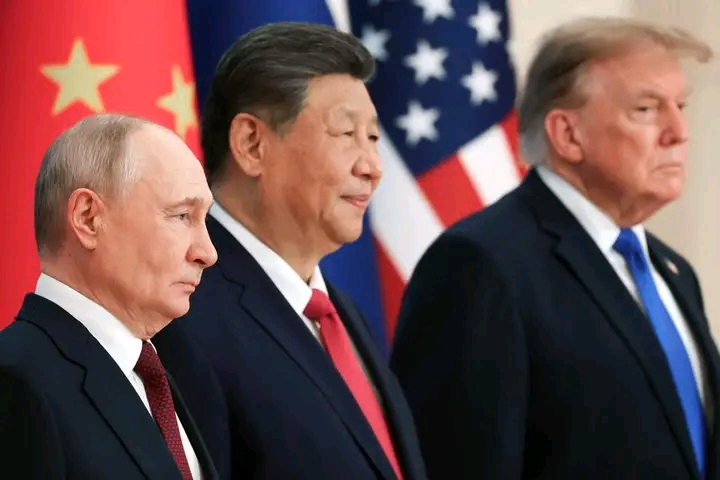
Three of the world’s most powerful leaders met in China on Thursday, and their discussions raise questions that deserve serious attention in Zambia. US President Donald Trump, China’s Xi Jinping and Russia’s Vladimir Putin held historic trilateral talks on the sidelines of the Asia-Pacific Economic Cooperation summit in Shenzhen. Their four-point declaration addressed global security, energy supplies, United Nations reform and international justice. But the meeting also exposed a fundamental disagreement over how nations should be governed and who has the authority to judge them.
The timing is particularly interesting. On 17 November, Amnesty International called on President Hakainde Hichilema’s government to release 18 detained opposition figures, including Brian Mundubile and Makebi Zulu. The organisation alleged that the individuals had been targeted for exercising their political rights, declaring:
“The Zambian authorities must immediately release all eighteen individuals.”
Amnesty further argued that national security cannot justify arbitrary detention or restrictions on legitimate political expression. The detainees face serious criminal allegations, including treason, which the authorities are entitled to investigate and prosecute through lawful procedures.
Government’s position on international assessments has been equally instructive. Responding to the European Union Election Observation Mission’s report earlier this month, Information and Media Minister Elvis Nkandu argued that foreign observers had not sufficiently considered Zambia’s historical, institutional and security circumstances.
“In a democracy, context matters as much as observation,” he declared. Nkandu maintained that election observers do not necessarily possess the intelligence and security information available to sovereign institutions. His statement concerned the EU report, rather than Amnesty International’s subsequent appeal, but the underlying disagreement is unmistakable: how should international scrutiny be balanced against national sovereignty?
That question takes us directly to Shenzhen. Xi Jinping argued that countries should respect one another’s sovereignty and their chosen political systems and development paths. His message was that international cooperation need not depend on governments adopting identical political arrangements. The summit’s declaration did not establish a universal democratic model. Nor did its four commitments include the promotion of Western-style democracy. The leaders instead found common ground on sovereignty, security, energy and international institutions.
But who actually determines what qualifies as democracy? The United States has long exercised considerable influence over international discussions of democratic governance. Nevertheless, it possesses no exclusive legal authority to certify another nation’s political system. Even American elections have faced bitter disputes.
Trump repeatedly claimed that the 2020 presidential election was rigged, although those allegations were not substantiated by the courts and investigations. The experience demonstrates that disagreements over electoral legitimacy are not peculiar to Africa.
China describes its system as whole-process people’s democracy, emphasising consultation, development and Communist Party leadership. Russia maintains constitutional elections, although international observers have questioned their competitiveness and the restrictions affecting political opposition. Western liberal democracies generally emphasise competitive elections, political pluralism, independent institutions and constitutional limits on power. These differences invite an important distinction: countries may organise their political institutions differently, but the existence of elections or a government’s description of itself does not, by itself, establish democratic accountability.
The International Criminal Court presents another striking example. Trump described the institution as “out of control” during the Shenzhen discussions. The three leaders subsequently agreed that the ICC and comparable bodies must not abuse their jurisdiction, emphasising state consent and official immunities. Africa has long questioned the consistency of international criminal justice, particularly when powerful countries appear less exposed to prosecution. Nevertheless, victims of atrocities in Sudan, the Democratic Republic of Congo and elsewhere also depend on credible mechanisms of accountability. The declaration does not change the court’s treaty or remove existing legal obligations.
Zambia’s present political debate therefore deserves examination beyond the familiar division between government and opposition. Amnesty International raises questions about detention and political rights. Government raises questions about security, national context and the limits of foreign assessments. Neither sovereignty nor international scrutiny settles the legal merits of the detainees’ cases. Those questions require evidence, due process and independent judicial determination.
The larger lesson from Shenzhen is that international politics is shaped by interests as well as principles. Washington, Beijing and Moscow disagree profoundly over political institutions and strategic priorities, but they can negotiate when their interests converge. Their agreement on United Nations reform also leaves unanswered Africa’s longstanding demand for permanent representation on the Security Council.
For Zambians, the question should extend beyond whether America, China or Russia considers our country democratic. Who determines our political arrangements? Can citizens participate freely, challenge authority and obtain justice? And are our institutions accountable to the people whose sovereignty they claim to defend?
A country’s independence gives its people the right to determine their political future. The more demanding question is whether that right is genuinely exercised by citizens or merely invoked in their name.
The People’s Brief | Ollus R. Ndomu
November 20, 2026