

GOVERNMENT PROPOSES K19.9 BILLION SUPPLEMENTARY BUDGET, PRIORITIZES K14.7 BILLION FOR MAIZE FARMERS
The Government has proposed a K19.9 billion supplementary budget for 2026, with K14.7 billion prioritized for payments to farmers who supplied maize to the Food Reserve Agency (FRA), following a bumper harvest that significantly exceeded the Government’s initial purchase target.
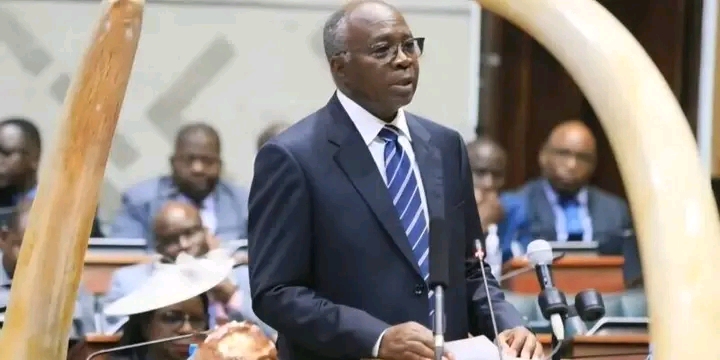
Finance and National Planning Minister Dr. SITUMBEKO MUSOKOTWANE, MP, presented the Supplementary Estimates of Expenditure No. 2 of 2026 to the National Assembly today, explaining that additional financing was required to meet emerging expenditure obligations, strengthen national food security, support agricultural production, and address other priority spending requirements.
The Minister disclosed that the FRA purchased 2.7 million metric tonnes of maize in 2026, against an initial target of 500,000 metric tonnes, necessitating increased expenditure to meet obligations to farmers.
He explained that the Government had deliberately taken advantage of the bumper harvest to strengthen strategic food reserves in anticipation of a lean period in 2027, associated with the adverse effects of El Niño.
Under the proposed supplementary budget, the Ministry of Agriculture will receive K15.8 billion, representing 79 percent of the total allocation, under Head 89. Of this amount, K14.7 billion will finance payments to farmers for maize supplied to the FRA, while K1.1 billion will supplement resources for the Farmer Input Support Programme (FISP).
The additional FISP allocation is intended to facilitate the effective implementation of the 2026/2027 agricultural season’s e-voucher program, ensuring continued support for agricultural production and participating farmers.
Dr. MUSOKOTWANE further proposed K1.3 billion, representing 6.3 percent of the supplementary estimates, under the Ministry of Finance and National Planning.
Of this allocation, K1.0 billion is earmarked for the remittance of 2026 ASYCUDA processing fees by the Zambia Revenue Authority (ZRA), while K232.0 million will capture additional World Bank grants supporting three development initiatives.
These are the Catalysing Climate Risk Protection Shield for Zambian Small Holder Farmers, the Zambian Mineral Investments, Governance and Economic Sustainability project, and the Irrigated and Sustainable Agriculture for Transformation project.
The proposed supplementary expenditure also provides K540 million, representing 2.7 percent, for the education sector. The resources will enable the Higher Education Loans and Scholarship Board (HELSB) to meet shortfalls in tuition fees and student allowance obligations at universities during 2026.
In addition, K422.5 million, representing 2.1 percent, has been proposed for the Ministry of Defence to meet higher-than-anticipated operational requirements of the security wings in support of national security.
A further K300 million, equivalent to 1.5 percent of the supplementary budget, has been proposed under the Contingency Vote to provide for unforeseen or unavoidable expenditures during the remainder of the financial year.
FINANCING THE SUPPLEMENTARY BUDGET
On financing arrangements, Dr. MUSOKOTWANE informed the National Assembly that the Government proposes to mobilize K18 billion through additional borrowing from the domestic market. He indicated that further details of the proposed borrowing would be provided in accordance with the revised Annual Borrowing Plan.
The financing framework also provides for K82.9 million in savings from external debt service and K510.8 million in additional donor funds from cooperating partners that were not included in the originally approved 2026 Budget.
A further K27.3 million will be financed from unspent balances carried forward from the 2025 financial year for utilization in 2026.
Additionally, Government expects to realize K1.3 billion in additional revenue collections that were not anticipated when the 2026 National Budget was approved.
PARLIAMENTARY CONSIDERATION
Dr. MUSOKOTWANE explained that the SUPPLEMENTARY ESTIMATES HAD BEEN PREPARED IN ACCORDANCE WITH ARTICLE 203 OF THE CONSTITUTION OF ZAMBIA, which provides for supplementary expenditure estimates to be presented to the National Assembly where previously appropriated resources are insufficient to meet spending requirements during a financial year.
He recalled that the 2026 National Budget was approved in December 2025 and that the National Assembly subsequently approved Supplementary Budget No. 1 of 2026 in April 2026 to address additional expenditure obligations. The latest estimates respond to further financing requirements that have arisen during the year, particularly the substantial increase in maize purchases and the corresponding need to meet payments to farmers
Following the presentation, the National Assembly referred Supplementary Estimates No. 2 of 2026 to the Expanded Planning and Budgeting Committee for consideration. The Committee is expected to submit its report to the House in due course.
The Government’s immediate priority under the proposed supplementary expenditure is to meet obligations arising from the increased agricultural purchases, reinforce national food security, sustain farmer support, and address essential expenditure commitments in education, national security, and other priority areas, subject to parliamentary approval.