

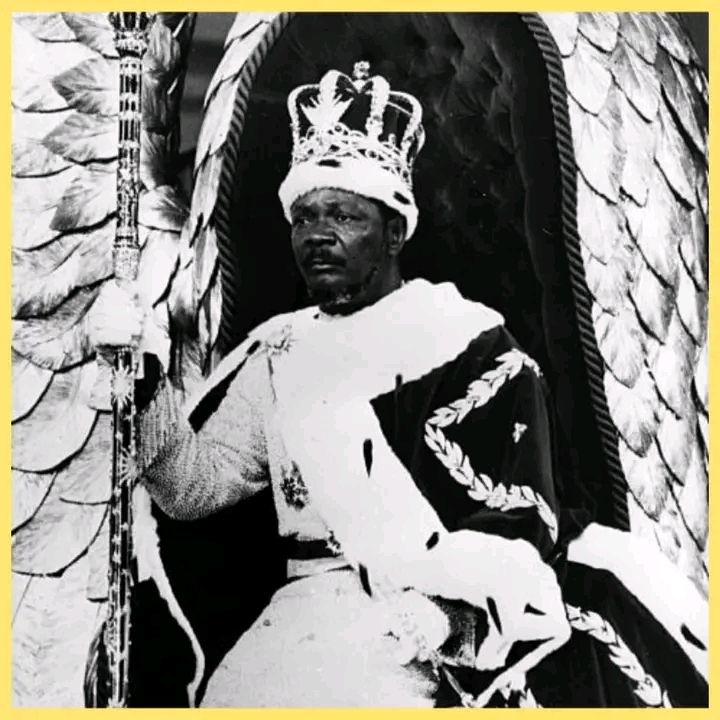
“How Student Protests Over Expensive Uniforms Forced France to Overthrow a Notorious African Dictator”
Emperor Jean-Bédel Bokassa, the dictator of the Central African Empire, now the Central African Republic, was overthrown in 1979 following the massacre of hundreds of students who protested against expensive and compulsory school uniforms imposed by his government.
The crisis began when Emperor Bokassa I issued a decree requiring all high school and university students to wear new, expensive uniforms bearing his likeness. The uniforms costed around $165 and were manufactured exclusively by a factory owned by one of Bokassa’s wives. However, many families could not afford them, sparking widespread student demonstrations in the capital city of Bangui.
On April 18, 1979, Bokassa deployed the Imperial Guard to crush the protests. Hundreds of students were arrested and taken to Ngaragba Central Prison, where many were beaten or killed in custody. Reports also alleged that Bokassa personally participated in the violence
The massacre sparked international outrage, forcing France, the country’s former colonial power, to reconsider its support for Bokassa. Following an investigation by an African commission that implicated him in the killings, France decided to remove him from power
On September 20, 1979, French military and intelligence forces carried out a bloodless coup to overthrow Bokassa while he was away on an official visit to Libya. Following his removal, former president David Dacko, who was living in exile, was brought back to the country and reinstated as president.
Following his ouster, Bokassa lived in exile in Côte d’Ivoire and France. A Central African court tried him in absentia and sentenced him to death in 1980 for crimes including murder and embezzlement.
In 1986, Bokassa unexpectedly returned to Bangui, where he was arrested, retried and imprisoned. His death sentence was later commuted, and he was pardoned in 1993 before dying in Bangui in November 1996.
-Victor Adundo