

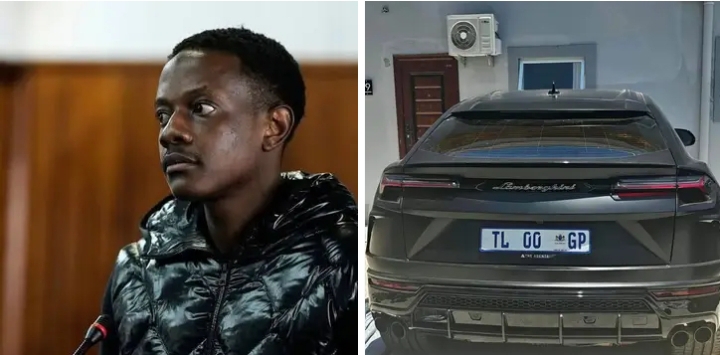
There is a tragic predictability to the trajectory of children who grow up under the blinding canopy of absolute power.
When the state functions not as a neutral administrator of justice but as a private security firm for a ruling dynasty, its youth absorb a lethal lesson.
They grow up believing that statutory law is merely an inconvenience meant for ordinary citizens.
Bellarmine Chatunga Mugabe, the youngest son of Zimbabwe’s late former President Robert Mugabe, remains bound to this delusion.
Years after his father was removed from office and subsequently passed away, Chatunga continues to navigate life as though the presidential seal still guarantees him unconditional immunity.
If decisive, institutional action is not taken to hold him fully accountable now, he is hurtling toward a self-inflicted catastrophe.
When we speak of a “terrible end” for Chatunga, the scope extends far beyond the immediate physical danger of being killed on the streets in a botched altercation or armed dispute.
While his reckless lifestyle—marked by violent brawls, police checkpoint clashes, and high-speed evasions—certainly makes a sudden, violent demise a real possibility, the destruction awaiting him is far more subtle and multi-layered.
First, there is the inevitable collision with the full weight of the penal system.
Up to this point, he has benefited from legal loopholes, withdrawn charges, or convenient plea bargains.
Even across the border in South Africa, where some initially hoped the law would take its course following the near-fatal Hyde Park shooting of his gardener, Chatunga managed to slip through the net.
By negotiating a plea deal for lesser firearm and immigration infractions—leaving his cousin and co-accused, Tobias Matonhodze, to take the fall and face prison as a convenient scapegoat—Chatunga walked away with a fine and a deportation order.
But luck and scapegoats are finite resources.
If left unchecked, Chatunga will eventually commit a major offense where no high-priced legal team, political intervention, or fall-guy can shield him.
The inevitable result will be a life sentence spent behind bars—exchanging the phantom ghost-pass of his father’s memory for the cold, unforgiving reality of a prison cell.
Yet, perhaps the most tragic form of ruin is the one he faces even as a “free man.”
Chatunga is rapidly cementing his path toward becoming a permanent prisoner of a failed life and a wasted adulthood.
Stripped of the executive apparatus that once shielded his excess, he has demonstrated zero capacity to build a legitimate, self-sustaining identity outside of his surname.
Without disciplined intervention, he will drift into his middle age as an empty shell—a faded prince living off diminished capital, trapped in an endless loop of juvenile rebellion, drug allegations, and public ridicule.
There is no greater punishment than reaching mature adulthood only to realize one has achieved nothing of intrinsic value, becoming a living monument to wasted potential.
This crisis of self-development casts a dark shadow over his future capacity to lead a family.
What type of father can we realistically expect Chatunga to become if his current trajectory remains uninterrupted?
A parent who has never mastered self-control, respected authority, or earned an honest living cannot instill those values in the next generation.
Instead of offering stability, mentorship, and a grounding moral compass, he risks passing down an inherited legacy of dysfunction, entitlement, and paranoia.
A child raised by an unrepentant, unstable parent inevitably inherits the chaos of a broken household, perpetuating a multi-generational cycle of decline.
The institutional softness shown by courts—whether through withdrawn charges in Harare or convenient legal maneuvers in Johannesburg—is not mercy; it is enablement of the most destructive kind.
Privilege can shield a person from police officers and courtrooms for a time, but it cannot suspend the basic laws of cause and effect indefinitely.
It is time for the judicial system to treat Chatunga Mugabe not as the untouchable remnant of a political dynasty, but as an ordinary adult subject to the full force of the law.
Strong, unyielding legal action—including real custodial sentences where warranted—is not an act of political vengeance; it is a vital intervention.
If the state continues to hesitate, it will not be protecting him.
It will simply be acting as a silent accomplice to his complete personal and spiritual ruin.
Chatunga needs to be protected from himself.
● Tendai Ruben Mbofana is a social justice advocate and writer. Please feel free to contact him on +263715667700 or mbofana.tendairuben73@gmail.com