

🇿🇲 CONTEXT | Inside the UPND’s 5 Million Vote Strategy
With only 10 days remaining before Zambia votes on August 13, President Hakainde Hichilema’s campaign has entered what increasingly appears to be its most calculated phase. The President is no longer following a province-by-province itinerary. Instead, the campaign has shifted into a second deployment, revisiting carefully selected provinces and districts where strategists believe additional votes remain available. To some opponents, the return visits reflect electoral anxiety. Viewed through Zambia’s electoral map, they resemble something different: a systematic attempt to expand the governing party’s coalition towards its publicly declared target of five million votes.
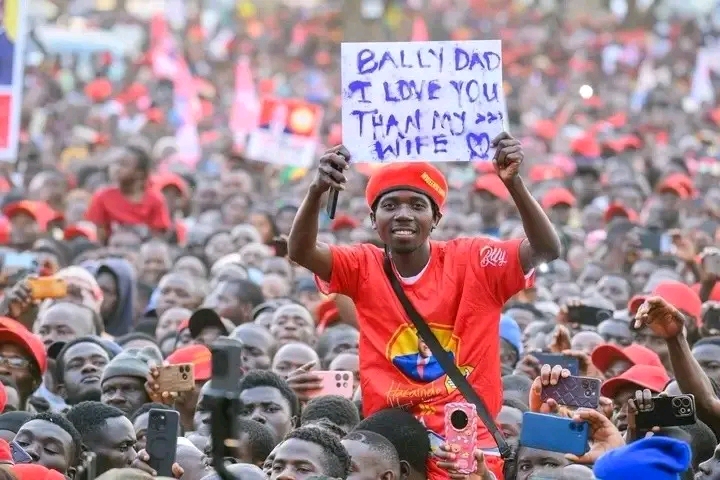
The pattern is difficult to ignore. After concluding his campaign in Southern Province, Hichilema moved into Central Province before returning to Western Province to engage communities omitted during his first tour. On Sunday he re-entered Eastern Province, beginning with Katete, Chadiza and Vubwi before concluding with a large rally in Chipata.
Today Monday, August 3rd, the campaign continues into Kasenengwa, Chipangali and Mambwe. Campaign sources indicate the President is also expected to revisit selected parts of the Copperbelt and the Northern circuit before polling day, completing what increasingly resembles reinforcement rather than repetition.
This strategy begins with arithmetic, not geography. The UPND understands that five million votes cannot be assembled by relying solely on its traditional strongholds. Southern, Western and North-Western provinces remain central pillars of the party’s electoral base, but even commanding victories there cannot produce five million ballots.
Additional votes must come from competitive provinces where the governing party believes it can improve on its 2021 performance. Eastern Province, with 1,129,444 registered voters, represents one of the largest opportunities on Zambia’s electoral map.
History explains why Eastern deserves this attention. For decades the province formed one of Zambia’s most dependable political blocs, first for UNIP under Kenneth Kaunda, then for the MMD during the Mwanawasa and Rupiah Banda years, before becoming one of the Patriotic Front’s strongest bastions under Edgar Lungu.
In 2021, Hichilema secured 213,707 votes (37.6 percent) against Lungu’s 308,520 (54.3 percent) and carried only three constituencies. Electoral history would therefore classify Eastern as opposition territory. Electoral strategy now treats it as expandable territory.
The governing party also enters this phase with organisational advantages built over the past five years. Since 2021, the UPND has steadily increased its footprint through parliamentary and local government by-elections across Eastern Province.
More than fifteen former PF and independent parliamentarians are now contesting on the UPND ticket, bringing established ward structures, polling agents and community networks into the governing party’s campaign.
Provincial mobilisation has further been reinforced by Colonel Panji Kaunda and Andrew Banda, whose family histories and political networks carry considerable influence across Eastern Province.
The campaign message mirrors the province’s economic profile. Agriculture dominates both livelihoods and political conversation. Fertiliser distribution, expanded farming support, quicker payments to farmers, Social Cash Transfers, Cash for Work, free education and the Constituency Development Fund have become the centrepiece of Hichilema’s appeal.
Rather than unveiling a catalogue of new promises, the President has repeatedly asked voters to judge his administration on programmes already visible in their communities, from schools and health facilities to feeder roads and water projects.
The opposition interprets these return visits differently. Alliance leaders argue the President is revisiting provinces because internal polling has exposed electoral weakness. They also question why the Head of State continues campaigning in areas previously visited. Such arguments form part of normal election messaging. They sit alongside another reality facing the opposition itself.
Tonse Alliance has not campaigned in some provinces, including Western and Southern, while its presidential candidate, Brian Mundubile, has publicly appealed for financial contributions after acknowledging campaign funding pressures. The expansion of Zambia’s electoral map following the creation of additional constituencies, wards and local authority positions has significantly increased the financial and logistical demands of running a genuinely national campaign.
Those structural demands are beginning to separate campaign models. The UPND is operating multiple teams simultaneously across different regions while the President reinforces selected battlegrounds. The opposition has concentrated much of its senior leadership around the presidential candidate, creating high-profile rallies but leaving fewer senior teams available for parallel mobilisation. Neither approach guarantees victory. Each reflects different organisational capacity, resource availability and electoral calculation.
There is another reason repeated visits should not surprise experienced election observers. Votes are rarely won during a single rally. They accumulate through repeated contact with communities, local candidates, churches, cooperatives, traditional leaders and ward structures. Presidential appearances energise supporters. Local organisation converts enthusiasm into ballots. Campaign intelligence therefore values reinforcement almost as much as first contact, particularly in provinces capable of producing large numbers of swing voters.
Whether the UPND ultimately reaches its five million vote ambition remains a question only Zambians can answer on August 13. What is already visible, however, is the architecture behind the attempt. This campaign is no longer travelling to complete a map. It is returning to reshape one. Every additional district visited, every competitive province revisited and every local structure reinforced points towards a single objective: expanding the governing party’s electoral ceiling rather than merely defending its political base.
© The People’s Brief | Ollus R. Ndomu
In fact those places (Districts or Constituencies ) he is visiting, he has NEVER visited them. He deliberately left them so that he can pass the last Time.