

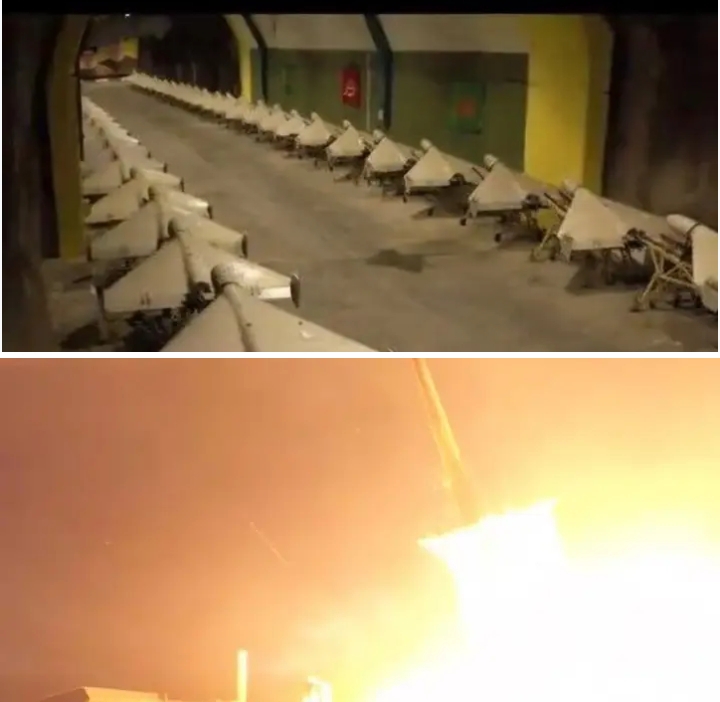
Iran Uses Low-Cost Drones to Pressure U.S. Air Defenses
Iran’s reported strike strategy increasingly relies on combining large numbers of relatively low-cost Shahed-type attack drones with ballistic missiles, creating a difficult cost and capacity problem for U.S. and allied air-defense forces.
The objective is not necessarily to destroy every target with the drones. Instead, repeated waves can force defenders to detect, track and engage large numbers of incoming threats, potentially consuming expensive interceptors at a much higher rate than the cost of the attacking drones. Analysts have identified this cost-exchange imbalance as a major challenge in prolonged air-defense operations.
The pressure becomes greater when drones are combined with ballistic missiles. The slower drones can create additional targets and complicate the defensive picture, while faster ballistic missiles require higher-end systems such as Patriot and THAAD.
This is becoming a real concern for the United States. Reuters reported that roughly 65% of U.S. Patriot interceptor stock had been used between February and July 2026, leaving fewer than 850 interceptors, while production is being accelerated.
The Pentagon has also pushed defense manufacturers to rapidly increase production amid concerns over depleted stocks of advanced interceptors, including Patriot and THAAD.
The strategic calculation is simple: Iran does not necessarily need to destroy the entire air-defense network. It can seek to stretch, saturate and exhaust it.
That turns the battle in the sky into a war of endurance — **cheap drones on one side, expensive interceptors on the other.**