

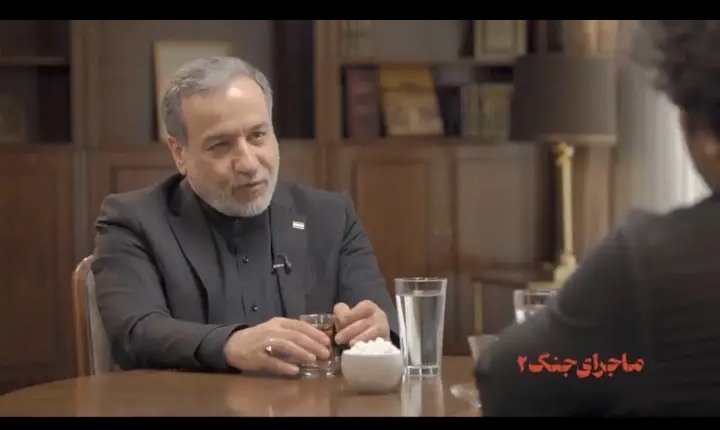
BREAKING: Iran’s Foreign Minister Warns of Regional Retaliation if U.S. or Israel Launches Attack
Iranian Foreign Minister Abbas Araghchi has revealed details of what he described as a private conversation with a senior regional leader, using the account to underscore Tehran’s determination to retaliate against any military attack on its territory.
According to Araghchi, the unnamed regional official confidently warned him that Iran should expect a major assault targeting both its nuclear and energy infrastructure.
“He told me, ‘Be prepared. You will be attacked. They will destroy your nuclear facilities, and they will also destroy your oil installations. You will not be able to respond because they will target your country and your leadership as well,'” Araghchi said.
The Iranian foreign minister said he rejected that assessment, insisting that any attack on Iran would be met with an immediate and proportional response.
“I told him, ‘It is not as simple as you think. If they attack any part of our country, we will strike an equivalent target,'” Araghchi stated.
Araghchi reiterated Iran’s longstanding position that if the United States were to attack Iran directly, Tehran would target American military bases across the Middle East.
“If the United States attacks us, we will target its military bases in the region. Our missiles cannot reach the U.S. mainland, but they can destroy American bases in the region,” he said.
The foreign minister also issued a warning regarding global energy security, saying that attacks on Iran’s oil infrastructure would have consequences for the entire region
“If they destroy our oil facilities and we cannot export oil, then no other country in the region will export oil either,” Araghchi declared, suggesting that regional energy exports could be disrupted in the event of a wider conflict.
Araghchi said he later learned that some American and Israeli analysts had reportedly reassured regional governments not to fear Iranian threats, arguing that even if Iran retaliated, its attacks would last only about a month before ending.
He dismissed that assessment, implying that those predictions underestimate Iran’s capabilities and resolve.
“Where the situation stands today, and what the person who spoke to me with such arrogance is saying now, is something your ears would hardly believe,” Araghchi said, without identifying the individual or providing further details.
The remarks reflect Iran’s continued warning that any military strike against its nuclear or energy infrastructure would trigger a broader regional response, potentially involving U.S. military installations and energy routes across the Middle East. They also highlight the increasingly tense strategic environment as fears of a wider regional conflict continue to grow.