

IS PUTIN LOSING ANOTHER ALLY? ARMENIA MOVES CLOSER TO EUROPE
Russia’s influence in the South Caucasus continues to face new challenges.
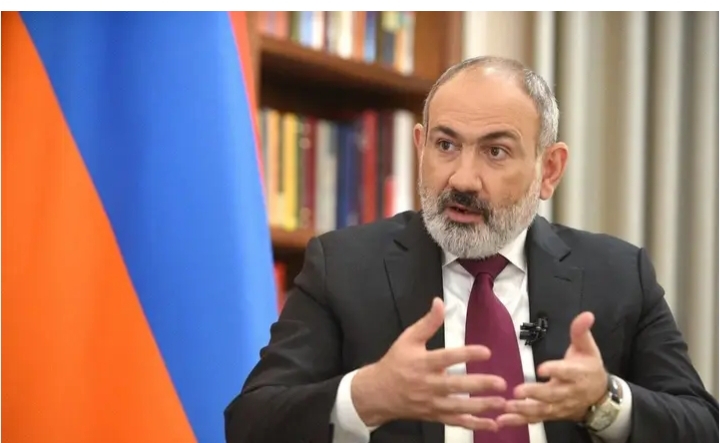
Armenian Prime Minister Nikol Pashinyan has indicated that Armenia could eventually hold a referendum on joining the European Union, marking another sign that Yerevan is looking beyond Moscow for its future.
According to the reports, the issue came up during a conversation with Vladimir Putin. Pashinyan reportedly replied that any referendum would only come after Armenia officially applies for EU membership, signaling that the country is taking a gradual—but increasingly European—path.
The shift is significant.
For decades, Armenia was regarded as one of Russia’s closest allies, hosting a Russian military base and remaining a member of the Eurasian Economic Union (EAEU) and the Collective Security Treaty Organization (CSTO). But relations have deteriorated sharply in recent years.
Many Armenians believe Russia failed to support them during the conflicts over Nagorno-Karabakh, despite long-standing security ties. At the same time, Yerevan has steadily expanded its cooperation with the European Union and other Western partners while distancing itself from Moscow.
The war in Ukraine has accelerated that trend.
Countries that once viewed Russia as an indispensable security partner are increasingly reassessing that relationship as Moscow devotes enormous military, political, and economic resources to its invasion of Ukraine.
The question is becoming harder to ignore:
How many allies can Russia afford to lose?
In recent years, Moscow has seen strains in its relationships across parts of the former Soviet sphere. While Armenia has not announced plans to leave the EAEU or CSTO, its growing engagement with Europe reflects a broader geopolitical shift that the Kremlin can no longer take for granted.
Influence is one of Russia’s most valuable strategic assets. Every time a long-time partner begins looking elsewhere, it raises a larger question: is Russia expanding its influence through this war—or gradually watching it slip away?