

KAPONYA THINKING: IF RESERVES ARE HIGH WHY ARE PEOPLE STILL STRUGGLING?
Kaponyanomics is the single most defining feature of a leadership that once took our country back to unsustainable debt after the New Deal Administration worked tirelessly to get Zambia to the HIPC completion point and the building of huge reserves.
There is a difference between running a street corner and running a nation. A nation is not managed through slogans. It is not managed through emotions. It is not managed through the Kaponya mentality.
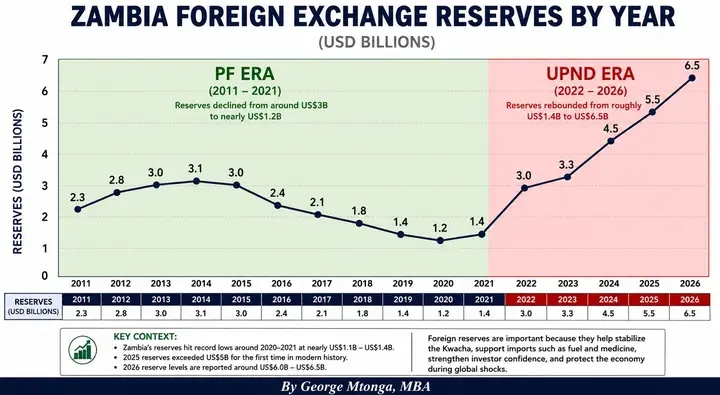
Many people hear that Zambia’s foreign exchange reserves have risen from about US$1.5 billion to US$6.5 billion and immediately ask, “Where is the money?” That question comes from a misunderstanding of what reserves are.
Foreign exchange reserves are not government revenue. They are not money sitting in a government account waiting to be shared. They are the nation’s financial shield. Think of reserves as the savings that protect a family during difficult times. When drought strikes, when fuel prices rise globally, when international markets become unstable, reserves help a country withstand those shocks.
Reserves strengthen confidence in the economy. They help stabilise the Kwacha. They reassure investors that the country can meet its international obligations. They reduce risk, and when risk falls, the cost of borrowing falls. Investment increases. Businesses expand. Jobs are created. This is how serious economies are built.
The increase from US$1.5 billion to US$6.5 billion did not happen by accident. It did not happen through luck. It did not happen through political chants. It required knowledge and strong leadership. It required discipline. It required restoring confidence. It required rebuilding relationships with international lenders and investors. It required repairing damage that had accumulated over many years. That is why economic recovery takes time.
When President Levy Mwanawasa inherited Zambia, he did not transform the economy overnight. The rebuilding process took years before ordinary citizens began to feel the full benefits.
The same principle applies today under President Hakainde Hichilema’s administration. Macroeconomic recovery comes first. The strengthening of reserves comes first. The stabilisation of the currency comes first. The restoration of confidence comes first.
Then come the benefits that citizens can touch and feel, i.e, more investment, more factories, more jobs, higher incomes, easier access to capital, growing businesses, and expanding opportunities. That’s how every successful economy in the world has developed.
A nation cannot spend its way into prosperity. A nation must first create stability before it can create abundance.
The lesson is simple. Street economics embedded in the kaponya approach to statecraft may win an argument among the people who may not fully understand complex economics, but reality is different.
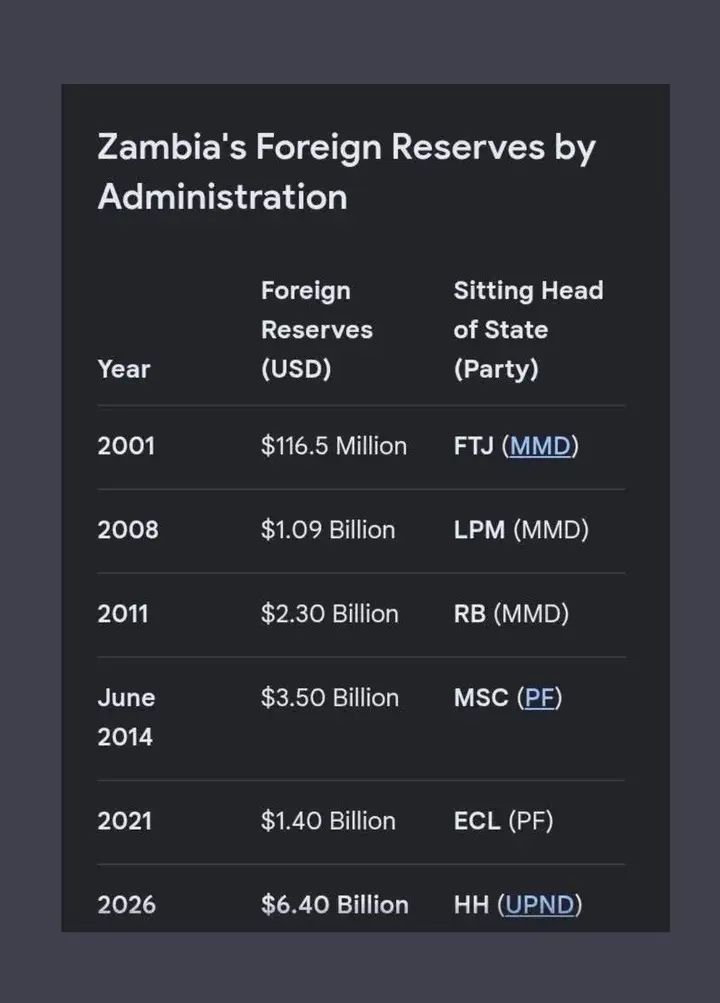
National economics builds a country, and our own Zambian history has repeatedly shown that nations rise not through political songs, but through discipline, patience, and sound management of public affairs.
Zambia is still on that journey. The foundations are being strengthened. The results are beginning to emerge, and if we remain focused as a nation, the benefits of today’s stability will become tomorrow’s prosperity.
Saviour Chishimba
President
United Progressive People (UPP)
Of late you are smoking the best marijuana boss,talking alot of sense kudos bwana. This is saviour if have known not the resent past one.
The previous Administration was busy eating (ubomba mwibala) and busy amassing wealth at the same time borrowing recklessly. The current Administration has the nation at heart. How I wish HH had come after LPM or immediately after Sata died, the story could have been very different.