

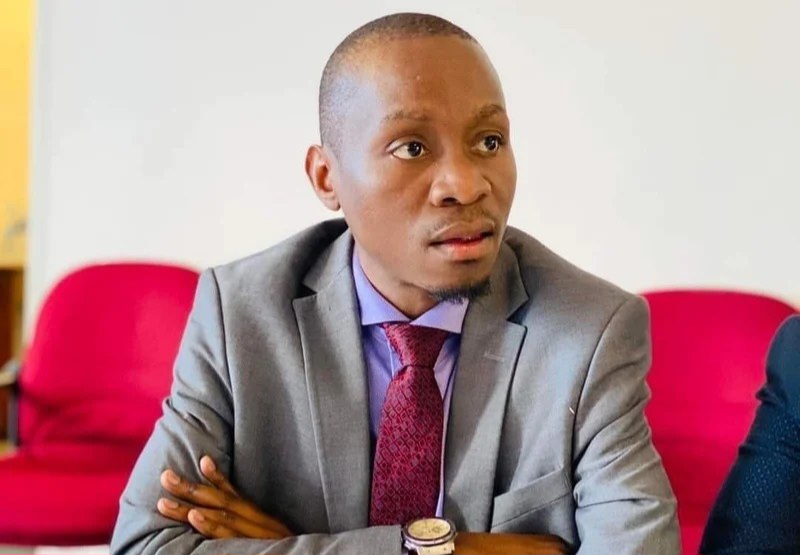
Former Lumezi Member of Parliament Munir Zulu says the
ruling UPND should not be comforted by the number of rallies it
is holding, arguing that voter sentiment, not campaign
activity, will determine the outcome of the August 13 general
elections.
In a statement released this week, Zulu drew parallels with
Malawi’s 2025 elections, where he said the then ruling party of
President Lazarus Chakwera held far more rallies than
opposition parties but still lost power.
“In Malawi the then ruling party of President Chakwera had a
hundred rallies more than the opposition political parties but
the will of the people prevailed,” Zulu said.
“In the same vein the ruling party in Zambia is boasting of
having so many rallies but the will of the Zambian People shall
always prevail.”
Zulu, who served as Lumezi MP from 2021 to 2024 before losing
his seat following a prison sentence, has re-entered the
political debate ahead of the elections. He is now seeking to
contest the Lusaka Central seat.
The former lawmaker said he had been asked by friends following
the political landscape what indicator he was using to suggest
the ruling party was in trouble. His answer, he said, lies in
candidate adoption patterns.
“I said the simplest barometer is one former member of
parliament named Sunday,” Zulu stated. “In the 2011 elections
he stood on the MMD ticket and thats how the MMD lost
elections. In 2016 elections the PF avoided the temptations of
adopting him but in the 2021 elections they adopted him and
thats how they lost power.”
He did not name the individual in full, but the reference
appears to be to Sunday Chanda, former PF member of parliament
for Kanchibiya and PF media director. Chanda has since joined
the UPND.
“Now he has been adopted by the ruling UPND so history is not
short of memories,” Zulu added, ending the statement with
“Tilitonse” — a Bemba phrase meaning “we are together.”
Zulu’s comments come at a time when political activity is
intensifying across the country. The UPND has been holding
large rallies in several provinces, with party officials saying
the turnout demonstrates continued public support for President
Hakainde Hichilema’s government. Opposition parties have
countered that crowds at rallies do not translate into votes.
The Malawi reference is to the September 2025 general elections
where the opposition Democratic Progressive Party defeated the
ruling Malawi Congress Party of President Chakwera. Analysts in
Malawi attributed the result to economic hardship and voter
fatigue, despite the ruling party’s extensive campaign.
In Zambia, the “will of the people” argument has been a common
theme in opposition messaging. Parties outside government argue
that issues such as the cost of living, youth unemployment and
debt servicing will weigh more heavily on voters than the
number of campaign events.
Zulu’s invocation of candidate adoption history reflects a
broader debate within Zambian politics about the impact of
“political cross-carpeting.” The movement of politicians
between parties ahead of elections is often cited by both
ruling and opposition camps as a sign of strength or
desperation.
The former Lumezi MP himself was elected in 2021 as an
independent candidate, defeating both PF and UPND opponents. He
was later convicted of seditious practices and defamation and
served 18 months in prison before being released in early 2025.
Since his release he has announced plans to run in Lusaka
Central, currently held by UPND Secretary General Mulambo
Haimbe.
Political analysts say Zulu’s statement is likely to spark
debate on whether rally numbers are a reliable indicator of
electoral success. In 2021, the UPND won the presidency with
fewer publicly reported rallies than the PF in some areas, but
with strong turnout in its strongholds. The PF in turn argued
that it had a wider ground presence.
The Electoral Commission of Zambia has urged all parties to
focus on issue-based campaigns and to avoid inflammatory
language as the election date approaches. Church and civil
society groups have also called for restraint, warning that
comparisons to other countries should not be used to incite
unrest.
For now, Zulu’s message adds to the growing pre-election
rhetoric. By citing Malawi and what he calls the “Sunday
factor,” he is framing the 2026 vote as a referendum on public
mood rather than party machinery.
Whether voters agree will be tested on August 13. Until then,
both the ruling party and its challengers will continue to make
their case — on the rally grounds, in the media, and at the
ballot box.
Tilitonse, Zulu concluded.
There’s NOTHING WE CAN LEARN FROM MALAWI. They are full of Hunger and floods.
Failure of Chakwera CAN’T be compared to success of UPND ba dull Munir.
Neither can we learn anything from Zimbabwe! EACH COUNTRY HAS ITS OWN way of dealing with it’s leader.
Malawi should IN FACT LEARN FROM HH how to run the government.
Munir Zulu, there political dynamics of the two countries are different. Learn to employ critical thinking and analysis before drawing comparisons. It is hard to imagine we had such dunderheads in parliament. Munir as for now just relax and reflect. Politics slipped through your fingers while you watched. It is not your game.
I can’t understand why people like Mr. Munir Zulu are even given a forum.