

🇿🇲 INSIGHT | Lusaka is Getting Cleaner, But Can Politics Sustain It?
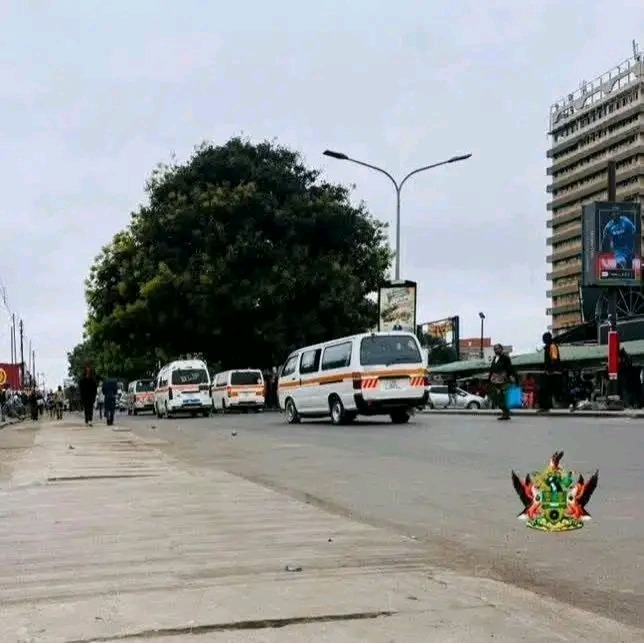
Walk through parts of central Lusaka this weekend and the difference is difficult to miss. Pavements which had become extensions of informal markets are opening up. Streets are beginning to look like streets again. But behind the cleaner appearance is a harder political contest: vendors are unhappy, livelihoods are involved, and Mayor Chitambala Mwewa is testing whether city authorities can enforce rules successive administrations have struggled to sustain.
The timing gives the clean-up greater urgency. Government declared a cholera outbreak this week after 304 cases and 11 deaths were recorded across seven districts as of September 29, including Lusaka, Chilanga and Chongwe. Street vending is not the sole cause of cholera, and it would be wrong to present it as such. But uncontrolled food trading, indiscriminate waste disposal, poor sanitation and blocked drainage create precisely the kind of public-health environment authorities cannot afford to ignore.
For years, Lusaka has struggled with something deeper than sanitation: the politics of enforcement. Pavements became trading spaces. Drainage channels became dumping points. Bus stations spilled onto roads. Structures appeared where structures were not supposed to be. Each activity could be defended individually through poverty, survival or convenience. Taken together, they gradually created a city where breaking urban rules became normal.
Mwewa has identified the political problem unusually directly. Before taking office, he argued politicians had been “misled” into believing removing traders from the streets would cost them votes, while residents had grown accustomed to “chaos” and “dirt”. His conclusion was uncompromising: “It’s impossible to have a functional city with street vending.”
There is also a legal point which sometimes disappears beneath the politics. Street vending in undesignated places is not merely a disagreement between a mayor and people trying to earn a living. Councils have legal powers to regulate markets, bus stations and trading spaces. The argument should therefore not be whether Lusaka can regulate where commerce takes place. It should be whether those rules are lawful, consistently enforced and applied without political favour.
The livelihood argument nevertheless deserves respect. Informal trading feeds households. It pays rent and school fees. It puts food on tables in an economy where formal employment cannot absorb everyone who needs an income. Moving a vendor can therefore alter the economics of an entire family.
But poverty cannot become a permanent exemption from urban regulation.
If economic hardship creates an automatic right to occupy any available public space, there is eventually no workable boundary between livelihood and disorder. Roads have a purpose. Pavements have a purpose. Drainage systems have a purpose. Markets have a purpose. Government has an obligation to consider livelihoods, but it also carries responsibility for public health, sanitation and order.
This is where the Lusaka argument becomes more interesting because Mwewa says market space exists. He has put available trading spaces across 28 markets at more than 14,000 against an estimated 8,000 street vendors. Those numbers should continue to be tested, but if sufficient usable space exists, the argument shifts from where will traders go? to why do traders prefer the street?
The answer is straightforward. The street brings the customer.
A trader beside a road catches the commuter before the commuter reaches the market. Someone selling near a bus catches passengers as they disembark. A vendor moving between cars reaches customers without requiring customers to go anywhere. Traders follow traffic because traffic produces sales.
And customers sustain the arrangement because it is convenient.
This is not a new discovery. Zambia has been debating the demand side of street vending for at least 15 years. In 2012, then Local Government Minister Nkandu Luo told Parliament: “The vendors would not be on the streets if we stopped buying from them.” She said the strategy being developed by Government would also address people purchasing from street vendors.
Luo went much further than the current authorities have gone. “Anybody who is found buying from a vendor will be charged,” she told Parliament, even suggesting detention overnight as a deterrent if Cabinet accepted the proposal. The severity of that suggestion can be debated, but the diagnosis was important: the customer helps create the street market.
Nine years later, under a different government, Vice-President Mutale Nalumango arrived at essentially the same conclusion.
“When the public chooses not to buy from designated places, the seller, then, goes where the public is able to buy,” Nalumango told Parliament in September 2021. She added: “So, the problem could be us, the public, who buy.”
Three political periods, different actors, same basic diagnosis.
This history matters because it suggests Lusaka has not suffered from an absence of understanding. Authorities have known why street vending persists. Traders want customers. Customers want convenience. Politicians want to avoid angering either group.
The missing ingredient has often been sustained enforcement.
This is why simply chasing vendors may not permanently solve the problem. The street vendor is one half of the transaction. The customer is the other. Clear the seller today while thousands of residents continue expecting tomatoes, fruit, clothes and phone accessories beside the road, and the economic incentive for somebody to return tomorrow remains.
There is therefore a legitimate policy discussion about whether clearly designated no-trading areas should eventually carry consequences for buyers as well as sellers. Any such measure would require proper legal authority, public education, proportionate penalties and safeguards against harassment or corruption. The objective should be changing behaviour, not creating another opportunity for arbitrary punishment.
The politics, however, may prove harder than the regulation.
UPND Secretary General Batuke Imenda has publicly placed the governing party behind Mwewa. “As the UPND, we will not tolerate street vending and we are in full support of our Mayor,” he said on Friday. More significantly, Imenda declared: “We are not going to please anyone at the expense of the whole population of Lusaka.” He linked the party’s position to cholera, typhoid and sanitation concerns.
Those words matter.
They mean Mwewa is no longer carrying the political burden alone. The governing party has associated itself with the clean-up. If resistance among traders grows, UPND will share the political consequences. If pressure eventually produces a retreat, the public will also be able to measure that retreat against Imenda’s words.
And the political risk is real. Every vendor belongs to a household. Vendors have relatives, customers and votes. Enforcement produces immediate losers who can organise, protest and complain. The benefits of an orderly city are spread across a much larger population and are politically less visible.
This helps explain why disorder can become politically easier to tolerate than order is to enforce.
But there is another constituency which politics frequently overlooks: the resident who wants a functioning city.
The pedestrian who wants the pavement back. The motorist who wants an open road. The formal shop owner paying rent, taxes and council levies while someone trades outside the entrance. The commuter who wants an organised bus station. The household which expects drainage systems to carry storm water instead of plastic bottles, food waste and discarded packaging.
Their interests count too.
The danger for Mwewa is mistaking a successful operation for a successful policy. Zambia has cleared vendors before. Officers arrive. Streets open. Photographs circulate. Political pressure grows. Enforcement weakens. Traders gradually return.
The real test therefore comes after the photographs.
Will the council enforce the same rules next month? Will illegal dumping receive similar attention? Will drainage channels remain clear? Will bus operators stay in designated places? Will politically connected traders receive exactly the same treatment? And when resistance becomes politically uncomfortable, will the leadership continue supporting enforcement?
Those questions matter because Lusaka’s problem has never simply been an absence of laws. It has been the difficulty of enforcing rules when enforcement carries a political price.
Mwewa is therefore doing more than moving vendors. He is testing an old assumption in Zambian politics: that maintaining urban order necessarily costs political popularity.
The outcome should not be prejudged. Vendors have legitimate livelihood concerns. Authorities have legal and public-health responsibilities. Enforcement must remain lawful and humane.
But one principle should survive the argument. Poverty deserves public policy. It cannot become public policy itself.
A capital city cannot function on the assumption that every regulation becomes optional whenever enforcing it becomes politically difficult. Neither can Government build order simply by chasing poor people from one location to another.
The responsibility is broader. Traders must use designated spaces. Councils must enforce regulations consistently. Waste must be collected. Drains must remain open. Public transport must obey city rules. And residents themselves must stop sustaining the very street economy they later blame for congestion and disorder.
Nkandu Luo identified the customer in 2012. Mutale Nalumango identified the customer in 2021. Chitambala Mwewa is confronting the vendor in 2026.
The question is whether Lusaka will finally confront the entire system. Lusaka can be cleaned in a weekend.
The political test is whether Zambia can build a culture in which keeping it clean no longer requires an operation.
INSIGHT | Beyond the headline. We examine the forces, choices and consequences shaping the story.
-The People’s Brief | Ollus R. Ndomu