

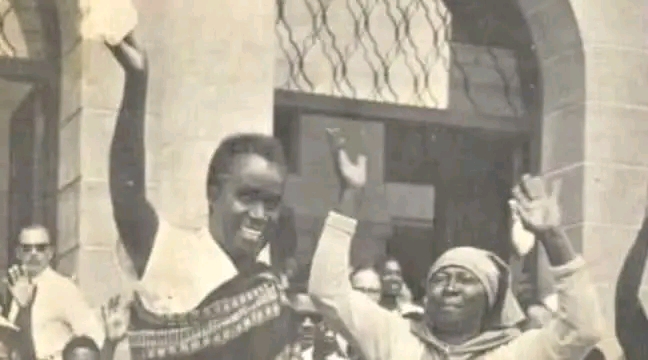
MAMA JULIA CHIKAMONEKA—ZAMBIA’S FEARLESS FREEDOM FIGHTER WHO KNEW WHEN WORDS WERE NOT ENOUGH!
The woman who mobilised marketeers, tormented colonial authorities and helped liberate a country, sometimes without a single stitch of clothing!
Mama Julia Chikamoneka understood that fighting oppression required courage, organisation and, occasionally, tactics that left the colonial establishment completely lost for words.
Born Julia Mulenga Nsofwa Lombe between 1904 and 1910 in Kasama, she was the daughter of Mulenga Lombe, a First World War veteran and grandson of Chief Chitimukulu.
She adopted the Julia Chikamoneka name to protect her identity during anti-colonial protests.
Mama Chikamoneka was not a woman who needed a microphone, a convoy of expensive vehicles or a government appointment before she could become politically relevant
Her political headquarters was a food stall near Kabwata.
After moving to Lusaka with her husband in search of work, Mama Chikamoneka became involved in welfare associations, which exposed her to the growing struggle against colonial rule. She eventually quit her job and established a food stall, turning an ordinary marketplace into an extraordinary recruitment centre for the independence movement.
While some politicians today struggle to mobilise even their own relatives without providing transport money and lunch, Mama Chikamoneka recruited women through everyday interactions at the market. She organised fellow marketeers into protest groups, encouraged them to attend political rallies and helped build grassroots support for the nationalist cause.
Her methods were simple but effective. At night, she would ring a tin filled with stones to summon people to political meetings.
Imagine that! No Facebook Live, no WhatsApp groups, no paid influencers and certainly no political consultant charging millions to explain why the mobilisation strategy was failing. Just a tin, some stones and a woman who understood the assignment.
The colonial authorities had the administration, the police and the law on their side. Mama Chikamoneka had courage, determination and a growing army of women who were no longer prepared to accept second-class treatment.
She helped organise boycotts against shops and butcheries that discriminated against Africans. She also mobilised women to support imprisoned freedom fighters, raised funds for the nationalist cause and provided assistance to leaders who were being pursued by colonial authorities.
Mama Chikamoneka’s activism came at a price. She was repeatedly arrested for her political activities, but detention did little to extinguish her determination.
In 1951, she became one of the founding members of the Women’s Brigade, which played an important role in mobilising women for the independence struggle. The organisation raised money for detained nationalists, supported their families, sheltered activists and coordinated political activities.
While colonial authorities were busy trying to contain the nationalist movement, Mama Chikamoneka was helping build the very networks that made the movement harder to suppress.
Her home also became a place of refuge for nationalist leaders. Accounts of the independence struggle associate her with the early political organising that preceded the formation of UNIP.
If there is one episode that captures Mama Chikamoneka’s fearless approach to activism, it is the dramatic protest involving her and fellow women nationalists in 1960.
Following the detention of nationalist leaders, women activists marched to the District Commissioner’s office at the time British Secretary of State for the Colonies Iain Macleod was visiting Lusaka, to demand justice and draw attention to the suffering of imprisoned leaders and their families.
Accounts of the protest describe an extraordinary act of defiance: Mama Chikamoneka and fellow activists, including Emelia Saidi and Magdalena Mumba, used public nudity as a form of political protest.
Unlike today’s political theatrics, where some leaders undress their opponents’ reputations while carefully protecting their own privileges, Mama Chikamoneka and her fellow activists were prepared to put their own reputations on the line for a cause greater than themselves.
As nationalist organisations split, rebranded and reorganised, she continued to mobilise women and support the wider independence movement. The Women’s Brigade eventually developed into the Women’s League within the independence-era political structure.
Her contribution was not merely that of a woman standing behind the men who made the speeches. She was among those creating the conditions that made the speeches matter.
She understood that independence was not going to arrive because colonial officials suddenly woke up one morning feeling generous. It had to be demanded, organised for and fought for by ordinary people who were prepared to take extraordinary risks.
Zambia eventually gained independence on 24 October 1964. Mama Chikamoneka was among the women whose courage and grassroots organising helped sustain the struggle that brought colonial rule to an end.
Mama Chikamoneka died on 20 March 1986 and was accorded a state funeral. Fellow freedom fighter Chibesa Kankasa remembered her as a torchbearer of the Women’s League.
Her story reminds us that history was also made at market stalls, in the homes that sheltered fugitives, through night-time calls to political meetings and in the streets where women dared to confront an empire.
She did not need to occupy State House to make history. She did not need a ministerial portfolio to exercise leadership. And she certainly did not need permission from the colonial establishment to challenge its authority.
Mama Chikamoneka was proof that a woman armed with conviction could frighten an entire administration more effectively than a room full of men armed with official titles.
May we remember her not merely for the dramatic naked protest that made her famous, but for the organising, sacrifice and fearless commitment that gave that protest its meaning.
Because before independence became a national holiday, it was a dangerous idea and Mama Chikamoneka was one of the women brave enough to turn that idea into a movement.
In the picture, Mama Chikamoneka standing next to first Republican President Kenneth Kaunda. Image courtesy of ZANIS.