

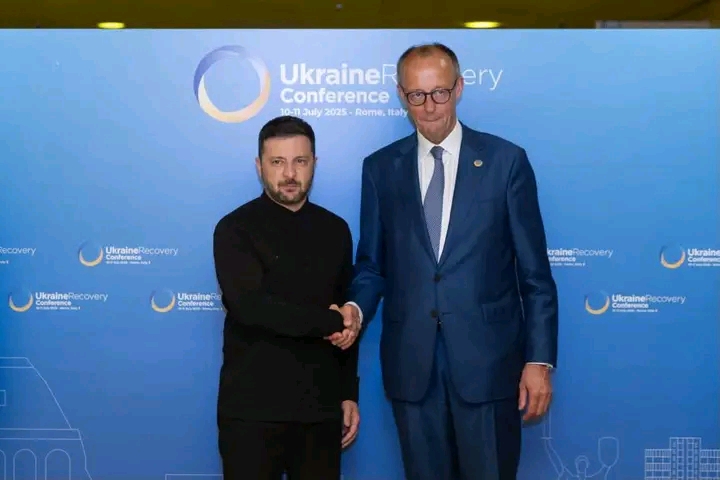
MERZ THREATENS TO BLOCK EU BUDGET WITHOUT LONG-TERM FUNDING FOR UKRAINE
German Chancellor Friedrich Merz has threatened to block the European Union’s entire 2028–2034 budget unless every member state agrees to help finance Ukraine in 2027 and beyond.
Ukraine faces an estimated €70 billion funding gap next year. The EU has promised to cover approximately €45 billion, but Hungary, Slovakia, Bulgaria and the Czech Republic have indicated that they do not want to make further contributions.
Merz is effectively telling these governments that they cannot demand billions from the European budget while refusing to help defend the country protecting Europe’s eastern frontier.
Germany also wants future Ukraine-support mechanisms structured around qualified-majority voting wherever legally possible. That would make it more difficult for one government—particularly Hungary—to hold assistance hostage through a veto.
Changing the system will not be easy. Major EU financial decisions still require unanimity, and tying Ukraine’s support directly to the next seven-year budget could delay both. But Germany is the bloc’s largest net contributor, giving Merz significant leverage.
The timing also matters.
Merz is under severe political pressure at home. The AfD has moved ahead of his CDU/CSU alliance in national polling, public satisfaction with his government has collapsed and parties opposed to supporting Ukraine are gaining traction across Europe.
That does not mean Merz is about to leave office. It does mean he understands that Europe’s political landscape could look very different after another year of elections.
He is therefore attempting to secure as much as possible while Germany still possesses the political influence and financial leverage to do it. Instead of forcing Ukraine to return every few months and plead for another emergency package, Berlin wants a long-term funding structure capable of surviving elections, changing governments and individual vetoes.
For Ukraine, that distinction is critical. A promise for the next several months helps it survive. A binding multi-year commitment helps it plan its defense, sustain its economy and demonstrate to Moscow that European support will not disappear with the next election.
Merz appears determined to get that commitment written into Europe’s future while he still has the opportunity.