

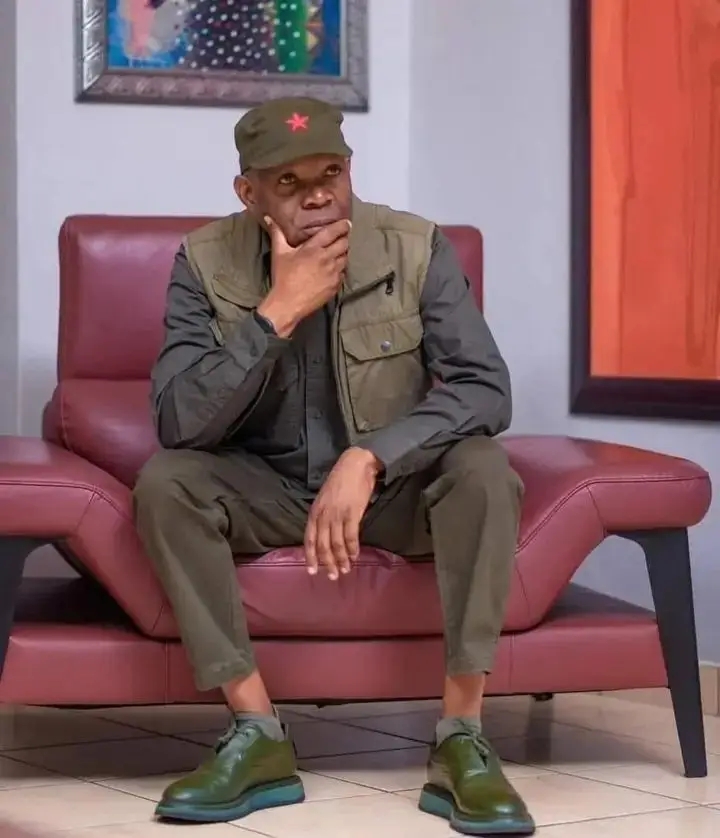
🇿🇲 BRIEFING | M’membe Calls K179 Mealie-Meal a ‘Vote Snare’ as Economic Debate Heats Up
Socialist Party president Fred M’membe has launched a blistering attack on government’s economic messaging ahead of the August 13 elections, dismissing the recently advertised K179.99 price of a 25-kilogram bag of breakfast meal as an election-year illusion designed to influence voters.
In a strongly worded statement titled The Illusion of Cheap Mealie-Meal, M’membe argued that the pricing structure does not reflect genuine market conditions and accused government of using subsidised food prices to create a false sense of economic progress.
“Temporary election-cycle pricing structures distort true economic conditions,” M’membe said. “The low retail price of today functions as a vote-snare targeted at the consumer.”
The Socialist Party leader further questioned the widely publicised K179.99 price tag itself, arguing that the 99 ngwee component has little practical meaning in a country where the one ngwee denomination disappeared from circulation years ago.
“The pricing of ZMW179.99 is a precise exercise in psychological engineering,” he said. “It exists purely as a marketing trick designed to make a cost feel lower than it is.”
M’membe’s intervention is significant because it directly challenges one of the ruling party’s most important campaign arguments: that Zambia’s economy is steadily improving after years of crisis.
Over the past year, government has increasingly pointed to falling inflation, debt restructuring, a strengthening kwacha, record foreign exchange reserves and rising investor confidence as evidence that difficult economic reforms are beginning to yield results. The UPND’s newly launched manifesto is heavily anchored on those achievements and presents them as the foundation for a second term.
M’membe is advancing a different case.
“Foreign reserves alone do not develop a nation; strategic investment does,” he argued, insisting that headline economic indicators mean little if ordinary citizens continue struggling with the cost of living.
The opposition leader also claimed that artificially low mealie-meal prices conceal deeper strains within the agricultural value chain. He pointed to delayed payments to farmers who supplied maize to the Food Reserve Agency and argued that many rural producers effectively carried the burden of supporting lower consumer prices.
“Cheap is never cheap,” M’membe wrote. “This gap is not a corporate donation; it is a structural imbalance funded by artificial means that carries a significant long-term cost.”
Among his more controversial claims was a warning that price distortions could encourage cross-border smuggling and create future fiscal pressure once election season ends.
Whether voters accept M’membe’s argument remains to be seen.
What is clear is that the economy has become the central battleground of the 2026 election.
The UPND wants voters to focus on inflation falling from above 24 percent in 2021 to single digits, foreign reserves surpassing US$6 billion, debt restructuring gains and a recovering currency.
The opposition wants voters to focus on household purchasing power, unemployment, load-shedding and the everyday cost of living.
Between now and August 13, both sides will be fighting to define what economic success actually means.
For the ruling party, success is reflected in the numbers. For M’membe, success must first be felt at the dinner table. The voters will decide which argument carries greater weight.
What do you think? Is Zambia’s economic recovery showing up in your household budget, or are the benefits still largely visible in macroeconomic indicators?
For feedback, corrections, partnerships, advertising opportunities, opinion submissions and feature proposals, contact The People’s Brief: 📧 editor.peoplesbrief@gmail.com
© The People’s Brief | Goran Handya