

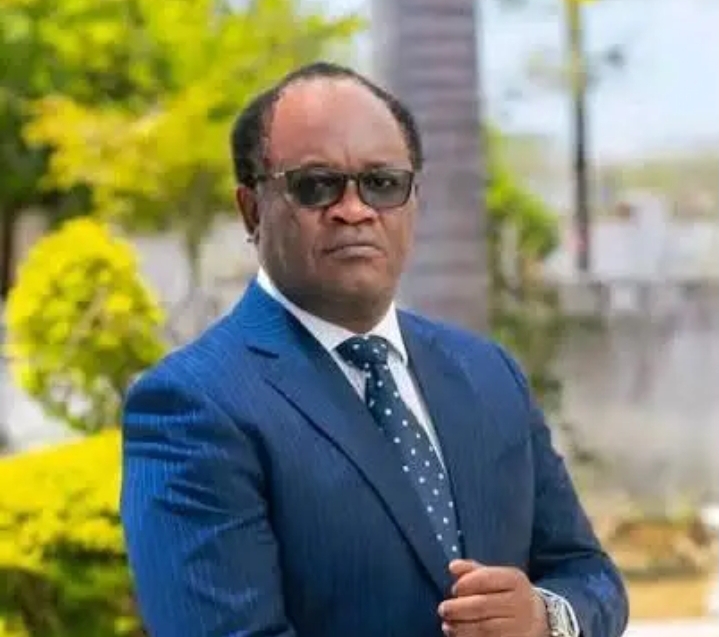
By Larry Mweetwa
MUNDUBILE DESERVES CREDIT FOR A GOOD FIGHT — BUT THERE IS A BIGGER LESSON ABOUT SUCCESSION
Brian Mundubile deserves genuine credit for the political fight he has put up. Whatever one’s political affiliation, democracy is strengthened when an opposition candidate is prepared to organise, campaign, challenge the incumbent and present himself before the people as an alternative.
He fought. He mobilised. He remained in the contest. And for that, he deserves respect.
“There is honour in fighting a difficult battle well, even when the mountain proves too steep to climb.”
However, the Mundubile camp must eventually undertake an honest post-election assessment. In my view, one of its biggest strategic disadvantages was not necessarily created during the campaign itself. It was created much earlier through the unresolved question of succession within the PF political family.
Former President Edgar Chagwa Lungu commanded a substantial and loyal political following. But leadership is not only about building followers; it is also about preparing those followers for the leadership that comes after you.
“A great leader does not only build a throne; he builds a bridge to the next generation.”
The failure to settle the succession question early cost the PF-Mundubile political formation valuable time.
Instead of having a clearly identified successor who could immediately begin consolidating structures, rebuilding constituencies, recruiting candidates, mobilising resources and developing a fresh national message, considerable political energy was consumed by internal uncertainty, competing centres of influence, alliances and attempts to rebrand the old political identity.
That time could never be recovered.
Elections are not won in the final weeks of campaigning. They are won in the years of organisation before the campaign begins.
“You cannot plant a tree during the storm and expect to shelter beneath it the same afternoon.”
Had ECL decisively identified and prepared a successor earlier—or had the political family established a credible and orderly mechanism for choosing one—the eventual candidate could have inherited something far more valuable than a political endorsement: time.
Time to build branches.
Time to penetrate wards and polling districts.
Time to develop young leaders.
Time to establish campaign machinery.
Time to define policies.
Time to raise resources.
And, most importantly, time to establish an independent relationship with the Zambian voter.
Instead, Mundubile eventually faced the difficult task of simultaneously introducing himself as a national alternative, consolidating a fragmented political constituency, defending the record of the past and selling a vision for the future. That is an enormous political burden for any candidate.
ECL’s popularity could provide Mundubile with a political foundation, but it could never substitute for Mundubile building his own political identity.
“You may inherit someone’s supporters, but you cannot inherit their relationship with the people.”
This is where the rebranding exercise arguably consumed too much strategic oxygen. The fundamental question should never have been simply, “How do we recreate ECL’s political movement?” It should have been, “How do we build the next generation of this political movement?”
Those are very different questions.
A successor cannot permanently campaign as the custodian of another man’s legacy. At some point, he must stand before the electorate and answer:
“Who are you? What do you believe? And what Zambia are you asking us to build with you?”
Mundubile nevertheless deserves considerable credit because, despite these structural disadvantages, he put up a serious fight. His campaign demonstrated that there remains an opposition constituency that can be organised into a formidable political force if the lessons of this election are properly understood.
The lesson for the PF-Mundubile group should therefore not simply be about who won or lost. It should be about succession, institutionalisation and political renewal.
“Movements that depend entirely on one leader eventually inherit his absence; movements that build institutions inherit his strength.”
And there is an equally important lesson for UPND: never become complacent because an opponent was organisationally weaker today. Political circumstances change. Governments retain public confidence by delivering development, jobs, economic opportunity, competent public services and accountable leadership.
Victory should produce humility, not arrogance. Defeat should produce reflection, not bitterness.
Mundubile fought a good fight and deserves acknowledgement for it. But perhaps the greatest lesson from his campaign is this:
“The best time to prepare a successor is while the leader is still strong; the worst time is when circumstances suddenly demand one.”
In politics, succession delayed can easily become opportunity lost.
He certainly gave his best shot, but it was not his time. What is important now is how he holds the alliance together in the next five years as an opposition. He deserves a credit. He will loose honourably. Perhaps more important is the choice of his running mate.
Very beautiful analysis.PF shot themselves in the foot by crying ALEBWELELAPO ECL.Should have gone for a convention when ECL resigned from partisan politics.