

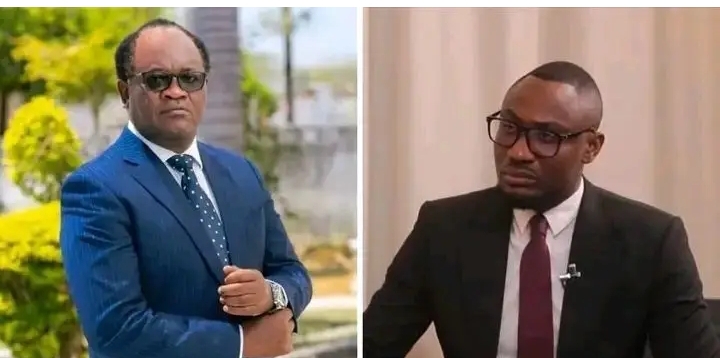
🇿🇲 INSIGHT | Mundubile’s BBC Moment Raises a Bigger Question
Presidential campaigns are built on rallies. Leadership, however, is often tested in interviews.
Brian Mundubile’s appearance on the BBC’s Focus on Africa was one of the few opportunities during this campaign to present his economic vision before an international audience. It was also an opportunity to introduce Zambia’s opposition to investors, diplomats, regional observers and millions of viewers who may never attend a campaign rally. Instead, the interview has generated widespread discussion because of what was missing rather than what was said.
BBC journalist Dingindaba Jonah Buyoya did not ask unusual questions. He asked the questions every undecided voter would expect a presidential candidate to answer. What economic policies would your government implement differently? What lessons did you learn after serving in government for ten years? How would your administration reduce inflation and the cost of living? Those were policy questions. They required policy answers.
Instead, the interview repeatedly returned to one theme.
“We will put women, youth and the poor at the centre.”
The phrase was repeated when the interviewer asked about economic policy. It was repeated when he referred to the previous Patriotic Front administration’s economic record. It was repeated when he asked what specific programme would distinguish a Mundubile presidency from the government in which he had served as Cabinet Minister. Even after being asked directly, “What are the actual policies?” the response remained focused on women, youth and the poor rather than explaining how the economy would be managed.
There is nothing wrong with placing women, young people and vulnerable households at the centre of public policy. Every serious political party does. The UPND says it does. The Socialist Party says it does. Citizens First says it does. The question was never who should benefit. The question was how government would deliver those outcomes.
What makes the interview particularly intriguing is that the Tonse Alliance already published a manifesto. That document contains positions on agriculture, mining, taxation, governance, education, health, infrastructure and public administration. Whether one agrees with those proposals or not, they exist. The obvious expectation was that the party’s presidential candidate would draw from that document when challenged to explain his economic programme before an international audience.
That did not happen.
The interview therefore leaves an unavoidable question. If the manifesto already provides policy positions, why were those positions not presented? Was it a missed opportunity under pressure? Was it a communication failure? Or does it reveal a wider gap between the party’s written programme and the campaign’s public messaging? These are legitimate questions because manifestos are not written simply to be launched. They are written to guide campaigns and explain how a government intends to govern.
The timing also matters. Throughout this campaign, the alliance has announced an ambitious catalogue of promises. Civil servants have been promised a 30 percent salary increase. Farmers have been promised a K500 FRA maize price. Water utility debts have been earmarked for cancellation. Free uniforms and books have been promised for school children. Illegal miners have been assured they would return to gold fields. A new Miners’ Day has now been added to that catalogue. Each promise carries financial, legal and administrative implications. The BBC interview presented an opportunity to explain how those commitments fit into a coherent economic programme. Instead, the discussion never moved beyond broad statements of compassion.
Presidential elections ultimately ask two different questions. The first is whether a candidate understands the problems facing the country. The second is whether the candidate understands how to solve them. Most politicians comfortably answer the first. The second is where leadership is examined.
At The People’s Brief, we believe voters deserve more than applause lines and campaign slogans. They deserve to understand how competing visions would be financed, implemented and sustained. Manifestos should not remain documents for launch ceremonies.
They should become living policy references capable of withstanding public scrutiny. When candidates step onto international platforms, they are not merely representing themselves or their political parties. They are presenting Zambia to the world.
That is why interviews matter. They reveal not only what politicians believe, but whether they are prepared to govern.
© The People’s Brief | Ollus R. Ndomu