

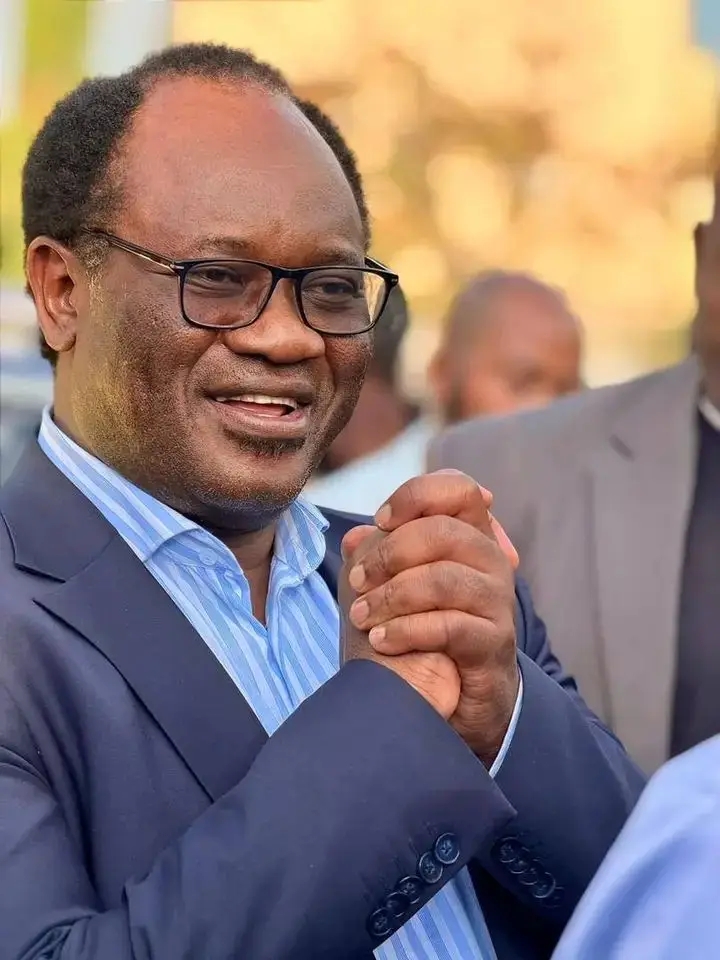
EXPLAINER | Mundubile’s Debt Swap Promise & Zambia’s Debt Reality
Brian Mundubile’s proposal to revive a debt swap programme for civil servants may be one of the most politically attractive promises of the 2026 campaign. Public workers burdened by loan deductions, rising household costs, and delayed benefits would undoubtedly welcome relief.
The problem is that Zambia’s recent economic history makes such promises impossible to evaluate without asking a more difficult question: who pays?
Speaking this week on Millennium TV, the NRPUP presidential candidate argued that many civil servants have become trapped in debt because government owes them money and has failed to adequately address long-standing obligations.
“If you look at the civil servants today, they are drowning in debt. They are highly indebted because government owes them money, and as a result they have had to go and borrow,” Mundubile said.
His solution is a debt swap programme under which government would settle obligations owed to civil servants while also assuming debts accumulated from commercial lenders.
For many voters, the proposal sounds familiar.
That is because debt swaps formed part of former President Edgar Lungu’s campaign messaging ahead of the 2021 election. The idea generated considerable public discussion at the time, particularly among civil servants facing mounting financial pressures.
But there is an important distinction. The programme was proposed. It was never implemented.
By the time Zambians went to the polls in August 2021, the PF government was confronting a severe fiscal crisis. Public debt had escalated dramatically. Government arrears had accumulated. Confidence in public finances had weakened. Most significantly, Zambia had become the first African country to default on its Eurobond obligations during the pandemic era.
This default was not a minor event.
It effectively locked Zambia out of international capital markets, damaged investor confidence, and triggered years of complex restructuring negotiations with bondholders and official creditors. The debt burden that today’s government continues to manage was largely accumulated during the period when many of the current opposition leaders, including Mundubile himself, occupied senior positions within the PF administration.
Such a historical context matters because economic credibility is often built not only on what politicians promise, but also on the fiscal record they leave behind.
The irony is difficult to ignore.
While Mundubile is proposing that government absorb private debts accumulated by civil servants, the current administration is simultaneously pursuing the opposite objective at the national level: reducing debt obligations.
Since taking office, President Hakainde Hichilema’s government has completed one of Africa’s most closely watched sovereign debt restructurings. More recently, authorities announced plans to buy back more than US$1.3 billion in Eurobonds before maturity, a move designed to reduce future interest costs and strengthen Zambia’s balance sheet.
One approach seeks to transfer liabilities onto government. The other seeks to remove liabilities from government.
Neither approach is automatically right or wrong. But they represent fundamentally different philosophies of public finance.
The unanswered question in Mundubile’s proposal is therefore not whether civil servants deserve assistance. Many clearly do. The real question is how much the programme would cost and where the money would come from.
Would government assume billions of kwacha in private debt? Would taxpayers effectively underwrite personal loans? Would the programme apply only to verified work-related debts or to all forms of borrowing? Would banks absorb part of the cost? Would the Treasury issue new debt to finance the intervention?
So far, no detailed framework has been presented.
That absence becomes even more significant when viewed alongside the broader economic promises emerging from the campaign. Debt swaps. Teacher upgrades. Youth empowerment programmes. Mining formalisation. Expanded social interventions. Each proposal addresses a legitimate issue. Together, however, they carry substantial fiscal implications.
Ft ft
This is where campaigns move from politics into economics.
Every kwacha spent on debt relief is a kwacha unavailable for roads, schools, hospitals, electricity infrastructure, or debt reduction. Governments can choose those trade-offs. They cannot avoid them.
Mundubile is right to identify indebtedness among civil servants as a real problem. He is also right that unresolved teacher upgrade backlogs remain a source of frustration across the public sector.
But identifying a problem and financing a solution are two different tasks.
The lesson from Zambia’s recent history is that good intentions alone do not balance budgets. The PF years demonstrated how quickly borrowing can become a national crisis when spending commitments outpace fiscal capacity.
It is for this reason voters should demand more than promises. They should demand numbers.
Because in the end, the success of any economic proposal is not measured by applause at a campaign rally. It is measured by whether the Treasury can afford it.
—For story tips, opinion submissions, advertising, partnerships, or corrections:
editor.peoplesbrief@gmail.com
Strong journalism depends on informed readers, trusted partners, and community support.
© The People’s Brief | Ollus R. Ndomu
Verified. Contextual. Independent.