

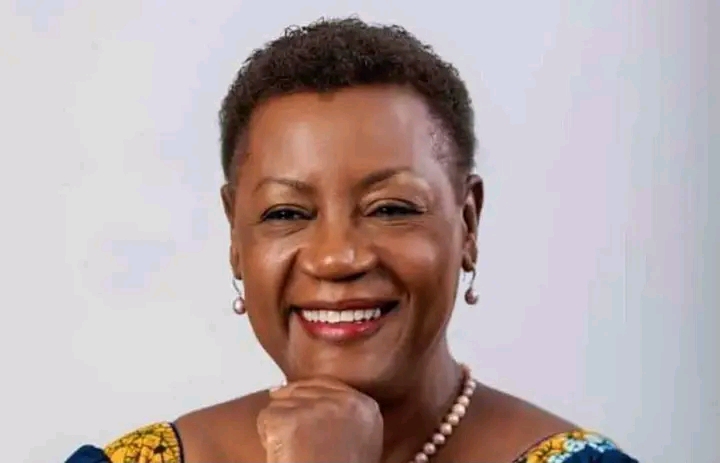
MOVING THE DAY OF NATIONAL PRAYERS TO 29 DECEMBER 2026 – WHAT IT REALLY MEANS
CHISHALA KATEKA
President – New Heritage Party
The observance of the Day of National Prayer, Fasting, Repentance and Reconciliation has been moved to 29 December from October 18. 29 December was the day that Zambia was declared a Christian Nation, which declaration is enshrined in the Preamble of Zambia’s National Constitution.
The response by Zambians to this move, has been divided, with the Government and some individuals defending this while a large number of the Clergy, political figures and some individuals, have opposed it.
As usual, we need to look at the bigger picture – not just the moving of the date from 18 October to 29 December. What was the real motive?
According to the Government and the Church Mother Bodies, the justification for this move has been as follows:
• The consolidation of this day with the commemoration of the Declaration of Zambia as a Christian Nation is an alignment due to both events sharing similar spiritual and national values;
• This move also presents a budgetary and administrative integration
I would like to add my understanding and voice to this national debate.
Every person’s position regarding this, will be informed by their worldview. My own worldview is spiritual. I am a Christian and therefore I look at issues from that perspective. I have come to accept that the highest laws of our nation are not those espoused by the Constitution but are in fact spiritual laws.
Spiritually, October is (considered) as an important month on the calendar and therefore, the placing of the day of prayers, in October, was significant in that regard.
The three ECL legacies considered to be spiritually significant
ECL’s government introduced
i. The Ministry of National Guidance and Religious Affairs;
ii. The Day of National Prayer, Fasting, Repentance and Reconciliation; and
iii. The commissioning of and commencement of the building of the House of Prayers
After the UPND took over the administration of the Government, we have seen:
• The Ministry of National Guidance and Religious Affairs dissolved in September 2021. It is worth noting that some of its core functions were converted into a Department of National Guidance and Religious Affairs under the Office of the Vice-President;
• The building of the House of Prayer completely abandoned; and now
• The observance of the Day of National Prayer, Fasting, Repentance and Reconciliation has been moved to 29 December from October 18, with the new title of the 29 December commemoration to be known as the National Day of Prayer and Christian Heritage.
Each government administration has the leeway to make changes to the system of Governance, in order to attain its goals, as it sees fit as long as it is within the bounds set by the Zambian Constitution. Clearly, the above 3 actions are within the bounds set by our Constitution.
Individually, each one of the above 3 actions can, financially, logically and objectively be justified. They all make sense.
When looked at collectively, however, these moves are sending a very subliminal message, if we care to pay attention. Where is Zambia being taken to?
I do not believe that this is simply about the erasure of ECL’s legacy. ECL may have used the establishment of the above 3 for political mileage as some have charged, but from a spiritual standpoint, he certainly did what was right – just as FTJ did in 1991 before him.
The declaration of Zambia as Christian Nation has been hotly debated from 1991 to date with many reasons advanced as to why the Declaration should be reversed. I could but do not want to go into the details of that debate save for one of the reasons advanced by the naysayers. The one that states that the Declaration was made by one man – without the consultation and support of the people.
This argument fell away in 2006 when the Mungomba Commission traversed the country to enquire with regards to how Zambians wanted to be governed. One of the questions posed, was whether the Christian Nation Declaration should be removed from the Constitution.
The results: 736 people called for the retention of the declaration of Zambia as a Christian Nation in the Constitution, while 142 opposed it. At the point where the majority indicated that they wanted to maintain it, ownership of this Declaration was taken away from FTJ to the people of Zambia – they now owned it.
Here is the interesting thing about this that many people may not be aware of – in spite of the above numbers, the Mungomba Commission still went on to recommend the removal of the Christian Nation Declaration citing the minority non-Christian communities. Here is what happened, Zambians rose up in large numbers across the country, we petitioned, we marched, we held prayer vigils (Woodlands Stadium has never been filled to the extent that it was then) to give pushback to this. Seeing the response from Zambians, LPM opted to go with the majority of Zambians and maintained the Christian Nation Declaration in the Constitution.
It is important to give this backdrop in order for Zambians to understand what their legacy is and in order for those currently with the powers to change the laws of this nation, know who we are as a people and what we deem as important. God and how He expresses Himself in this nation, is very important to us.
We see the observance of the Day of National Prayer, Fasting, Repentance and Reconciliation, on 18 October, as a layer to the Declaration of Zambia as a Christian Nation.
We still have a Day of Prayers regardless of the date– right?
One may say that the Day of Prayers has not been abolished but has merely been moved to 29 December.
Zambians need to understand that God ordained days for the observance of certain feasts and activities and He did that for a reason. He communicated this to whoever was head of his people at the time, not through his priests nor His Prophets. God judges a nation, not through what the priests or prophets (Clergy) do but through what the King (President) does – whether it is right or wrong in His sight.
One cannot move Easter to be celebrated at Christmas merely because they are both seen and observed as Christian proceedings. Ecclesiastes 3 tells us that there is a time for every matter under heaven. One cannot move the celebration of one’s wedding day to your birthdate, simply because you are the same person!
“Cursed be anyone who moves his neighbor’s landmark” Deut 27:17. Metaphorically speaking, this merging of two events entails the moving of a spiritual ‘landmark’.
Now, we as Zambians gave or devoted this Day of 18 October to God. It is therefore holy (set apart) to the Lord. “But no devoted thing that a man devotes to the Lord, of anything that he has…..shall be sold or redeemed; every devoted thing is most holy to the Lord.” Leviticus 27:28.
“Redeemed” in this case means, we have taken away 18 October and instead given 29 December. From our thinking, this seems okay but what about from God’s perspective?
You see, when you break spiritual laws, the consequence of the infraction of those laws will always come to bear, even if what is done is legal. In other words, it is possible to have actions perpetrated by the state but which are contrary to spiritual laws.
Conclusion
What I have written stems from my world view and those with ears to hear, will hear. Those that have spoken on this matter, the Lord bless you as He always does not leave Himself without a witness. You have warned as you so felt led as I have.
The question still stands though. Where is Zambia being taken to, spiritually?
My call to all Zambians that believe in the significance of 18 October, continue to observe 18 October as the Day of National Prayer, Fasting, Repentance and Reconciliation – for so it was set. The Government, legally, has the power to cancel the holiday, which it already has, but does not have the spiritual wherewithal to determine when you can and should pray or fast.
Let us be on the lookout for any attempts to remove the declaration from our Constitution of Zambia as a Christian Nation. Let us jealously safeguard that Declaration because, so we chose to be.
17 October 2026.
Firstly I would like to know the distance difference between prayers day and Christians day. In my understanding when you say prayer you refer to Christianity and when you say Christianity you are simply referring to praying, then if that’s correct what’s the reason of having two different days for the same thing. Or maybe since one was declared by a dagger smoker and the other by a drunkard we should keep one for smokers for chiluba and the other for the drunkards for lungu or we combine them into one for hh who is a well know church goer with known responsibility in the worshipping world.
If you want to scam Zambians, do it via religion.
The only thing this fake krishianity has done is make us easy targets for religious scammers. It is open season in Zambia. The gullible used to charter planes to go and see TB Joshua. Kagame requires religious leaders to have verified qualifications. In Zambia a junkie can open a church without scrutiny of their background.
We have Saturday and Sunday.
We have several religious public holidays scattered throughout the year.
You add day to commemorate declaration of krishian neshen.
Then you add national day of prayer.
When will this madness stop?
I will borrow the words of Paul to Galatians when there was some controversy on the issue of circumcision: he told the Galatians off that whether you circumcise or not Christ shall profit you nothing. Circumcision or uncircumcision availeth nothing…… Galatians 5:2 Behold, I Paul say unto you, that if ye be circumcised, Christ shall profit you nothing. in the same vein, whether you pray on 18th October or not, Christ shall profit you nothing. Praying on 18th October or on 29th December availeth nothing, these ordinary days put by man (politician) and not God. Both of these days don’t add any value both to our individual and national Spiritual well being. Those who want to honor them just as we do with Christmas can continue doing so, they are free to do so. But in terms of Spiritual gain, there is nothing at all. Moreover God already gave us a day of prayer not only for our country Zambia but fire the entire world. We are better off and safe to stick to what God said or put than what man put. And the day God gave us on which to worship him is enough for us, I don’t think we need another one.
Then on the house of prayer, it’s equally not necessary, Zambians through their various churches already have adequate houses or Churches where they congregate and pray to their God. And expect the government to build and complete the house of prayer is just a confirmation that the matter is political and not spiritual. Even if that house of prayer was completed, it’s just one house in Lusaka, is God only found in Lusaka? Christ himself told the woman of Samaria that time was coming and it had come worshipers will no longer worship on the mountain of Samaria or go to the Temple in Jerusalem. God is Spirit and all those who worship him should worship him in Spirit and in truth. We don’t need that physical temple in Jerusalem any more, it’s not necessary in our new covenant with God. Some Zambians were or are still planning to assassinate the President the same person whom they want to complete or the one whose government they want to complete the house of prayer, is that not hypocrisy of the highest order? Let’s continue worshiping God the way we have been worshiping him, he knows them that faithfully worship him.
Both days were creations of politicians for purely political reasons. Absolutely nothing to do with God.
Why do you think it is the politicians and politically connected individuals who are driving this agenda? The prayer day is neither here nor there in God’s scheme of things.
The two days are merely Messrs Chiluba’s and Lungu’s remembrance days hence the vehement resistance from those closely associated with them.
It would be good to just scrap them from our calender. They serve no spiritual purpose but they might cause us to incur God’s wrath for taking our commitment lightly and misusing His name for political ends.
You have a point: these are two redundant political gimmicks for weak and vulnerable people. They hardly add any value to religion or people’s lives.