

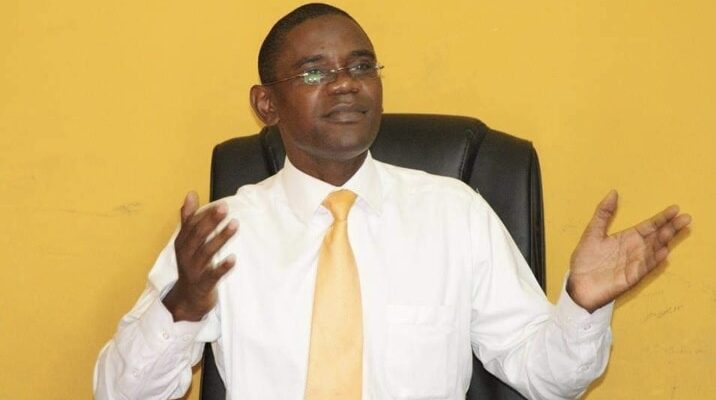
MY REBUTTAL TO JCTR ON THE RETENTION OF THE PRESIDENTIAL TERM LIMIT
I have carefully read the position advanced by the Jesuit Centre for Theological Reflection (JCTR) regarding the retention of the presidential term limit.
While I appreciate their contribution to this important national debate, I fundamentally disagree with some of their arguments, particularly the proposition that Article 106(3) is an indispensable safeguard of democracy.
I. IS DEMOCRACY ABOUT CHANGING LEADERS OR CHOOSING LEADERS?
Article 106(3) of the Constitution states:
“A person who has twice held office as President is not eligible for election as President.”
What I struggle to understand is how the automatic disqualification of an otherwise qualified individual constitutes a safeguard of democracy, regardless of that individual’s performance, competence and popularity among the electorate.
Does the value of democracy reside in changing leaders periodically, or does it reside in allowing citizens to determine who should govern them?
What inherent democratic or developmental benefit does society derive from changing a successful leader simply because that leader has served two terms?
Should citizens be compelled to replace a competent leader merely to satisfy a constitutional requirement for leadership renewal?
In my understanding, democracy must guarantee the possibility of changing leaders, but it should not necessarily impose their replacement.
The freedom to remove a leader must be accompanied by the freedom to retain a leader.
II. ARTICLE 106(3) RESTRICTS DEMOCRATIC CHOICE
In my view, Article 106(3) introduces a discriminatory distinction in electoral competition by excluding individuals solely on account of their previous presidential service, even when they otherwise possess the qualifications to contest.
This restriction affects not only the prospective candidate but also the citizens who may desire to elect that individual.
Article 45(1)(a) requires an electoral system that protects the free exercise of citizens’ political rights, while Article 46 guarantees eligible citizens the right to vote.
Article 106(3), however, restricts the available choices before those citizens.
While this restriction is constitutionally valid under the existing framework, I believe it creates a fundamental tension with the broader democratic principle of popular sovereignty.
If a President has performed exceptionally well and the majority of Zambians desire his continued leadership, why should the Constitution prevent them from expressing that preference through the ballot?
Why should previous service become a ground for disqualification, rather than an asset to be evaluated by the electorate?
III. ELIGIBILITY FOR RE-ELECTION IS NOT AN INCREASE IN EXECUTIVE POWER
One of the recurring arguments advanced by JCTR, the Church and some civil society organisations is that removing the presidential term limit would lead to the concentration of power in one individual.
However, Article 106(3) regulates eligibility for election. It does not define the executive powers of the President.
Removing this provision would not, in itself, confer additional executive powers upon the President.
It would not automatically give the President control over Parliament, the Judiciary or other constitutional institutions.
Neither would it guarantee his continued stay in office.
The President would still be required to subject himself to an election every five years, competing against other candidates and seeking a fresh mandate from the people.
Certainly, prolonged incumbency may create political advantages and risks of institutional capture. However, these risks must be addressed through effective checks and balances, institutional independence and electoral reforms.
Being eligible to contest an election is not the same as being entitled to win it.
IV. THE HISTORICAL EXPERIENCE OF DR. KENNETH KAUNDA
JCTR refers to Zambia’s historical experience under the leadership of Dr. Kenneth Kaunda, particularly during the one-party political system.
However, we must distinguish between the absence of a presidential term limit and the absence of meaningful multiparty electoral competition.
These are two fundamentally different issues.
Whatever political and economic shortcomings characterised Dr. Kaunda’s administration cannot automatically be attributed to his 27-year tenure.
We must examine the political system, economic circumstances, constitutional arrangements and institutional weaknesses that existed during that period.
Equally, we must acknowledge the substantial achievements of his administration in infrastructure development, education, healthcare, industrialisation and national unity.
His prolonged leadership provided an opportunity to initiate and implement numerous long-term national projects.
Furthermore, when competitive multiparty elections were restored in 1991, the Zambian people voted Dr. Kaunda out of office despite his 27 years of incumbency.
That historical experience demonstrates the importance of competitive elections as an instrument of democratic accountability.
We must not confuse longevity in office with the absence of democracy.
V. EXPERIENCE, CONTINUITY AND THE COST OF LEADERSHIP CHANGE
Where do we place the value of experience, institutional knowledge, international relationships and policy continuity in this particular debate?
Developing countries such as Zambia require long-term planning and sustained implementation of development programmes, some of which take considerably longer than ten years to achieve their intended objectives.
Changes in political leadership can result in:
▪️ Abandonment or suspension of development projects.
▪️ Reversal of economic and administrative policies.
▪️ Changes in senior government personnel.
▪️ Additional expenditure arising from administrative restructuring and separation of personnel.
▪️ Disruption of established international and investment relationships.
▪️ Loss of experience and institutional knowledge.
I agree with JCTR that sustainable development should be anchored in strong institutions rather than individual personalities.
However, strong institutions and experienced leadership are not mutually exclusive. They can complement each other.
Leadership renewal is not necessarily synonymous with progress, just as leadership continuity is not necessarily synonymous with stagnation.
Why should we deny ourselves the benefit of experienced and successful leadership when the people themselves desire its continuation?
VI. ELECTORAL WEAKNESSES MUST BE ADDRESSED DIRECTLY
JCTR raises concerns about incumbency advantages, electoral fairness and the independence of certain institutions.
These are legitimate matters deserving attention, irrespective of whether the presidential term limit is retained or removed.
However, retaining Article 106(3) does not automatically eliminate incumbency advantages during a President’s first or second term.
Nor does changing the presidential candidate necessarily eliminate the advantages enjoyed by a governing political party.
▪️ If the problem is an uneven electoral playing field, let us level the playing field.
▪️ If the problem is the abuse of state resources, let us strengthen the laws against such abuse.
▪️ If the problem is institutional interference, let us reinforce institutional independence.
▪️ If the problem is unequal media coverage, let us guarantee equitable access to public media.
These safeguards would strengthen democracy regardless of who is President or how many terms that person has served.
VII. REMOVING THE TERM LIMIT IS NOT EXTENDING THE PRESIDENTIAL TENURE
It is important that JCTR and other stakeholders distinguish between Article 106(1) and Article 106(3).
My position is that Article 106(1), which provides for a five-year presidential term, should be retained.
However, Article 106(3), which restricts an individual from being elected President after having twice held that office, should be removed.
Every five years, the President must return to the people to account for his performance and seek a fresh mandate.
There should be no automatic extension of office and no guaranteed presidency for life.
The mandate must always come from the people.
CONCLUSION: LET THE PEOPLE DECIDE
I agree with JCTR that the presidency is a public office entrusted to an individual for the service of the people. It is not the personal property of the officeholder.
It is precisely for this reason that I believe the people should determine whether that individual deserves another mandate.
The ultimate objective of democracy should not be to guarantee the departure of a particular individual after a predetermined number of terms, but to guarantee that no individual remains in office against the freely expressed will of the people.
If a President performs poorly, the people should remove him.
If a President performs exceptionally well, the people should have the option of retaining him.
If a better candidate emerges, the people should have the freedom to elect that candidate.
Let us strengthen our democratic institutions, preserve the five-year electoral cycle, safeguard electoral competition and entrust the ultimate decision to the Zambian people.
DEMOCRACY SHOULD GUARANTEE THE CITIZENS A CHOICE, NOT IMPOSE A CHANGE.
Let’s make this our slogan:
TERM LIMIT — LET THE PEOPLE DECIDE!
TAYALI THE MARRIED MAN – FAMILIES MUST COME FIRST
TAYALI THE POLITICAL ENGINEER
TAYALI THE PUBLIC LAWYER OF THE PUBLIC COURT OF OPINIONS