

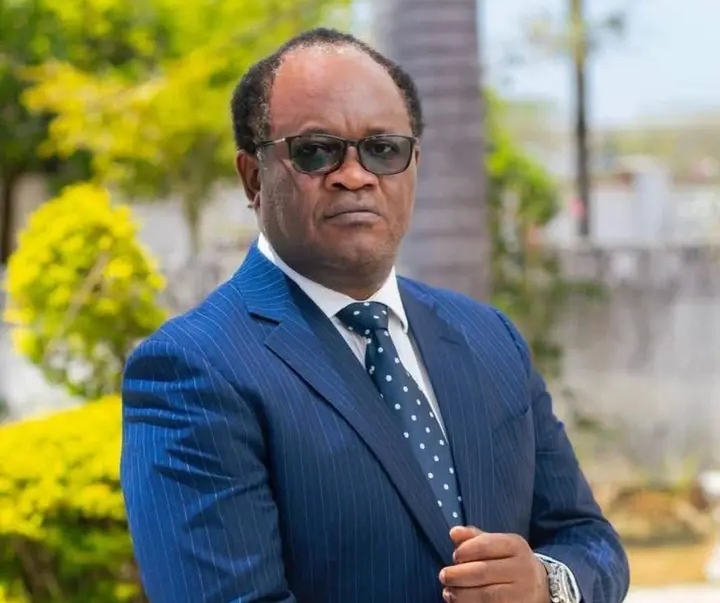
OPEN LETTER TO BRIAN MUNDUBILE AND THE TONSE ALLIANCE
A CALL FOR A NATIONAL INDABA, GOVERNMENT OF NATIONAL UNITY AND A COMPLETE DEMOCRATIC RESET
As Zambia prepares to make an important democratic choice, I wish to place on record an appeal to Mr. Brian Mundubile and the Tonse Alliance.
Should the people of Zambia entrust you with the responsibility of forming the next Government, I urge you to recognise that the task before you will be much greater than simply changing the occupants of State House.
Zambia will need a national reset.
The country will need healing, reconciliation, institutional reform, decentralisation and a deliberate effort to restore confidence in our constitutional democracy.
1. CONVENE A NATIONAL INDABA
One of the first undertakings of the new administration should be the convening of a genuine National Indaba.
It should bring together political parties, the Church, traditional leaders, civil society, constitutional experts, professional bodies, local government representatives, young people, women, the business community and other representatives of our society.
The Indaba should honestly confront the political, constitutional, economic and governance challenges that have divided our country and develop a national consensus on the Zambia we want to build.
It should not become another political conference whose recommendations gather dust.
It must produce a clear programme for national reconciliation, constitutional reform, decentralisation, institutional independence and democratic renewal.
2. CONSIDER A GOVERNMENT OF NATIONAL UNITY
I further appeal to Mr. Mundubile and the Tonse Alliance to seriously consider establishing an inclusive Government of National Unity.
If we truly want to reset Zambia, we cannot govern on the principle that only those belonging to the victorious political camp have something to contribute.
There are capable and patriotic Zambians across political parties, civil society, academia, the professions, business and our communities.
Bring the best minds together.
A Government of National Unity should not mean abandoning the mandate given by voters. It should mean exercising that mandate with humility and recognising that rebuilding Zambia requires the participation of more than one political organisation.
3. REFORM AND STRENGTHEN STATE INSTITUTIONS
Our institutions must become stronger than the individuals temporarily entrusted with leading them.
The Judiciary must function independently, without political pressure, intimidation or selective application of justice.
Parliament must reclaim its constitutional responsibility of representing the people, making laws and holding the Executive accountable.
The Electoral Commission must command the confidence of all political participants, not merely those in government.
The Police and other law-enforcement and investigative institutions must serve the Constitution and the people, not political interests.
Appointments to important public institutions should increasingly be based upon competence, integrity and constitutional principles rather than political loyalty.
4. RESTORE THE IMPORTANCE OF LOCAL GOVERNMENT AND DEVOLVE POWER
A genuine national reset cannot take place if political, administrative and developmental power remains excessively concentrated in Lusaka.
Local government must become a genuine centre of governance and development.
Councils must be strengthened financially and administratively so that communities can meaningfully participate in decisions affecting their roads, markets, water, sanitation, health facilities, local infrastructure and economic development.
Decentralisation must move beyond political speeches.
Resources and appropriate decision-making authority must reach provinces, districts, constituencies, wards and communities.
The people closest to a problem are often best positioned to understand what solutions their communities require.
A new Government should therefore undertake a serious review of local government financing, accountability and administrative capacity so that councils can perform their constitutional and developmental responsibilities effectively.
Zambia cannot be successfully governed only from Lusaka.
Development must begin where the people live
5. RECOGNISE CHIEFDOMS AND TRADITIONAL LEADERSHIP AS PARTNERS IN NATIONAL DEVELOPMENT
Our national reset must also recognise the important place of chiefdoms and traditional leadership in Zambia.
Traditional leaders are not merely ceremonial figures.
Chiefdoms remain important institutions of community organisation, cultural identity, customary governance, land stewardship, conflict resolution and local development.
Yet too often, traditional leadership is remembered when politicians need access to communities and forgotten when national policies and development programmes are being formulated.
That relationship must change.
Chiefs and traditional authorities should be respected as important partners in national and local development while preserving the constitutional distinction between traditional leadership and partisan politics.
Government should establish stronger and more structured consultation between traditional authorities, councils, provincial administrations and central Government.
Traditional leaders should have meaningful avenues through which they can communicate the developmental priorities of their communities.
At the same time, Government must respect the autonomy, succession processes, customs and traditions of chiefdoms and avoid unnecessary political interference in traditional leadership matters.
Our chiefdoms preserve histories, identities and systems of community leadership that existed long before modern political administrations.
They must therefore have an appropriate place in Zambia’s national development conversation.
6. BUILD DEVELOPMENT FROM THE CHIEFDOM AND WARD UPWARDS
The national reset should introduce a stronger bottom-up approach to development.
Instead of Lusaka deciding everything and sending decisions downward, communities should participate in identifying their priorities and feeding them upward through traditional structures, wards, councils, districts and provinces.
Imagine a Zambia where every chiefdom, ward and district has a clearly defined development plan connected to the national development agenda.
Traditional leaders, councillors, community organisations, churches, young people, women and local businesses could participate in identifying priorities such as schools, clinics, roads, agriculture, water, communications and economic opportunities.
National development would then become something communities participate in, rather than something Government simply announces to them.
That should be part of the new Zambia we build.
7. NO REVENGE — BUT ACCOUNTABILITY MUST REMAIN
I particularly appeal to the next Government:
Do not use State institutions to settle political scores.
Zambia must end the cycle in which today’s opposition becomes tomorrow’s Government and then uses the same institutions it previously accused of being abused.
Where there is credible evidence of corruption, abuse of office or criminal conduct, let independent institutions investigate and let the courts determine guilt or innocence through due process.
Accountability must never become vengeance, and reconciliation must never become immunity from the law.
The law must apply equally to everyone.
8. BEGIN A GENUINE CONSTITUTIONAL REFORM PROCESS
The National Indaba should also begin an inclusive discussion about constitutional reforms capable of protecting our democracy regardless of who governs.
We need constitutional arrangements that strengthen checks and balances, protect fundamental freedoms, reinforce separation of powers, strengthen decentralisation and reduce opportunities for excessive concentration of authority.
The constitutional conversation should also examine how local government and traditional leadership can be better integrated into our governance and development architecture without compromising their independence or constitutional roles.
We must build institutions capable of saying NO even to a sitting President when the Constitution demands it.
That is the democracy Zambia deserves.
9. LET THIS BE A GOVERNMENT FOR ALL ZAMBIANS
Should Brian Mundubile and the Tonse Alliance receive the people’s mandate, remember that from the moment you assume office, you will no longer govern only those who voted for you.
You will govern every Zambian.
Those who supported you.
Those who opposed you.
Those who criticised you.
Those living in our cities.
Those living in our villages and chiefdoms.
And those who never participated in politics at all.
There must be no second-class citizens because of political affiliation, tribe, region or opinion.
MY FINAL APPEAL
Mr. Brian Mundubile and the Tonse Alliance:
If the Zambian people give you the opportunity to form Government, do not simply change the Government — change the culture and structure of governance.
Do not replace one political establishment with another.
Build institutions.
Restore constitutionalism.
Protect political freedoms.
Reform Parliament.
Safeguard judicial independence.
Professionalise State institutions.
Strengthen local government.
Devolve meaningful authority and resources to communities.
Respect and empower chiefdoms as partners in development while protecting traditional leadership from partisan political interference.
Reconcile the nation.
And bring Zambians together through a National Indaba and an inclusive approach to Government
Let Zambia finally break the cycle of political retaliation and excessive centralisation of power.
Let reconciliation replace revenge.
Let institutions replace personalities.
Let constitutionalism replace political expediency.
Let decentralisation bring Government closer to the people.
Let our chiefdoms have a respected voice in national development.
Let national service replace partisan entitlement.
And let Zambia belong to every Zambian again.
This should be our National Reset.
ONE ZAMBIA, ONE NATION.
Rev. Dr. Kelvin Mugala
Clergy and Advocate for Good Governance & Constitutional Rights
Excellent write up….fear is a CANCER that should never ever be embraced in any society….another Dawn is at yet hand in the coming few weeks….Insh’Allah….Zambians, we are stronger together!!
Kwacha ngwee….may His Light shine upon our beloved nation tomorrow and thereafter!!