

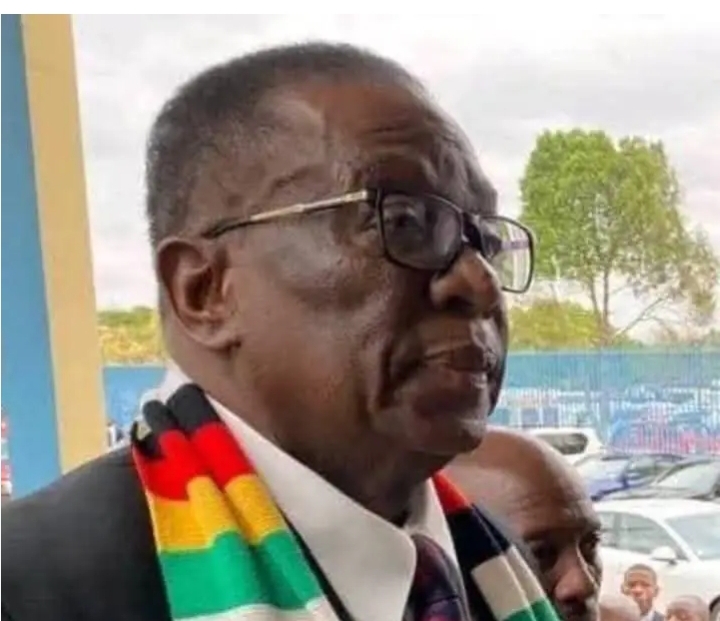
Opposition challenges Constitutional Amendment No. 3 in Constitutional Court, seeks to nullify Mnangagwa’s term extension
OPPOSITION National Constitutional Assembly (NCA) National Executive Committee member Vhurande Mahlupeko has approached the Constitutional Court seeking an order declaring the recently enacted Constitution of Zimbabwe Amendment (No. 3) Act, 2026 null and void.
Mahlupeko cited Parliament of Zimbabwe, President Emmerson Mnangagwa, Attorney-General Virginia Mabiza and Justice, Legal and Parliamentary Affairs Minister Ziyambi Ziyambi as respondents in the application
The application, filed in terms of Section 167(2)(d) of the Constitution, asks the Constitutional Court to determine whether Parliament and the President failed to fulfil their constitutional obligations during the passage and assent of Constitution Amendment No. 3, which was gazetted on July 7, 2026.
In his founding affidavit, Mahlupeko argues that the entire amendment process was unconstitutional.
“I respectfully believe that the processes leading to the aforesaid enactment of the Constitution of Zimbabwe Amendment Act (No. 3), 2026 were afflicted by failures by both Parliament and the President to fulfil their respective constitutional obligations.
“As a result of the aforesaid failures of one or both of Parliament and the President, the Constitution of Zimbabwe Amendment Act (No. 3), 2026 is null and void,” he said.
Mahlupeko is seeking a declaration that President Mnangagwa failed to fulfil his constitutional obligations when assenting to the Bill and that the Constitution of Zimbabwe Amendment (No. 3) Act, 2026 is invalid and of no force or effect.
He is also asking the court to strike down the entire Act, arguing that the alleged constitutional defects taint the whole legislative process.
“Where some of its provisions are found to be invalid, the proper course ought to be to declare the whole Bill invalid and leave it to the executive and legislature to go back to the drawing board,” he said.
The application raises four principal constitutional objections.
First, Mahlupeko argues Parliament violated Section 328(3) by introducing amendments that were not contained in the Constitutional Bill originally published for public scrutiny.
He contends Parliament could not lawfully amend constitutional provisions that were not included in the published Bill.
Second, he alleges a breach of Section 328(7), which prohibits amendments to presidential term-limit provisions that benefit an incumbent office holder.
“The amendments introduced by clauses 4 and 9 of the Bill are now part of the Constitution… Increasing the length of the terms of office in question was an amendment to a ‘term-limit provision’. Yet the amendment allowed the incumbents to benefit,” he argued.
Mahlupeko contends the amendment unlawfully extended the terms of office of the President and Parliament from five years to seven years.
Third, he argues the legislation effectively amended other constitutional provisions by replacing the direct popular election of the President with election by Parliament.
According to the application, this “took away the right of every citizen to vote directly for the President of Zimbabwe” and therefore amounted to an unconstitutional amendment by implication.
The fourth ground alleges Parliament failed to publish the notice required under Section 131(5)(b) of the Constitution indicating when the Bill had been transmitted to the President for assent.
Mahlupeko also argues that Mnangagwa ought to have recused himself from assenting to the Bill because he stood to benefit personally from the constitutional changes.
“In these circumstances, the President was conflicted and ought to have recused himself and allow an Acting President to deal with that responsibility,” the affidavit states.
Constitution Amendment No. 3 has become one of Zimbabwe’s most controversial constitutional reforms in recent years; among its key provisions are the extension of presidential and parliamentary terms from five to seven years and changes to the method of electing the President.
The Bill was passed by both Houses of Parliament before Mnangagwa assented to it on July 7, 2026.
The Constitutional Court is yet to set a date for hearing the application. – NewZimbabwe