

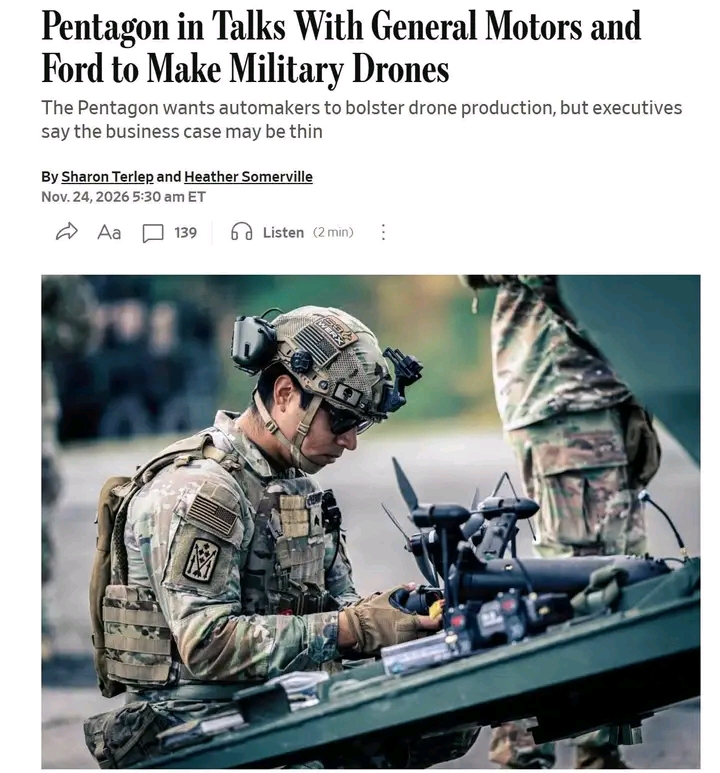
PENTAGON LOOKS TO AMERICA’S CARMAKERS TO SCALE UP MILITARY DRONE PRODUCTION
The Pentagon is exploring whether General Motors, Ford and other major manufacturers can help expand military drone production, The Wall Street Journal reports. GM is considering manufacturing drone motors, although no agreements have been reached. The discussions centre on bringing established industrial capacity into a sector struggling to produce at the scale the military wants.
There is a strong practical argument behind the approach. Automakers bring supplier networks, precision manufacturing, quality control and experience producing enormous quantities of components. Adapting those capabilities could help drone developers move from promising designs to dependable mass production. It would still require investment, suitable tooling and military testing; a car factory cannot become a drone production line overnight.
The relationship between Detroit and American defence stretches back generations. During the Second World War, Ford’s Willow Run plant produced thousands of B-24 bombers. Today, GM Defense’s Infantry Squad Vehicle uses the Chevrolet Colorado ZR2 platform and approximately 90% commercially available parts. Civilian manufacturing can support military requirements without every component needing to be designed from scratch.
The commercial obstacles are substantial. According to the Journal, manufacturers worry about reputational exposure, thin margins on expendable drones and unpredictable government funding. Ford also told Reuters that its discussions focused on military vehicles and satellite work, underscoring that talks do not yet amount to a commitment to manufacture drones.
Ukraine faces these production questions under the immediate pressure of defending its people and territory. American manufacturers face investment decisions shaped by contracts, costs and shareholder expectations.
Turning their capacity into useful output therefore requires the Pentagon to provide sustained orders and credible funding. The industrial potential exists; converting it into drones depends on giving companies a durable reason to build.