Hopewell Chin’ono writes;
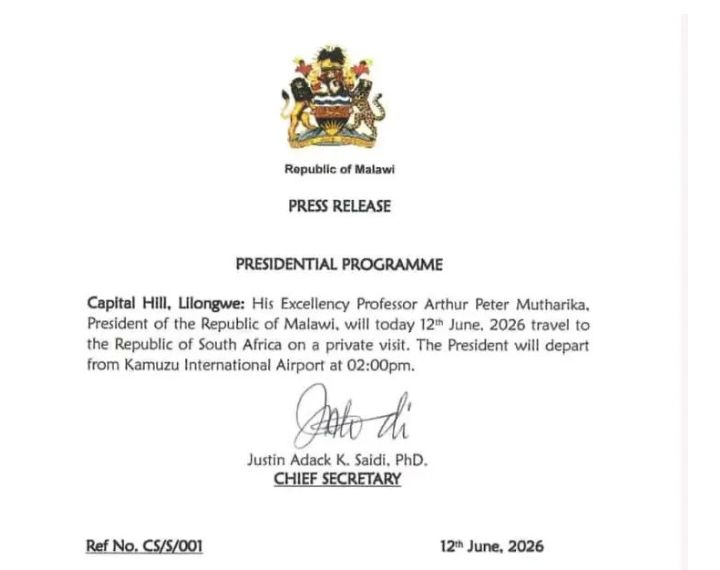
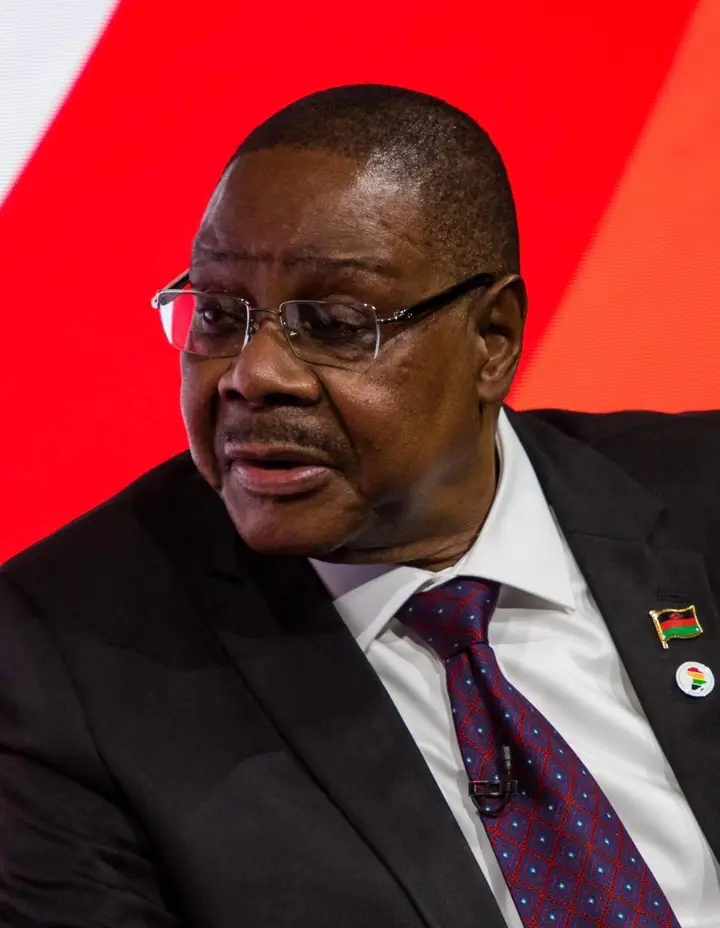
It is that time again when President Arthur Peter Mutharika of Malawi heads to South Africa for a medical check-up.
The 87-year-old President was elected by Malawians last year to serve another five-year term. He has already travelled to South Africa several times, and if I am not mistaken, this must be his third visit for medical treatment.
Meanwhile, many Malawian public hospitals struggle with severe shortages. Some lack basic necessities, including reliable access to clean drinking water, let alone adequate medication and medical equipment.
Yet the President is able to fly to South Africa on a private jet to receive treatment while ordinary Malawians are left to rely on an under-resourced healthcare system.
This raises a broader question that applies not only to Malawi but to much of Africa, why can’t African leaders fix their healthcare delivery systems so that they can receive treatment in their own countries instead of travelling abroad?
President Arthur Peter Mutharika is not unique. Across Africa, presidents, vice-presidents and senior government officials routinely travel to South Africa, India, China, Dubai and other destinations for medical care.
Yet if one considers the amount of money spent on private jets, accommodation, security, allowances and medical bills abroad, that expenditure could go a long way towards improving healthcare systems at home.
The greatest tragedy is that a Malawian president can fly all the way to South Africa for medical treatment, only to discover that the doctor treating him is Malawian. That is the real tragedy of Africa. We spend millions sending our leaders abroad for treatment while failing to build healthcare systems that can retain our own doctors and serve our own people at home.
No nation can claim to be developing while its leaders have confidence in foreign hospitals but expect ordinary citizens to rely on failing public healthcare systems. The true test of leadership is building institutions that are good enough for everyone, including those in power.
If I were the president of an African country, I would make it an unchangeable law that every public official elected to public office must use public hospitals. Not private hospitals in our own country, and certainly not hospitals abroad, but public hospitals.
If you believe that a public hospital is beneath you, then you should not be in a public office in the first place. If you are unwilling to use the same healthcare system as the people who elected you, then you clearly lack the commitment, confidence or capacity to fix the problems facing that healthcare system.
The moment a minister, member of parliament, vice-president or president knows that their own life and the lives of their families depend on the quality of public healthcare, things will change very quickly. Equipment will be purchased, medicines will be stocked, doctors will be retained, and hospitals will be maintained.
The tragedy in many African countries is that those responsible for fixing public services are often insulated from the consequences of their failure. They send their children to private schools, use private security, live in exclusive suburbs and seek medical treatment abroad, while ordinary citizens are left to endure collapsing public services.
A leader should never ask citizens to rely on services that they themselves are unwilling to use. True leadership means sharing the same realities as the people you serve and having enough faith in your own policies to live by them.
It is also important to acknowledge things where they actually work, things that reflect the Africa that we want. Nelson Mandela did not die in a hospital abroad. He died in South Africa, being treated by South African doctors. The former Vice President of South Africa, David Mabuza, did not die in a foreign hospital. He died while being treated in a hospital in South Africa. Presidents Hage Geingob and Sam Nujoma of Namibia did not die in foreign hospitals. They died in Namibian hospitals, being treated by Namibian doctors.
That is the kind of Africa that we want, not what we see in countries such as Zimbabwe, Malawi and Nigeria, where presidents do not even have faith in the public systems that they are running. That is a tragedy.
As for Malawi, it is a tragedy because it is one of the poorest countries in the world, if not the poorest, and yet it is being saddled with these huge bills by its ailing and very elderly president. Yet his own country, as I have said many times, does not even have water in some of its major public hospitals. Just drinking water, forget about the medicine.
Former Malawian President Hastings Kamuzu Banda died on 25 November 1997 in Johannesburg, South Africa, in a South African hospital. President Peter Mutharika’s brother, former Malawian President Bingu wa Mutharika, suffered a cardiac arrest in 2012 and was flown to South Africa on a private jet.
So, almost 30 years after Malawi’s founding president died in South Africa, Malawian leaders are still travelling to South Africa for medical treatment. Three decades later, they are still unable to fix their own healthcare system.
It is sad. A country cannot continue spending millions flying its leaders abroad for treatment while its public hospitals struggle to provide basic services. The real measure of development is whether a country’s leaders have enough confidence in their own healthcare system to use it themselves.
Thirty years later, the destination remains the same, South Africa. That should concern every Malawian. It is a painful tragedy.