

Amb Emmanuel Mwamba writes
I’ve always held the view that President Hakainde Hichilema has no discernible respect for journalists or their profession.
He treats them with clear disdain.
For example, the most senior journalist in government holds a junior position at State House.
Infact, State House Special Assistant for Finance and Investment, Jito Kayumba effectively runs the media. The position of Special Assistant for Press and Public Relations remains vacant from the period when Anthony Bwalya last held it.
Remember from the onset, he appointed Chushi Kasanda-Jangulo as Minister and Kennedy Kalunga as Permanent Secretary of Information and Media, persons who had no knowledge or understanding of the media.
Their subsequent replacements; Cornelius Mweetwa (laywer) and Thabo Kawana (no minimum qualifications) were no better.
Further both his Party and Government senior media positions are held by non-media persons.
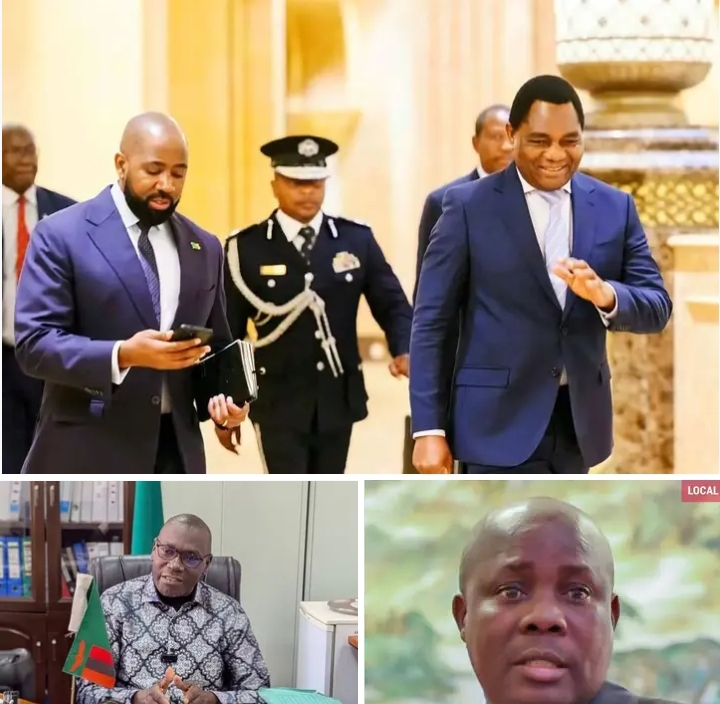
The latest appointment of Kaputa MP, Elvis Nkandu is a shameful example of how Hichilema views the media profession. They are inconsequential in his national agenda and economic growth plans.
And then Hichilema wonders why his media strategy, strategy implementation fails, which results in the troubled and incompetent team which is beaten time and time again at rising national issues.
It is clear that Hichilema doesn’t recognise that a media crisis within a government or state infrastructure rapidly transforms into a national crisis.
When communication mechanisms break down, face political capture, or suffer from severe systemic neglect, the cascading effects destabilize the entire country.
No wonder his government resorts to the use of the police and forces silence to any meaningful and robust national debate and engages cyber laws to shut free speech.
The word of a fugitive carries no weight.
Instead of taking responsibility for his criminal actions, true to character of a career criminal, Muamba continues to demonise HH as if HH is the one who sent him to steal from ZANACO bank and commit the other crimes.
As one of the master minds behind late ECL’s plan B to overthrow a democratically elected government, rest assured Muamba they will catch up with you. One day.
You are coming home very soon.
You, you still cling to the title of an Ambassador, what tangible qualifications do you have? You were terribly under qualified for those ambassadorial positions you had. And why didn’t you tell Lungu to appoint qualified and competent people instead of yourself? Look into your eye first before you look into another person’s eye.
Honourable Emmanuel Mwamba, with due respect, I believe it is important to reflect on your remarks concerning President Hakainde Hichilema and his alleged lack of respect for journalists and their profession.
You are entitled to your opinion, just as journalists are entitled to ask difficult questions and hold those in authority accountable. Equally, the President should be open to scrutiny and should demonstrate respect for the media, even when faced with uncomfortable questions. However, criticism of leadership should be fair, consistent and supported by specific examples rather than broad generalisations.
My concern, Honourable Mwamba, is whether your criticism is always accompanied by a willingness to acknowledge the other side of the story. Whenever the President announces a development agenda or outlines a roadmap for the country’s progress, your public commentary often appears to focus on challenging his position. This raises a legitimate question: are we giving sufficient attention to the substance of the proposed policies, their potential benefits and their shortcomings, or are we allowing political differences to overshadow the national interest?
Honourable Mwamba, opposition is not a crime, and criticism is not a weakness. In a democracy, these are essential elements of accountability. However, responsible opposition should go beyond pointing out perceived failures. It should also offer constructive alternatives, acknowledge positive developments where justified, and challenge government decisions with evidence and sound reasoning.
The title Honourable carries a responsibility beyond political affiliation. It calls for dignity, fairness, restraint and a willingness to put the interests of the nation above personal or partisan differences. The same standard should apply to every political leader, regardless of whether they support or oppose the government of the day.
If you believe the President has shown disdain towards journalists, kindly identify the specific statements or actions that support your conclusion. Let the public examine the evidence and make an informed judgment. In the same spirit, when the President presents a development initiative, let us assess its merits honestly, question its weaknesses where necessary, and propose practical improvements where possible.
Zambia needs political leaders who can disagree without becoming adversaries of every idea advanced by the other side. Our people are looking for better roads, jobs, improved health services, quality education, economic opportunities and a better standard of living. They deserve a political culture in which national development is not reduced to a contest over who can discredit whom.
My humble but candid appeal to you, Honourable Mwamba, is this: please let your contributions to national debate be measured not merely by how strongly you challenge the President, but also by how constructively you help Zambia move forward. Where the government is wrong, hold it accountable. Where its proposals are sound, acknowledge their merit. Where they are incomplete, offer better alternatives.
Ultimately, history will not judge our leaders solely by how effectively they opposed their political rivals, but also by the quality of their contributions to the welfare and development of the nation.
The question, therefore, is not whether an Honourable person should criticise the President. The real question is whether that criticism is fair, evidence-based, consistent and directed towards the public good.
Honourable Mwamba, Zambia needs principled criticism, not criticism for its own sake; constructive opposition, not perpetual confrontation; and leaders who can put the nation first, even when political differences run deep.
May we all remember that political offices are temporary, but the consequences of our words and actions can shape the future of our country for generations to come.