

PRESIDENT HH’S PROPOSED RESTRUCTURING OF GOVERNMENT MINISTRIES: A STRATEGIC INVESTMENT IN THE GROW ZAMBIA AGENDA
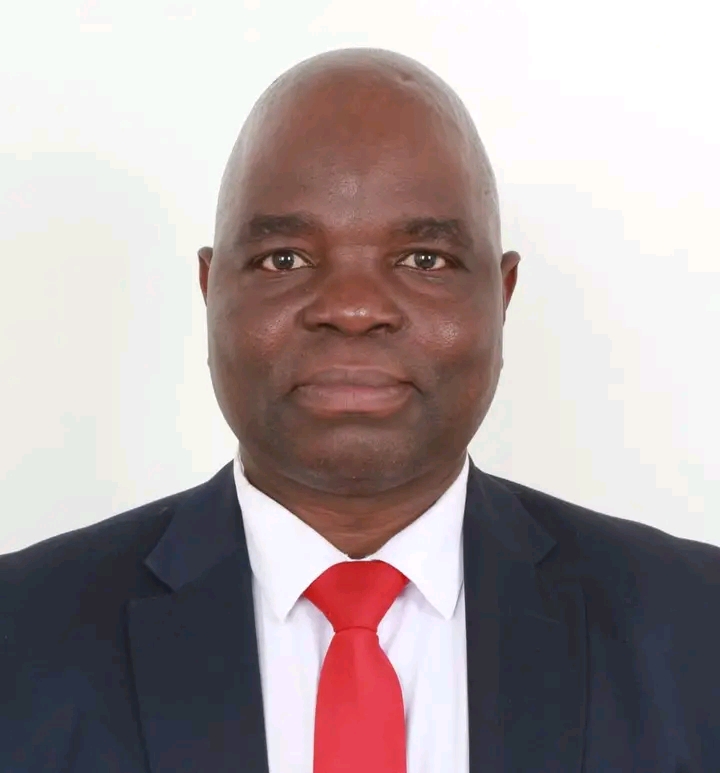
By Dr. Trans N. Munalula – Management Strategist
I have carefully examined the proposal by His Excellency President Hakainde Hichilema, submitted to the National Assembly for consideration today, 27th October 2026, regarding the dissolution, realignment and establishment of Government Ministries and Departments.
From a Strategic Management perspective, I strongly support this proposal because a country’s economic development strategy must be supported by an appropriate organisational structure.
There is a fundamental principle in Strategic Management that says “Structure follows strategy.” In other words, when an organisation changes its strategic direction, it must review and realign its structures to support the new strategy.
The same principle applies to national economic management.
1. STRATEGIC FIT: ALIGNING GOVERNMENT STRUCTURES WITH THE GROW ZAMBIA AGENDA
President Hichilema’s Grow Zambia Agenda is an ambitious economic transformation programme targeting increased production, productivity, industrialisation, exports and employment creation.
Consider the Grow Zambia Agenda production targets:
– 10,000 MW of electricity
– 10 million tons of maize
– 5 million international tourist arrivals
– 3 million tons of copper
– 3 million tons of soybeans
– 1 million tons of wheat
– 1 million tons of sugar
– US$1 billion in beef exports
These targets cannot be achieved through political declarations alone. They require deliberate investments, appropriate policies, efficient institutions, infrastructure, technology and coordinated implementation.
In Strategic Management, we call this STRATEGIC FIT, which refers to the alignment between an organisation’s strategy, resources, capabilities, structures and operating environment.
If Zambia is pursuing an expansionary economic strategy, it follows that the Government must establish institutional structures capable of supporting that expansion.
For example, the proposed separation of the Ministry of Trade and Exports from the Ministry of Industry makes strategic sense.
Industrialisation focuses on developing production capacity, while trade and exports focus on market development, competitiveness and access to domestic, regional and international markets.
These are complementary but distinct strategic functions.
Similarly, separating electricity and petroleum portfolios could provide greater policy focus on two critical inputs into economic production.
The question should therefore not simply be how many ministries Zambia has, but whether those ministries are strategically positioned to deliver the country’s economic objectives.
2. VALUE CHAIN ANALYSIS: GOVERNMENT MUST SUPPORT EVERY STAGE OF ECONOMIC PRODUCTION
Michael Porter’s Value Chain Analysis teaches us that value creation depends on a series of interconnected activities.
Applying this framework to the Grow Zambia Agenda, we can identify an economic value chain that includes:
– Agricultural production and raw material development.
– Manufacturing and industrial processing.
– Energy supply and infrastructure development.
– Transportation, storage and logistics.
– Marketing, trade and export development.
– Research, technology, innovation and skills development.
Each stage contributes towards transforming Zambia’s resources into valuable products and services.
Consider the maize value chain.
Producing 10 million metric tonnes of maize will require more than farmers increasing their cultivated hectares.
It will require improved seed technologies, affordable fertiliser, mechanisation, irrigation, agricultural financing, extension services, storage facilities, processing industries, reliable electricity, efficient transportation and export markets.
If one part of this value chain fails, the entire production system becomes less competitive.
Therefore, the proposed alignment of ministries responsible for Agriculture, Industry, Trade and Exports, Electricity, Transport and Logistics, Technology and Science, and Skills and Higher Education should be understood as an attempt to strengthen the institutional support system for economic growth.
Economic transformation requires an integrated value chain, not isolated government institutions working independently.
3. GOVERNMENT MUST CREATE AN ENABLING ENVIRONMENT FOR PRIVATE-SECTOR-LED GROWTH
Another important principle of the Grow Zambia Agenda is that Government should not be expected to undertake all economic production activities.
The private sector must remain a major driver of investment, production, productivity, innovation and employment creation.
Government’s responsibility is to establish the enabling environment.
This includes providing appropriate legislation, policies, infrastructure, affordable energy, access to finance, efficient regulatory systems and market opportunities.
Farmers must produce more crops and livestock.
Manufacturers must expand their production capacity.
Entrepreneurs must establish new businesses.
Investors must develop industries.
Exporters must penetrate regional and international markets.
However, these economic actors cannot operate efficiently without supportive public institutions.
The proposed ministerial realignment should therefore be viewed as an investment in the institutional capacity required to unlock private-sector production.
4. IS GOVERNMENT EXPANDING THE CABINET UNNECESSARILY?
I have observed public concerns suggesting that Government should have reduced the number of ministries instead of expanding the Cabinet.
These concerns are understandable, particularly because public resources must always be managed prudently.
However, I believe we should examine this issue from a strategic investment perspective rather than simply looking at the number of ministries.
In business management, an organisation pursuing expansion may need to establish new divisions, departments and specialised management functions.
This does not automatically mean the organisation has become inefficient.
What matters is whether the additional structures generate benefits greater than their costs.
Similarly, the proposed expansion and realignment of Government Ministries should not automatically be dismissed as unnecessary bureaucracy.
What some people describe as a bloated Cabinet may, if properly designed and managed, become a strategic investment in Zambia’s economic transformation.
The real concern should be duplication of functions, excessive administrative costs, poor coordination and failure to deliver measurable results.
If the restructuring improves policy implementation, attracts investment, increases production, expands exports and creates employment, then the additional administrative expenditure may be economically justified.
Nevertheless, Government must demonstrate value for money by controlling costs, eliminating duplication and ensuring accountability.
5. STRATEGY IMPLEMENTATION REQUIRES APPROPRIATE STRUCTURES
One of the greatest challenges in Strategic Management is not developing ambitious strategies but implementing them successfully.
Many organisations fail because their structures, resources and management systems are not aligned with their strategic objectives.
Zambia cannot realistically pursue an ambitious economic expansion programme while retaining institutional arrangements that may not adequately support its implementation.
The proposed restructuring should therefore be assessed against its capacity to accelerate economic growth, improve coordination, remove administrative bottlenecks and facilitate private-sector investment.
In my assessment, President Hichilema’s proposal provides an opportunity to establish stronger institutional alignment with the Grow Zambia Agenda.
However, the new ministries must operate as interconnected components of one national development system rather than competing administrative structures.
6. LET US SUPPORT THE PROCESS AND DEMAND RESULTS
My appeal to fellow Zambians is that we should give this proposed restructuring a fair opportunity.
We should not judge the effectiveness of Government solely by the number of ministers or ministries.
Instead, we should assess whether the structures deliver the economic transformation for which they are being established.
At the end of the implementation period, we must demand measurable results:
✅ Have we achieved the targeted agricultural production volumes?
✅ Have manufacturing output and industrial productivity increased?
✅ Have we expanded our export markets and foreign exchange earnings?
✅ Have we attracted more private-sector investment?
✅ Have we created sustainable employment opportunities?
✅ Have we improved energy availability and infrastructure?
✅ Have we increased household incomes and reduced poverty?
These are the performance indicators that should ultimately determine whether the restructuring was successful.
MY CONCLUSION
I support President Hakainde Hichilema’s proposed realignment of Government Ministries and Departments because I believe that an ambitious national economic strategy requires an equally ambitious and appropriately designed institutional framework.
The Grow Zambia Agenda cannot succeed through targets alone. It requires structural support, institutional coordination, appropriate policies and an enabling environment in which the private sector can thrive.
Let us therefore evaluate this proposal through the lenses of Strategic Fit, Value Chain Analysis and long-term economic returns.
A larger Government structure is not necessarily a better Government structure. But neither is a smaller structure necessarily more efficient. The best structure is the one that delivers the desired results at a justifiable cost.
Let us support the process, remain vigilant about public expenditure and hold Government accountable for delivering the Grow Zambia Agenda.
Ultimately, we should judge this strategic investment by its contribution to production, productivity, employment creation, exports and national prosperity.
GROW ZAMBIA! PRODUCE MORE! CREATE WEALTH!