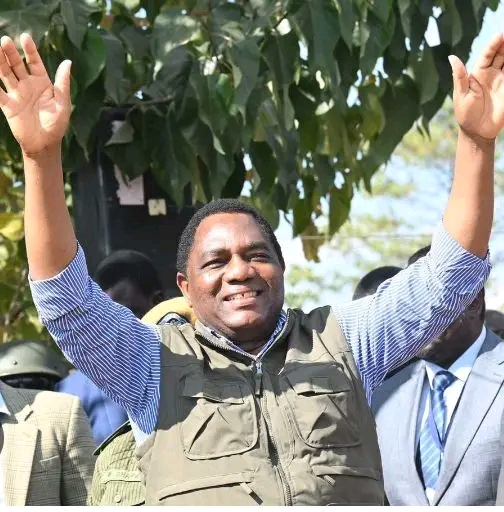

I AM A MISSIONARY, NOT A MERCENARY’
…..HH waives salary at Choma farm, warning UPND leaders against abandoning voters
By DAVID KANDUZA
SHUNNING the financial perks of State House, President Hakainde Hichilema today, November 10, 2016, declared himself a ‘missionary’ who refuses to draw a monthly wage, adding that he cannot imagine himself anxiously flipping open a pay slip to check his Government earnings.
Speaking from his farmhouse in Choma at the start of a 10-day working tour of Southern Province, the Head of State used the intimate, rural backdrop to deliver a blunt warning to ruling United Party for National Development (UPND) officials: stop ignoring the grassroots voters who put them in power.
To drive his point home, the wealthy businessexecutive-turned-politician drew a sharp contrast between elite political lifestyles and his own approach to leadership, revealing that despite holding the highest office in the land, he remained deeply rooted in local tradition.
“I am the first President of Zambia who does not get a salary because I am a missionary who came to serve,” President Hichilema told the gathering.
“I don’t see myself flipping a pay slip every month to see how much I am being paid.”
The President’s remarks strike a growing conversation regarding political accountability and civic engagement in Zambia.
By framing his presidency as a pastoral duty rather than a career, the Head of State sought to set a moral benchmark for a party facing internal friction over recent, controversial adoption processes.
He openly extended an apology for previous ‘messy’ UPND party adoptions, urging members to move past internal grievances and refocus their energies on serving the citizens.
He reminded the assembled party leadership that political authority belongs to the electorate, cautioning them against the arrogance of office.
Using himself as an example, he noted that despite managing the geopolitical affairs of a State, he continued to diligently perform the duties of an active village headman.
The 10-day provincial working tour is expected to see the President traverse local districts to inspect development projects, audit the expanded Constituency Development Fund distribution and engage directly with traditional leaders and rural communities.