

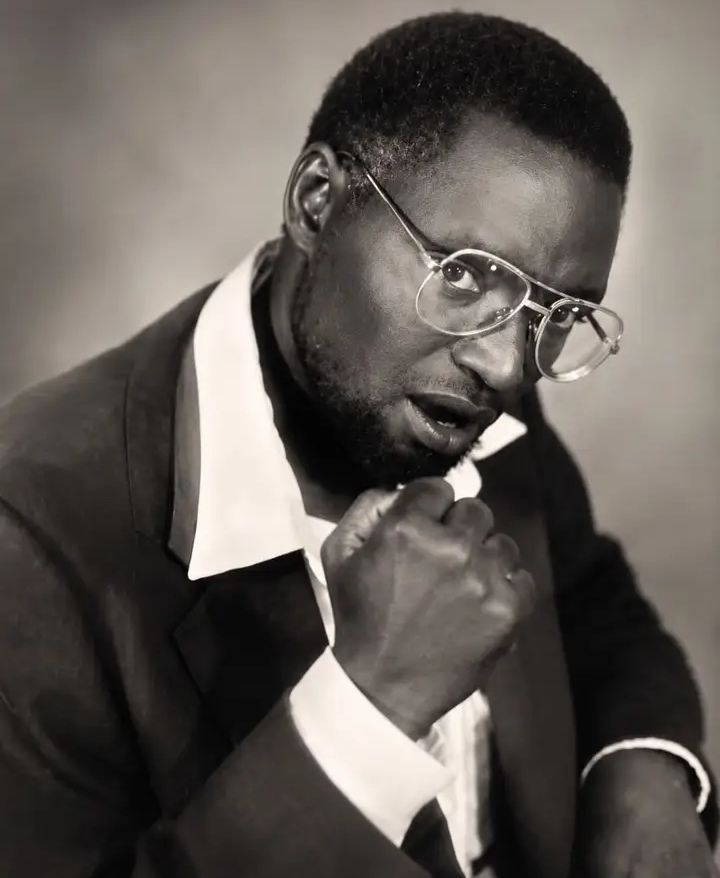
Remembering Cameron Pwele—Roan Constituency’s fearless voice who refused to whisper when others had mastered the art of applause.
Born on September 2, 1958, Pwele was a laboratory technician, trade unionist and politician whose life was defined by one stubborn habit: saying out loud what many preferred to mutter in private.
Pwele’s battles were not confined to the floor of Parliament. The outspoken Roan MP occasionally found himself fighting on an entirely different front, the home front.
He served as Member of Parliament for Roan Constituency from 2001 until his untimely death in 2005.
In the 2001 general elections, Pwele won the Roan seat on the UNIP ticket with 5,066 votes, defeating the MMD’s Stephen Chungu, who polled 3,685.
Long before entering Parliament, Pwele had earned his reputation as chairman of the Mineworkers Union of Zambia (MUZ) Luanshya Branch during one of the darkest chapters in Zambia’s mining history.
The privatization of the mines was marketed as an economic miracle. On paper, it promised investment, jobs and prosperity. In reality, for many Copperbelt communities, it became a masterclass in how to sell a cow, keep the rope and still ask the former owner to buy milk.
When Luanshya’s mines were sold in 1997 to Gokhul Binani’s London-based group for US$30 million, workers were promised US$69 million in investment, modern equipment and a brighter future. Instead, many watched machinery disappear piece by piece while promises evaporated even faster.
Workers were supposed to receive their terminal benefits. Many never did.
When Pwele demanded that RAMCoZ honour its agreement with miners, management responded with a uniquely corporate solution, they fired the man asking the uncomfortable questions.
His dismissal triggered an eight-day strike that was violently crushed by security forces, leaving two people dead.
The strike secured Pwele’s reinstatement, but the workers’ terminal benefits remained as elusive as campaign promises after polling day.
The privatization saga left deep scars. Angry miners accused both government and sections of their own union leadership of abandoning them.
Distrust ran so deep that national MUZ leaders reportedly avoided Luanshya for fear of hostile receptions. In 2003, the local union office was partially destroyed in an arson attack believed to have been carried out by frustrated miners.
Pwele never hid his disappointment.
“They became Government. They were supporting MMD. They left the workers in the dark… Anyone who spoke on behalf of the workers became an enemy.”
For him, a union existed to defend workers not to audition for cabinet appointments.
His election to Parliament simply gave him a bigger microphone.
Between 2001 and 2005, Pwele became one of the House’s most outspoken MPs, relentlessly attacking the government’s handling of privatization and exposing the economic pain experienced on the Copperbelt.
While others perfected the parliamentary art of speaking for twenty minutes without offending anyone, Pwele specialised in calling names and stepping on polished political shoes.
In March 2002, he branded Information Minister Newstead Zimba “very irresponsible” and questioned why President Levy Mwanawasa had retained such figures in Cabinet.
Months later, he turned his attention to then Luapula member of parliament Peter Machungwa, dismissing him as a suspected plunderer who could not even prepare a proper parliamentary report despite being a doctor.
It was vintage Pwele, if he believed you deserved criticism, he delivered it wholesale, without instalment payments.
He represented a rare breed of politician who understood that Parliament was built for debate, not for synchronized nodding.
Today, it is fashionable for politicians to describe themselves as “voices of the people.” Pwele was one long before the phrase became a campaign slogan.
He carried the frustrations of miners from the shafts of Luanshya straight into the National Assembly, refusing to exchange principle for political comfort.
His parliamentary career was cut short by his death in 2005, just a year before completing his first term. The subsequent by-election was won by the MMD’s Joseph Chilambwe.
Away from parliament, in February 2004, The Post reported that Pwele was allegedly involved in a dramatic altercation at the National Assembly Motel after his wife and son reportedly found him in the company of another woman.
According to reports at the time, the confrontation quickly escalated into a physical fight, with both the unidentified woman said to be from Avondale and Pwele reportedly clobbered by his wife & son.
Fellow parliamentarians had to intervene, escorting the woman away from the scene before matters deteriorated further.
Never one to miss an opportunity to identify someone else as the problem, Pwele later faulted motel security for allowing his family access to the premises without informing him first. He also denied knowing the woman at the centre of the incident.
It was perhaps one of the few occasions when the fiercest opposition Pwele faced was neither from the MMD nor from the Speaker’s chair, but from an unexpected coalition government consisting of his wife and son.
Parliament may have had Standing Orders, but the family appeared determined to enforce its own.
If parliamentary debates tested his political survival, the National Assembly Motel episode reminded everyone that some motions are settled not by a voice vote, but by domestic consensus.
Pwele may have served for almost one term, but he left behind something more enduring than longevity, a reputation for speaking truth to power at a time when silence was often the safer career option.
Some politicians leave Parliament with thicker bank accounts. Others leave behind thicker Hansards.
Pwele belonged firmly to the latter category.