

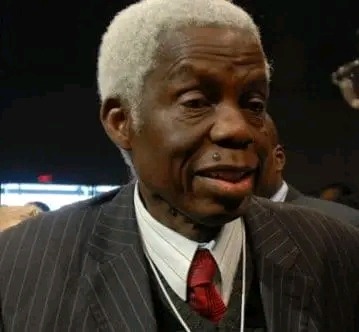
REMEMBERING MUNDIA SIKATANA —MR BUMPER HARVEST VS THE GMO MAIZE
Born on March 6 1938.
Zambia has produced many interesting Ministers of Agriculture, but few came with the combination of gumboots, a lawyer’s vocabulary and the confidence to tell the international community: “Thanks, but we don’t want your maize.”
Enter Mundia Sikatana.
A lawyer by profession, proprietor of Veritas Chambers and a formidable State Counsel, Sikatana had already made a name for himself as a human-rights defender and a man who wasn’t particularly interested in making powerful people comfortable.
Then President Levy Mwanawasa appointed him Minister of Agriculture in 2002.
And Sikatana apparently decided that if he was going to be Minister of Agriculture, he might as well actually become a farmer.
The suits came off. The gumboots went on.
And the man went into the fields.
But then came the small problem of a rather large famine.
Southern Africa was experiencing a severe food crisis. Zambia desperately needed maize. International donors were ready to help.
Unfortunately for the maize donors, Zambia’s Minister of Agriculture had other ideas.
The maize on offer was genetically modified.
Sikatana said, essentially:
“Hold the horses. We are hungry, not stupid.”
And just like that, Zambia found itself at the centre of an international GMO food fight.
Critics were furious
Their argument was brutally simple: People are hungry. Food is available. Why are you interrogating the maize like it is a suspect at Central Police Station?
But Sikatana wasn’t having it.
His government maintained that Zambia had legitimate concerns about the safety of GMO food, environmental consequences and the potential impact on the country’s agricultural future and sovereignty.
So while some people were looking at the maize and seeing nshima, Sikatana was looking at it and apparently seeing intellectual property rights, seed dependency, environmental policy and national sovereignty.
Only a lawyer could turn a bag of maize into a constitutional argument.
The controversy became so intense that Zambia’s decision attracted international attention.
Imagine being hungry and having the Minister of Agriculture tell you:
“Don’t worry. We have a plan.”
Then you discover the plan involves millet, sorghum, cassava, irrigation and organic farming while somebody outside the country is standing next to a truckload of maize saying:
“But this one is free!”
Sikatana’s position was that Zambia should strengthen its own agricultural capacity rather than become permanently dependent on imported food. He promoted irrigation, traditional crops and agricultural self-reliance.
His supporters saw principle.
His critics saw stubbornness.
And hungry Zambians probably saw a politician having a very complicated relationship with a bag of maize.
But whether you agreed with him or not, Sikatana had something increasingly rare in politics:
a position and the courage to defend it.
He later moved to Foreign Affairs, where his stubbornness apparently followed him like an unpaid bill.
Appointed Minister of Foreign Affairs on 9 August 2006, he was abruptly dismissed on 22 August 2007.
The official explanation was that his health was failing.
Sikatana’s response was basically:
“Which health?”
He reportedly told journalists:
“I am what you call fitness itself. I am fitness personified.”
The man even flexed his muscles.
At that point, it was becoming clear that Mundia Sikatana was not going to make political life easy for anybody.
According to government sources at the time, President Mwanawasa took issue with his foreign minister over the political crisis in Zimbabwe because Sitakana insisted that Zambia should take a hard-line stance against Harare.
The Zimbabwean government was unhappy with Sitakana for publicly criticising Robert Mugabe’s policies and condemning human rights abuses in Zimbabwe.
He retired from active politics thereafter.
Sikatana died on 14 June 2012, aged 74, at the University Teaching Hospital in Lusaka and was buried at Memorial Park Cemetery.
But that 2002 GMO controversy remains one of the more fascinating episodes in Zambia’s political history.
Because for once, a Zambian politician wasn’t accused of eating the maize.
He was accused of refusing to eat it.
Sikatana left behind the image of a politician who could be stubborn, outspoken and occasionally infuriating but who was rarely accused of lacking conviction.