

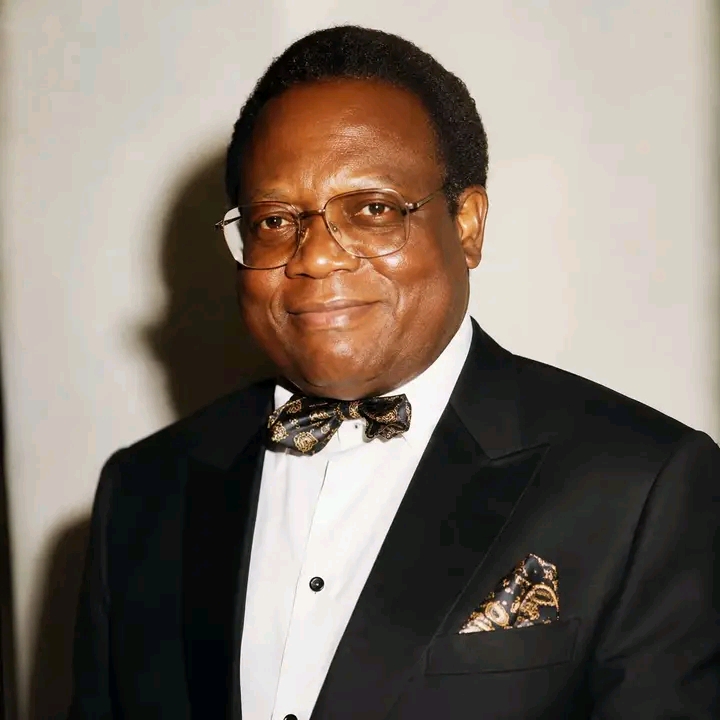
RONALD DAMSON SIAME PENZA: THE REFORMER WHO CHANGED ZAMBIA AND DIED WITH HIS SECRETS
Almost 28 years after Penza’s assassination, Zambia is still asking the same question: Why was he really killed?
The men who stormed his Ibex Hill home murdered him in front of his wife and then left empty-handed.
No cash. No valuables. No getaway loot.
Yet the official police explanation was simple: robbery.
For nearly three decades, that explanation has struggled to convince a nation that watched the story unfold with more questions than answers.
Who was Penza?
Born on September 3, 1949 in Mbala, Northern Province, Penza was an accountant, businessman and politician whose influence on Zambia’s economy remains impossible to ignore.
Penza first emerged as a student activist at the University of Zambia, where, as Student Union Secretary-General in the 1970s, he organised a march to the French Embassy protesting France’s decision to supply Mirage fighter jets to apartheid South Africa.
His activism eventually graduated from campus politics to national politics.
In the historic 1991 elections, Penza contested the Munali parliamentary seat on the MMD ticket, defeating UNIP candidate Rupiah Banda by a landslide of 19,580 votes to 4,218.
President Frederick Chiluba rewarded him with the Commerce, Trade and Industry portfolio before later transferring him to the Ministry of Finance in 1993 following cabinet reshuffles.
It was at the ministry of finance that Penza became the face of Zambia’s economic revolution.
He dismantled the socialist economic model inherited from the Kaunda era and championed liberalisation, privatisation and fiscal discipline.
In 1994, financial publication Euromoney recognised him as one of the world’s best Finance Ministers.
To international financial institutions, Penza was the poster child of free-market reform.
To many ordinary Zambians, he became the man who introduced strange new words into everyday conversation balanced budgets, treasury bills, stock exchanges, receivership and privatisation.
For a country accustomed to subsidised essentials and government control, “Penzanomics” was both an education and a shock therapy.
Queues for basic commodities disappeared.
Imported goods flooded supermarket shelves.
Apples, Coca-Cola, and countless other products suddenly became commonplace.
At the same time, thousands lost jobs as State-Owned Enterprises were privatised in one of the fastest privatisation programmes ever undertaken by a developing country.
Over 240 parastatals were sold, leaving only a handful that included ZESCO, PTC (ZAMTEL & ZAMPOST) and ZANACO in government hands.
Depending on whom you asked, Penza was either the architect of Zambia’s economic future or the executioner of its socialist past.
The fallout
Following the 1996 elections, Penza switched constituencies from Munali to his birth place of Mbala where he successfully contested & won the Mbala parliamentary seat on the MMD ticket.
Following the elections, Penza was reappointed finance minister but by March 1998, he was out of Cabinet.
Officially, no reason was given for his dismissal.
Unofficially, though he had been dismissed following political differences with President Chiluba.
Rumours suggested he had objected to an oil supply contract awarded to a company that had previously lost a tender, a decision he reportedly opposed as Chairperson of the Zambia National Tender Board.
Like many political divorces in Zambia, the official statement was brief & didn’t provide further details.
The rumours, however, were not.
The assassination
Eight months after his dismissal, on November 6, 1998, six armed men overpowered security guards and guard dogs before entering Penza’s Ibex Hill residence.
Two masked gunmen confronted land shot him dead in front of his wife.
Nothing was stolen.
The following morning, police announced that robbery had been the motive.
Hours later, police also announced they had shot dead five alleged members of the murder gang after they supposedly attempted to rob a filling station.
Case closed.
Or so it seemed.
Almost immediately, cracks began appearing in the official version.
Only one firearm was reportedly recovered.
Witnesses claimed some of the suspects had attempted to surrender before being shot.
Even the government-owned Times of Zambia questioned the astonishing speed with which police had solved one of the country’s biggest murders.
The Post newspaper went further, with editor Fred M’membe writing that many Zambians believed Penza had been executed by state agents and that subsequent police actions amounted to a cover-up.
Then came perhaps the most disturbing revelation.
Among the five men killed by police was Chanda Chafya, a security guard who had been assigned to guard Penza’s residence.
Witnesses said plain-clothed police officers had picked him up from work that morning.
Hours later, he was dead.
His family insisted he had not been arrested, tried or convicted..
He had simply disappeared into police custody and reappeared in a mortuary.
A post-mortem conducted after a magistrate’s intervention found multiple bullet wounds..
Lawyer Robert Simeza said photographs suggested Chafya had been severely beaten before being shot.
His family questioned why police needed three weeks to release the body if the case was as straightforward as authorities claimed.
Sometimes the fastest investigations produce the slowest answers.
Motives or mysteries?
Over the years, numerous theories have emerged.
Some believed Penza had become aware of alleged corruption involving senior government officials.
There were speculations that his murder allegedly occurred in a context of trade in arms and drug-smuggling by leading politicians such as Vice President Christon Tembo and former Minister of Defence Benjamin Mwila.
Penza was once named among other ministers to have been financing a gun running circle that supplied UNITA arms.
As a result speculations were high that Penza may have been planning to spill the beans over the deal that linked President Chiluba and his top ministers to Aero Zambia, a company that was flying arms in exchange of diamonds to Angola’s rebel group, UNITA using Zambian airspace.
Another theory suggested he had become increasingly close to MMD dissidents who were preparing to challenge Chiluba’s leadership.
Penza belonged to a historical political grouping that was known as Mbala Mafia during the 1990s.
Critics and political rivals used the term “Mbala Mafia” pejoratively, alleging regional cliquism or the consolidation of political and economic power.
On the other hand, it was a moniker that was used to describe the heavy political & intellectual weight wielded by the elite figures hailing from Mbala.
The night before his death, Penza reportedly met with fellow “Mbala Mafias” that included Derrick (Mbita) Chitala and the late Dean Mung’omba.
The trio reportedly spent hours together merry making & discussing politics.
Whether it was simply tribesmen sharing drinks or politicians plotting Zambia’s next chapter remains unknown.
History has never supplied the minutes of that meeting.
Only the rumours.
A murder that still refuses to die
Nearly three decades later, Penza’s assassination remains one of Zambia’s greatest political mysteries.
The official explanation has never silenced the speculation.
Many of the individuals who might have answered lingering questions have themselves passed away.
The files have gathered dust.
The witnesses have disappeared.
The suspicions have survived.
One of the country’s most celebrated economic reformers may ultimately be remembered less for balancing national budgets than for leaving behind an unbalanced national conscience.
And perhaps the greatest irony of all is that all these killings were happening at the time Zambia had just been declared a Christian Nation.
With a very committed Christian at the helm of the nation’s leadership, President Chiluba’s reign became a period remembered not only for economic reforms, but also for political intrigue, unexplained killings and unanswered questions.
Apparently, the commandment “Thou shalt not kill” was treated by some as policy guidance rather than a binding instruction.
History, however, has a stubborn habit of reopening files that governments would rather keep closed.
Penza’s file remains one of them.
In the picture is an AI image of Penza….
Yes, Mr. Penza is arguably the best Finance Minister Zambia has had so far. In my reckoning, Mr. Chiluba and his Finance Minister, Mr. Penza, made the hard decisions that transformed the economic landscape of Zambia and laid a firm foundation for future prosperity. This is exactly what President Hichilema and his Finance Minister, Mr. Musokotwane have done after the madness and looting of the PF regime.
Mr. Mwanawasa and his Finance Minister, Mr. Ng’andu Magande, simply built on this solid foundation to boost Zambia’s economy.
Life was truly hard during the Chiluba/Penza days but Mr. Chiluba clearly warned us it was going to be rough and asked if we were ready for it. We answered in the affirmative. I was retrenched twice with a very young family but it also helped me sharpen my business instincts. And God was gracious to me and my family in all this. The trauma still lingers at the back of my mind. The so called hardships of today under the UPND government is nothing compared to what we went through during that era. It was a time of forced growth.
Definitely, there were a lot of mysterious deaths during the Chiluba era. Wezi Kaunda, the lawyer Ngenda, Paul Tembo (a former deputy minister in the Chiluba government) and of course Penza.
There was Baldwin Nkumbula as well.
Derrick Chitala Mbita is still alive. Why doesn’t anyone corner the guy and ask him what he knows?
It is sad when leaders declare publicly that they are Christians when they hide their evil actions under that clock. A lawyer is not a good lawyer because he is a Christian. An engineer is not a good engineer because he is a Christian. One does not go to a doctor and ask, ‘Before you operate on me, are you a Christian?’ But why do people think that just because a person professes to be a Christian he is going to be a good leader. Many prosperous countries in the world are led by people who are irreligious. We should not mix the secular with the religious. God can use anyone, even his avowed enemies.
Good piece of history…. What KK built was destroyed by Chiluba. And all those mysterious killings will never be solved since many people who could give evidence are deceased. FAZ also failed to release the report of 1993 disaster that claimed the entire national squad and coaches.
240 state owned companies disappeared during Chipuba’s tenure and this contributed to Zambia qualifying to highly indebted poor countries.
Ba Kajimaano, those so called state companies were just shells. Mr. Chiluba didnot destroy any state company. By the time he was voted into power in 1991, state firms were companies in name only. Otherwise why did we have such acute shortages of essential commodities (cooking oil, soap, salt, sugar, bread mealie meal, etc. The list is endless) if these companies were operating normally?
For example, at the time of Mr. Chiluba assuming.the presidency, ZCCM (the acronymn had mockingly come to mean Zambia Chipuba Chaonaula Mine) copper production had plummeted to 250,000 tonnes from a peak of 850,000 tonnes. The mines were also costing the government USD2million per day in subsidies, money the country didnot have.
It is a myth that Mr. Chiluba destroyed state companies.
Thank you JMC for a little insight of your personal experience of having been retenched twice but rose up.