

Voting has begun in Russia’s first parliamentary election since Moscow launched its full-scale invasion of Ukraine in 2022, with voters choosing members of the 450-seat State Duma amid restrictions on anti-war candidates and continuing fighting between Russia and Ukraine.
The election is being conducted over three days, from September 18 to 20, with the ruling United Russia party seeking to retain its dominant position in the lower house of parliament.
Voting is also taking place in Russian-occupied areas of Ukraine that Moscow claims to have annexed, a process rejected as illegitimate by Ukraine. Images from the occupied Donetsk region showed voters casting ballots in the presence of armed personnel. The election is taking place in a tightly restricted political environment in which many candidates opposed to the war have been prevented from standing.
The liberal Yabloko party, the only registered Russian party campaigning openly against the war, was barred from the nationwide party-list contest after a court cited alleged electoral violations. Yabloko has denied wrongdoing, and some of its candidates remain on the ballot in individual constituencies. Other opposition candidates have also been disqualified during the election period, while critics of the Kremlin have faced broader restrictions on political activity.
Russian election kicks off with only parties that support Putin
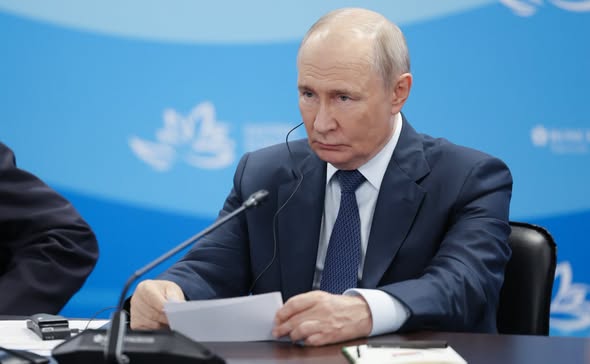
In a televised address ahead of voting, President Vladimir Putin urged Russians to participate, presenting the election as an opportunity to demonstrate national unity and support the country’s objectives in Ukraine. The Kremlin has argued that unity is particularly important because of what it describes as efforts by Ukrainian intelligence services and other adversaries to create instability inside Russia.
The election comes as the domestic effects of the war have become increasingly visible, with Russians facing economic pressures and disruption linked to Ukrainian attacks on oil, transport and logistics infrastructure. Recent polling has also indicated concern among some Russians about the war’s impact on everyday life. There has also been speculation about whether the Kremlin could order another large-scale mobilisation after the election.
Ukrainian President Volodymyr Zelensky has previously claimed that Putin was preparing to mobilise about 500,000 additional Russians. Moscow has not announced such a mobilisation, and speculation about its timing remains unconfirmed. The opening of voting coincided with a major Ukrainian drone attack targeting Moscow and other parts of Russia.
Moscow Mayor Sergei Sobyanin said more than 350 drones had flown towards the Moscow region during an 11-hour period beginning on Thursday evening. According to Sobyanin, most were intercepted at a distance, while 64 were destroyed as they approached Moscow.
Russia’s Defence Ministry separately said 629 Ukrainian drones had been destroyed or intercepted over Russian territory overnight. Those figures were provided by Russian authorities and could not immediately be independently verified. The attacks caused disruption at Moscow airports as voting began. The election is expected to conclude on Sunday, September 18, with preliminary results due to emerge that evening and near-final results expected on Monday.