

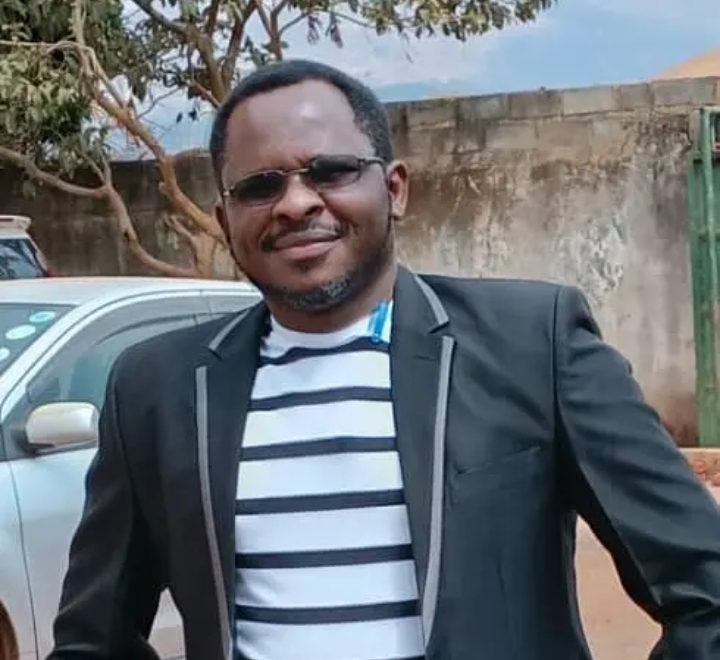
By Lameck Mark Banda
SHOULD DEMOCRACY SUFFER BECAUSE THE PRESIDENT IS DOING WELL ECONOMICALLY?
There is a dangerous argument beginning to take root in our politics in Zambia and Africa at large: They say, “If the economy is improving, perhaps we should tolerate a little less democracy”.
I disagree.
But they argue and say, “look at Rwanda with Paul Kagame”. My question is, are you sure 🤔
Yes economic performance matters. Jobs matter. Inflation matters. The exchange rate matters. Investment matters. Debt management matters. Ordinary Zambians want an economy that gives them dignity and opportunity.
If a government is getting these things right, it deserves recognition.
But economic performance cannot become a substitute for democracy.
A country does not become democratic only when the economy is struggling. Democracy matters most when those in power are performing well, because that is when citizens are most tempted to overlook the erosion of institutions.
We must therefore ask a difficult question:
How much democracy are we willing to surrender in exchange for economic progress?
My answer is simple: none.
A government can build roads, attract investment, stabilise the economy and still be held accountable for how it treats political opponents, journalists, civil society, protesters and ordinary citizens.
These issues are not mutually exclusive.
You can support economic reforms and still demand respect for constitutional rights.
You can acknowledge good economic management and still question the conduct of government institutions.
You can appreciate development and still insist that the police, courts, Parliament and electoral institutions remain independent.
That is not being anti-government. That is democracy.
The biggest mistake we can make is to judge democracy only by what happens to our wallets.
Suppose your income improves while your right to freely criticise government becomes weaker. Has your democracy improved?
Suppose the economy grows while opposition parties struggle to organise freely. Has that growth made the political system healthier?
Suppose roads are built and investments increase, but citizens become afraid to question those in power. Should we call that a complete success?
Economic development improves the material conditions of citizens.
Democracy protects their political dignity.
We need both. And there is another reason this matters. Presidents change, okay.
The institutions we weaken today may be inherited by a president we strongly dislike tomorrow.
If we defend excessive executive power simply because we like the person occupying State House, we are not defending democracy. We are defending our preferred politician; and that is a dangerous bargain.
Today, you may believe the President is competent, honest and economically responsible. Tomorrow, someone else will occupy the same office.
The question is therefore not:
“Do I like what the current President is doing?”
The better question is:
“Are we building institutions that will protect every Zambian or every Liberian, Ghanian, Cameroonian or a Rwandan, regardless of who is President?”
That is the real test.
Democracy is not designed to prevent governments from governing. It is designed to ensure that governments govern within the law and remain accountable to the people.
Checks and balances are not obstacles to development.
An independent judiciary is not an enemy of economic growth.
A strong opposition is not a threat to national progress.
A free press is not an inconvenience.
Civil society is not an unnecessary nuisance.
Citizens questioning government decisions are not enemies of the State.
These are components of a functioning democracy.
And when we begin justifying their weakening because “the economy is doing well,” we should be careful. Because democracy rarely disappears overnight.
It is usually weakened gradually.
One restriction is accepted because it is convenient.
One abuse is excused because the government has delivered something we like.
One institution is compromised because we trust the people currently in charge.
Then, eventually, the same powers we defended can be used against us.
This is why democratic principles must be bigger than political parties and personalities.
If the government is doing well economically, let us give it credit.
If it is failing somewhere, let us say so.
If it violates democratic principles, let us challenge it.
These positions are not contradictory.
In fact, they are the responsibility of a mature citizen.
We should not become societies where economic growth buys political immunity.
Neither should we become a society where political disagreement makes us incapable of recognising good governance.
We can hold both truths at the same time:
The government can be doing some things right economically, and citizens can still demand stronger democracy.
That is not hypocrisy.
That is accountability.
Any nation including Zambia or Liberia or Cameroon does not need to choose between development and democracy.
We need leaders capable of delivering both.
Because when the economy eventually changes, the institutions we protected will still be there.
And when another President takes power, those same institutions will determine whether ordinary citizens remain protected.
So let us not ask whether economic success is worth protecting.
It is.
Let us ask whether economic success gives any government permission to weaken democracy.
It does not.
Think, Africa. Think!
– The Voice of Reasoning –
There is a lot of political indiscipline in Zambia today. The behaviour of most politicians especially those in the opposition is appalling, unreasonable and childish. They only inspire uneducated people who have lost direction and on a blame game for their personal failures. Look at JJ Banda, Munir Zulu, Kaizer Zulu, Mumbi Phiri, Binwell Mpundu, Emmanuel Mwamba, Chishimba Kambwili. Can one really say these can deliver development? They need to be treated with a stick to behave.
Kkkkk a stick
Litterally ba Mulubushi, Chester is right….why should we held ransome and starve in the name of being “politically” correct?
Why the said Politicans want to think they are above the law?
Their actions deingrate institution and the law.