

THE ALTAR, THE PULPIT AND THE BALLOT: PROTECTING THE MORAL VOICE OF THE CHURCH
I write this with considerable reflection and profound respect.
I am a Jew, and proudly so. I therefore have neither the intention nor the standing to interfere with Catholic doctrine, liturgy or the internal governance of the Catholic Church, but my relationship with the Catholic Church did not begin with politics. Earlier in my professional career, I worked extensively with the Catholic Church in Zambia as a development consultant. My work extended across dioceses and included religious orders requiring professional consultancy support. I worked in areas including strategic planning, institutional development and financial resource mobilisation.
Through those years, I acquired a fairly broad appreciation, although I claim no authority in Catholic theology or Canon Law, of Catholic social teaching and particularly its profound emphasis on the dignity and development of the whole human person. I learnt something else. The moral authority of the Church is one of its greatest treasures. It must be guarded jealously.
The Church must speak about national affairs. It must speak about poverty, corruption, injustice, violence, human dignity, inequality, governance and the suffering of the vulnerable. When government is wrong, the Church must say so. When the opposition is wrong, the Church must say so, and when genuine national progress has occurred, the Church must possess the intellectual honesty and moral courage to acknowledge it. The Church must speak to politics without becoming partisan in politics. That distinction is fundamental.
THE BISHOPS AND THE NATIONAL CONSCIENCE
Zambia’s own history provides important lessons. From the early years of independence and through the one party era of the Second Republic, Zambia witnessed generations of Catholic bishops who understood that their influence extended far beyond the Catholic faithful. They spoke collectively through pastoral letters and statements on the great moral and social questions confronting the country. Sometimes they challenged political authority. Sometimes they acknowledged national progress. That balance mattered.
Their collective episcopal voice acquired enormous authority precisely because it was understood as something greater than the political preference of an individual cleric. That is part of the institutional genius of an Episcopal Conference.
Canon 447 of the Code of Canon Law recognises a Conference of Bishops as a permanent institution through which bishops jointly exercise certain pastoral functions for the faithful of their territory and promote the greater good offered by the Church. At the same time, Canon Law properly recognises the ordinary, proper and immediate pastoral authority of diocesan bishops within the dioceses entrusted to them. The two principles need not compete.
There is room for the pastoral responsibility of an individual bishop and there is enormous wisdom in the collective discernment of bishops when the Church addresses great national questions. That is why the tradition of pastoral letters is so important.
A bishop in Northern Province may encounter realities different from those experienced by a bishop on the Copperbelt. A bishop in Western Province may hear concerns different from those being heard in Eastern Province. One may witness remarkable development. Another may encounter serious deprivation. One may witness political intolerance. Another may witness cooperation and tranquillity. When those experiences meet in collective episcopal discernment, the resulting national pastoral voice carries extraordinary weight. That is unity without uniformity, and that is the dignity of the Church.
THE CHURCH ITSELF HAS ALREADY DRAWN THE LINE
This is not a standard being invented today. In January 2016, Zambia’s Catholic bishops spoke remarkably clearly about the Church and elections. They described the Church as the conscience of the nation. They urged church leaders to remain non partisan yet vigilant. They warned against politicians using churches and liturgical functions as campaign forums, and they stated that Catholic priests should not use the pulpit to campaign for, or de-campaign, political parties. Those principles were correct then. They remain correct today, and they must remain correct regardless of which political party occupies State House.
ONE ALTAR, ONE FLOCK
A Catholic congregation contains citizens with different political opinions. There may be UPND members in one pew and opposition supporters in another. There may be people who belong to no political party whatsoever, but when they enter the sanctuary, they are one flock.
The altar cannot belong to the Government. The pulpit cannot belong to the opposition. The sanctuary cannot acquire political colours. This becomes especially important during an election.
Prayer for Zambia is proper. Prayer for peaceful elections is proper. Prayer for the President is proper. Prayer for opposition leaders is proper. Prayer for candidates, voters, electoral officials and the security services is proper.
Candles themselves are ancient and legitimate symbols within Christian worship, but when a country is approaching an intensely contested election, those entrusted with religious authority must exercise extraordinary prudence concerning timing, symbolism, language and context.
Where an ecclesiastical activity can reasonably be interpreted by sections of the flock as carrying the imagery, symbolism or messaging associated with one side of a political contest, the responsibility upon religious leadership becomes even greater.
It is not sufficient to say, “We know what we intended.” A shepherd must also ask, “What could the flock reasonably understand from what we are doing?” That is not weakness. That is pastoral prudence.
THE SANCTITY OF THE VESTMENT
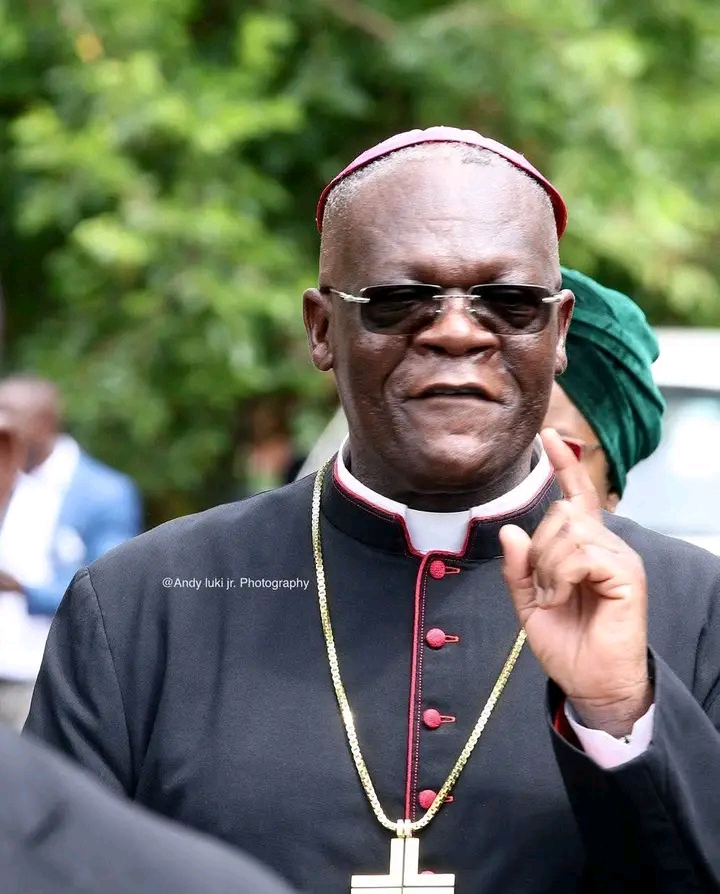
There is something else we must protect. The sanctity and dignity of religious office itself. A bishop does not merely carry his personal name. He carries an office. He carries centuries of tradition. He carries the expectations of a flock, and in the eyes of believers, he carries a sacred trust. That is why religious leadership can sometimes command respect even among people who do not belong to that religion. Look today at Pope Leo XIV.
When the Pope engages Muslims, Jews, Christians of other traditions, political leaders and people who profess no faith at all, the dignity of his office allows him to enter spaces far beyond Catholicism. That is the extraordinary power of religious moral authority. It transcends the congregation. It transcends denominations. It can even transcend religion itself. A Muslim should be able to recognise the moral stature of a Catholic bishop. A Jew should be able to recognise it. A Protestant should be able to recognise it. A President should recognise it. An opposition leader should recognise it. That is why the vestment must never acquire party colours.
The moment a religious office becomes readily identifiable with the political fortunes of one camp, something immeasurably valuable begins to diminish. When that religious leader subsequently condemns government, millions may no longer hear the shepherd. They hear the opposition, and when the political tide changes, another section of society may no longer hear the shepherd either. They hear yesterday’s political adversary. The Church loses.
HISTORY SHOULD HUMBLE US
As a Jew, I cannot discuss the moral independence of religious institutions without remembering history. Six million Jews were murdered during the Holocaust, including approximately 1.5 million children.
The history of Christian responses during that terrible period is complex. There were extraordinarily courageous Christians and Catholic institutions that protected Jews, sometimes at the risk of their own lives. There also remain serious historical questions concerning institutional responses to the persecution and extermination of Europe’s Jews. Rwanda provides another terrible lesson about what can happen when political and ethnic divisions penetrate religious communities themselves.
I am not comparing Zambia today with Nazi Europe or Rwanda. Absolutely not. Religious institutions must protect their independent moral authority before political division enters the sanctuary, not after.
ZAMBIA NEEDS THE CHURCH
Zambia needs a strong Catholic Church. We need its schools. We need its hospitals. We need its development institutions. We need its intellectual tradition. We need Catholic social teaching. We need its defence of the poor and vulnerable, but probably above everything else, Zambia needs its independent moral voice. A voice capable of telling State House, “You are wrong”, and capable of turning to the opposition and saying exactly the same thing when the opposition is wrong. A voice that condemns political violence regardless of the perpetrator. Corruption regardless of the beneficiary. Tribalism regardless of the politician promoting it. Injustice regardless of the political identity of its victim, and a voice honest enough to acknowledge national progress wherever genuine progress has occurred.
Indeed, only recently, as Zambia approaches the 13 August 2026 elections, the Catholic bishops collectively issued a Pastoral Statement appealing for peaceful, violence free and civil elections. That is precisely the kind of national episcopal voice Zambia needs.
Governments will come and go. Presidents will come and go. Political parties will rise and disappear. Generations of bishops will come and go, but the Church will remain. Nobody, politician or cleric, should therefore mortgage the accumulated moral capital of the Church for the temporary fortunes of an election.
The Church must remain sufficiently independent that, after the campaigns have ended and the ballots have been counted, the winner and the loser can enter the same church, kneel before the same altar and recognise the same shepherd.
Let the altar remain sacred. Let the pulpit remain prophetic. Let the ballot remain free, and let the moral voice of the Church belong to the whole nation and never to a political camp.
Zambia Forward, TOGETHER in UNITY. 🇿🇲
Saviour Chishimba
President
United Progressive People (UPP)
UPND Alliance Partner