

By Oliver Sepiso Shalala
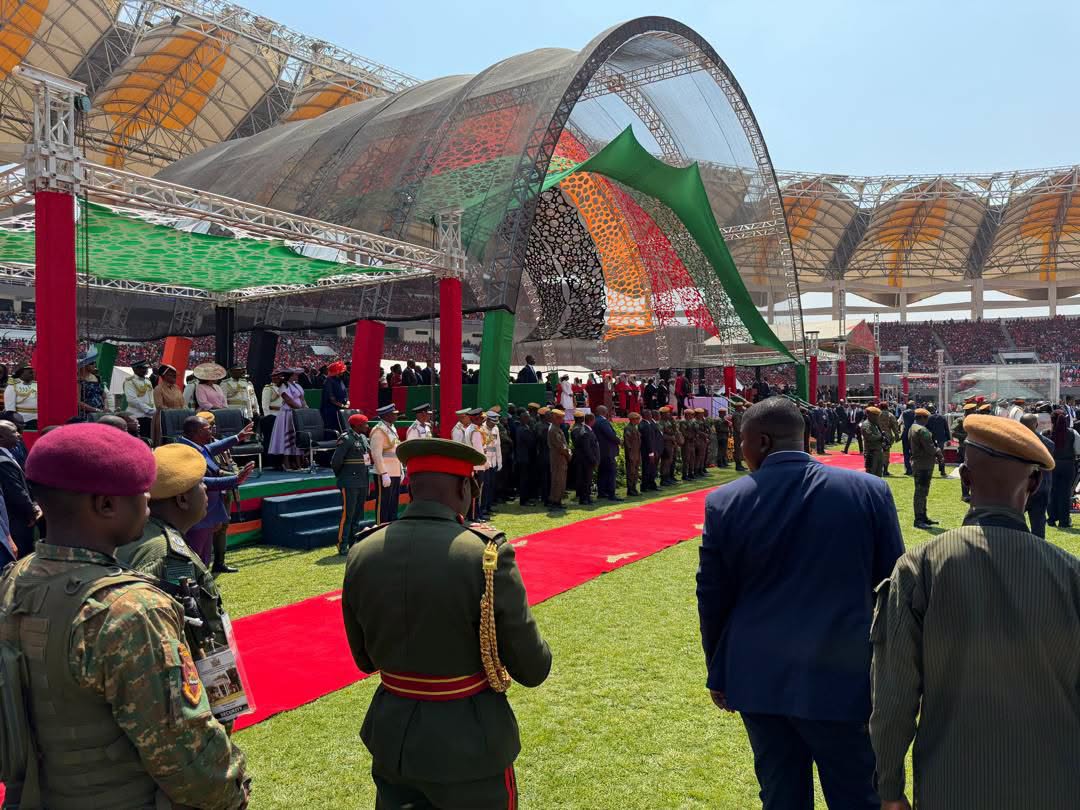
THE ANTI-FPV MESH THAT WAS DEPLOYED OVER THE PRESIDENTIAL STAGE AT HEROES DURING THE INAUGURATION OF PRESIDENT HAKAINDE HICHILEMA
By Shalala Oliver Sepiso
An extraordinary air security operation unfolded at the National Heroes Stadium in Lusaka, where the Government of Zambia, orchestrating a joint mandate through the Cabinet Office and the Zambia Defence Force, authorized the deployment of an anti-FPV mesh structure over the presidential stage.
The decision to install this physical, high-tensile protective screen was driven by credible, vetted intelligence pointing to severe and sophisticated threat vectors. Intelligence agencies warned of potential targeted assassinations utilizing agile, explosive-laden First-Person View (FPV) drones — a modern, low-altitude warfare threat capable of bypassing traditional radar nets. The stakes were amplified by a historic diplomatic gathering. The ceremony drew the largest contingent of sitting foreign Heads of State to assemble in Lusaka for an inauguration, creating a unprecedented security microclimate requiring zero-fail defense parameters.
Recognizing that electronic signal jammers alone could be circumvented by autonomous flight paths or fiber-optic guidance, the military implemented the anti-FPV mesh as a definitive, kinetic fallback layer. The engineered canopy acted as a physical shield directly above the dignitary pavilion, designed to instantly entangle the rotors of low-flying kamikaze drones or trigger their contact-fused payloads at a safe standoff distance before they could breach the perimeter. Woven seamlessly into the structural architecture of the main stage, the deployment remained largely invisible to the cheering crowds in the stadium, yet it served as a stark testament to the modern realities of protecting global leadership in an era of asymmetric aerial threats.
An anti-FPV mesh is a passive physical barrier made of high-tensile steel wire, nylon, or high-density polyethylene designed to intercept and neutralize incoming First-Person-View (FPV) kamikaze drones before they can hit a protected target. Unlike electronic jammers, it provides a strictly mechanical line of defense.
The tight grid catches fast-rotating rotor blades. The drone’s motors stall or tear away, causing the aircraft to crash harmlessly into the barrier. If an FPV drone carries a shaped-charge or contact-fused explosive, the mesh forces the munition to detonate a safe distance away from the actual target, reducing the damage. Modern FPV drones often use hardwired fiber-optic cables or analog signals that ignore traditional radio-frequency jammers. Physical mesh acts as a reliable final fallback layer.