

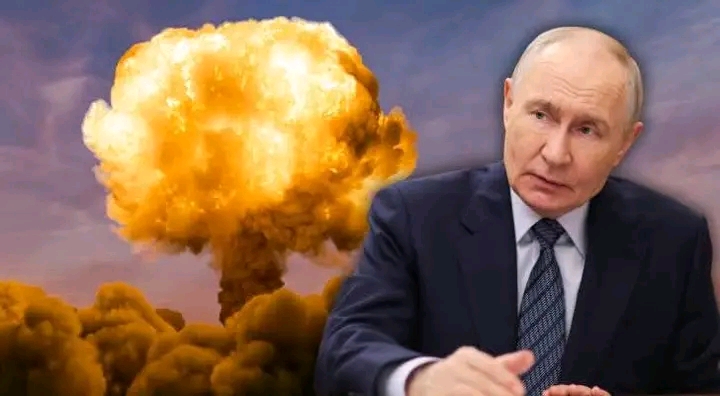
THE COUNTDOWN IS ENDING—EUROPE HAS ENTERED THE DANGER WINDOW
For years, European officials have warned that Russia might eventually test NATO. The threat was always placed safely in the “coming years”—distant enough to acknowledge, but never urgent enough to force immediate action.
That language is now worn out. The danger window is opening, and some reporting on the latest U.S. intelligence assessment indicates it could begin as early as this fall.
Washington reportedly believes Vladimir Putin could test NATO with a limited attack, potentially ranging from cyberwarfare and sabotage to a small ground incursion against one of the Baltic states.
This does not mean intelligence agencies have confirmed an invasion order or established a precise date. It means the risk is no longer being discussed as something that begins only after the war in Ukraine ends. For the first time, American assessments reportedly consider that Putin could move while the war is still underway—and potentially within the next year.
The concern was serious enough for CIA Director John Ratcliffe to make an extraordinary visit to Moscow and reportedly warn Russian intelligence officials against attacking any NATO member.
President Trump described the trip as “semi-routine.” Visits like this are anything but routine. The last publicly known visit by a CIA director to Moscow came in November 2021, when William Burns personally warned the Kremlin against invading Ukraine. Three months later, Russia launched its full-scale war anyway.
Now the warning concerns NATO itself.
The rhetoric surrounding the meeting is equally revealing. Kremlin-linked ideologue Alexander Dugin wrote: “If you want us not to escalate, give us Ukraine and we won’t.”
Dugin does not issue military orders, but his words expose the imperial logic surrounding the Kremlin: surrender Ukraine to Russia, or Moscow will continue raising the threat against the rest of Europe.
One possible Russian gamble would be a deliberately limited incursion designed to fracture NATO politically. Putin would not initially need to conquer an entire Baltic state. He would need to seize enough territory to force every allied capital to answer the question Moscow has spent years preparing: will NATO risk a major war to recover it?
If the Alliance hesitated, Russia could attempt to use captured territory as leverage—demanding an end to Western support for Ukraine in exchange for halting further escalation. This remains analysis, not a confirmed Russian operational plan, but it fits Moscow’s established strategy of applying controlled pressure and betting that Western fear will overcome collective resolve.
Meanwhile, Ukrainian intelligence says Russia’s General Staff has prepared a potential mobilization of 600,000 additional personnel across 2026 and 2027—300,000 each year. A final decision may come after Russia’s September parliamentary elections. Most would replenish forces fighting Ukraine or staff newly created formations, while some could reportedly train in Belarus.
Poland has received 28 additional K2 tanks under its 2025 contract with South Korea. Their delivery was scheduled—but their destination was a deliberate Polish decision. Warsaw assigned them to the 16th Mechanized Division defending northeastern Poland, with formations stationed only kilometres from Russia’s Kaliningrad border.
Those tanks could have reinforced another part of Poland. Warsaw chose the Russian frontier—an unmistakable indication of where it believes the danger is growing.
Across the Baltic and Nordic frontier, NATO members are strengthening defenses while Russia expands military facilities, logistics networks and its capacity to support additional troops. Belarus is also developing rail and logistical infrastructure that could serve future Russian deployments.
No single development proves that a wider war is inevitable. Together, however, they form a pattern that can no longer be dismissed as ordinary saber-rattling.
We are no longer casually watching a distant countdown. The intelligence warnings have changed, the tanks are moving, the logistics are being built and the threats are becoming increasingly direct. The pieces are already being placed on the board.
The purpose of recognizing this danger is not to declare that World War III has already begun. It is to prevent Putin from believing he can begin one in small, manageable pieces. If Russia crosses NATO’s border and the Alliance is forced to answer, the world after that morning will not be the same.
Europe may have months—not years—to prove that it is ready. The strongest way to prevent Russia from testing NATO tomorrow is to ensure it cannot defeat Ukraine today.