

THE DAY THE HIRED BOO REPORTED FOR DUTY—AND FOUND THE WRONG AUDIENCE:
(How Chiwenga Returned from Political Obituary and Disturbed the 2030 Funeral Programme)
By Reason Wafawarova
Zimbabwean politics has developed a highly efficient funeral service. You do not have to be dead. You only need to become inconvenient.
First, somebody writes your political obituary. Then several enthusiastic youths print placards confirming that the people have rejected you. Provincial structures discover simultaneously that you have always been disloyal. Social-media patriots explain that you are finished. Finally, a conference is assembled to bury you while you are seated at the top table.
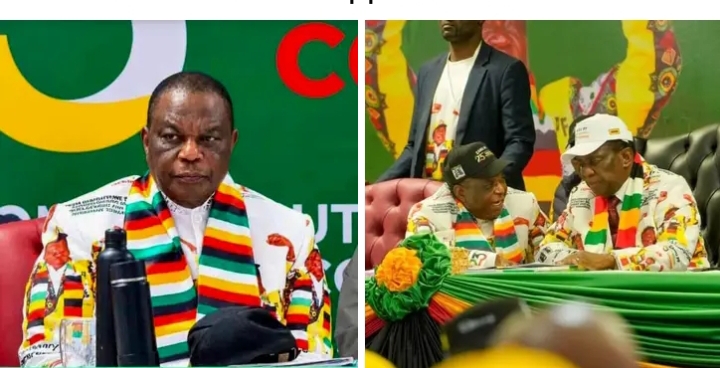
General Constantino Chiwenga arrived in Chinhoyi for his funeral. The programme appeared straightforward.
A small choir would sing Ngaaende Chiwenga. Some placards would announce that Chiwenga must stop killing people. TikTok would provide breaking news that the General was on his way out. The conference would clap. The provinces would resolve. The party constitution would be adjusted. The 2027 congress would be placed in storage.
President Mnangagwa would proceed peacefully towards 2030, where Parliament would elect him for seven years and everyone would discover that democracy had become much more efficient after removing the voters.
Unfortunately, the deceased had prepared a speech.
THE PROBLEM WITH BURYING A GENERAL WHO STILL HAS A MICROPHONE:
Chiwenga did not shout. He did not overturn the table. He did not arrive wearing camouflage and carrying a statement from the Zimbabwe Defence Forces.
He did something far more dangerous. He asked questions.
What caused the events of 2017? Were we not correcting rot? Are we repeating the same mistakes? Do these resolutions really come from the people? Are ordinary Zimbabweans benefiting from our programmes? Why should the many survive through the benevolence of a privileged few?
Then he returned President Mnangagwa’s famous 2017 words to their original owner: the voice of the people is the voice of God.
There are moments when receiving your own quotation feels less like recognition and more like being served court papers.
Chiwenga was effectively saying: “Comrade President, I have brought back the receipt from November 2017. Kindly explain the goods delivered.”
The conference became quiet. Not ordinary quiet.
It became the kind of quiet in which people suddenly remember that coughing may be interpreted factionally.
Some delegates probably stopped breathing temporarily to avoid producing an unauthorised sound.
THE BOOING DEPARTMENT EXPERIENCED TECHNICAL DIFFICULTIES:
There had been hostile placards and chants.
Claims circulated that protesters had been organised to create an impression of popular rejection. That allegation remains unproved. We must not accuse innocent citizens merely because they arrived together, carried professionally coordinated messages and discovered identical political anger at the same time.
Coincidences also enjoy constitutional rights. But whatever the original plan, the auditorium refused to cooperate.
Chiwenga spoke, and instead of being swallowed by hostility, he commanded attention. When he finished, the applause was large enough to create an administrative problem.
The people allegedly hired to demonstrate that Chiwenga had no people suddenly found themselves surrounded by people applauding Chiwenga.
This is known in political science as an invoice without delivery.
The difference between manufactured consent and political resonance is simple. Manufactured consent arrives by bus carrying placards. Resonance is already seated inside the hall.
Someone merely gives it words. Chiwenga gave it words.
THE PARTY REMEMBERED THAT IT CONTAINED MEMBERS:
For several years, the 2030 project has advanced like a government convoy. Everybody moves aside.
A slogan began at rallies. Youths demanded continuity. Provinces discovered that 2030 was their deepest historical desire. Conferences resolved. Lawyers drafted. Cabinet approved. Parliament debated briefly and obeyed extensively. Some opposition MPs discovered that constitutional principle becomes lighter when carried inside a parliamentary vehicle.
CAA3 became law. The President’s term was extended. Parliament extended itself. Councillors extended themselves. Senators extended themselves. Everybody already sitting down received a longer chair. Nobody consulted the people still standing.
That is where the aspiring MPs and councillors enter the story.
Thousands of ZANU-PF members had been preparing for 2028. They had attended funerals, paid school fees, bought football kits, donated mealie-meal and greeted every village chairperson as “Cde Chairman” even when the chairman was younger than their last-born child.
They were investing in democracy. Then CAA3 informed them that democracy had been postponed.
Their sitting MP, who was supposed to face a primary election in 2028, received two additional years. The aspiring candidate received two additional years of buying drinks for district officials.
This was described as continuity. Continuity is a beautiful word when you are the person continuing.
When you are waiting for someone else’s seat, it is called obstruction.
THE 2030 PROJECT DISCOVERED A QUEUE:
Chiwenga’s greatest potential constituency is not composed only of soldiers, war veterans and retired generals.
It includes everyone who has been told: “Comrade, your time will come,” only to discover that time itself has been constitutionally amended.
CAA3 locked Chiwenga out of the presidency. It also locked aspiring MPs out of Parliament, aspiring councillors out of councils, aspiring senators out of the Senate and aspiring ministers out of photographs taken while inspecting unfinished bridges.
These people may not have read every clause of the Constitution. But they understand a blocked promotion.
They know that if the 2027 ZANU-PF congress is postponed to 2030, the party queue has also been extended. If Mnangagwa becomes the sole candidate, internal democracy will have achieved its highest form: everyone is free to contest provided nobody contests.
Anyone challenging the sole candidate may then be expelled for disunity. This is efficient electoral administration. It eliminates disputed results by eliminating alternatives.
Chiwenga is inviting the people in the queue to inspect the person holding the “Closed Until 2030” sign.
THE STOCKHOLDERS HAVE MET THE SHAREHOLDERS:
There is also a deeper quarrel inside ZANU-PF.
On one side are liberation-war cadres, war veterans, provincial organisers and retired commanders who regard themselves as the historical custodians of the party.
They fought for the country. They organised the party. They buried comrades. They protected the revolution. They believe they own political shares purchased with sacrifice.
On the other side are the new men of money.
They arrive with contracts, vehicles, donations, tenders, business dinners and the extraordinary capacity to become senior politicians before older members have finished asking who introduced them.
The old cadres brought liberation credentials. The new cadres brought proof of payment.
Naturally, there is ideological tension.
Chiwenga calls some of these figures zvigananda—predatory elites growing rich around the State while ordinary citizens depend upon their generosity.
This explains his warning that the many cannot survive on the benevolence of a privileged few.
A country is not developed because a businessman can distribute cars.
A party is not ideologically strengthened because somebody pays for the conference and receives a senior position close to the receipt.
Patronage can purchase noise, attendance and temporary loyalty. But political momentum is a difficult commodity. It sometimes refuses to honour the tender.
CHIWENGA IS NOT CHE GUEVARA:
Balance is necessary. Chiwenga has been inside this Government since 2017. Before that, he commanded the military under the same political system. He cannot arrive in 2026, discover inequality and behave as if he has just returned from a long research mission in Finland.
He is not an opposition activist who accidentally wandered onto the conference platform.
Nor is every rich businessman automatically a thief, and every war veteran automatically a guardian of the poor.
Many revolutionary custodians have accumulated comfortable custody. The dispute is not between saints and sinners. It is between rival centres of power describing their interests in ideological language.
But good politics does not require a perfect messenger. It requires a message that finds an available grievance.
Chiwenga found one. He told party members that their resolutions may not belong to them.
He told ordinary Zimbabweans that development cannot mean waiting for crumbs from privileged benefactors.
He told the liberation establishment that its party may be moving from revolutionary ownership to corporate acquisition.
Most importantly, he told Mnangagwa that 2017 had not been forgotten.
WHEN HISTORY CLEARS ITS THROAT:
Chiwenga asked whether the same rot corrected in 2017 was returning.
That was not a coup announcement. He did not say tanks were warming up somewhere.
But when the general who commanded the military in November 2017 asks whether the conditions of November 2017 are returning, sensible people do not answer by discussing the weather.
It is like a retired undertaker asking whether anyone has recently updated their will. The question is constitutionally innocent. The atmosphere is not.
Mnangagwa understood that he had been challenged. He responded by defending his economic record: GDP growth, lower inflation, roads, schools, hospitals, water and improved houses.
It was an important response.
Chiwenga had described a country in which the people required rescue from oligarchic dependence. Mnangagwa described a country enjoying “huge improvement” in welfare.
The delegates were offered two nations while sitting in one auditorium.
In Chiwenga’s Zimbabwe, the majority are waiting for the generosity of the privileged few.
In Mnangagwa’s Zimbabwe, the roads, hospitals, schools, water and houses have substantially improved.
The advantage of living in Zimbabwe is that citizens can compare both speeches with the road outside, the clinic nearby, the dry tap at home and the balance in their EcoCash account.
GDP may have risen impressively. The question is whether it rose alone.
THE CONSTITUTIONAL AMENDMENT MAY NEED A CONSTITUENCY:
The reported plan was to align the ZANU-PF constitution with CAA3. Extend the party president’s term from five years to seven. Postpone the 2027 congress until 2030. Retain Mnangagwa as President and First Secretary. Ensure that he becomes the sole candidate. Allow Parliament to elect him for a new seven-year term.
It is a magnificent political bridge. Every time the traveller reaches the end, engineers add another section.
Chiwenga has placed a tollgate on that bridge. He argues that constitutional changes must return to the grassroots: supporters, cells, districts, provinces and the Central Committee.
This sounds like a procedural disagreement. It is actually political warfare conducted with minutes, agendas and attendance registers.
If the proposal returns to the grassroots, it enters territory populated by aspiring candidates whose opportunities CAA3 postponed. The very people being asked to extend the current leadership are also being asked to extend their own waiting period.
That is not consultation. That is asking the queue to vote for the closed sign.
THE POLITICAL CORPSE HAS REQUESTED AN ADJOURNMENT:
Before Chinhoyi, Chiwenga was said to be finished. He had missed Chivayo’s funeral programme. He had not attended the President’s fundraising ball. He had avoided Tagwirei’s swearing-in.
His silence was described as weakness. His absence was described as isolation.
CAA3 had closed his route. The party amendments would lock the remaining door.
Then Chiwenga walked into the conference and reminded everyone that a closed door is useful only when the person outside accepts that it is locked.
His speech did not defeat Mnangagwa. It did not repeal CAA3. It did not make Chiwenga the automatic successor.
What it did was destroy the fiction of unanimous surrender.
The General showed that he still understands institutional psychology. Patronage appears invincible while everyone believes everyone else has already submitted. The first senior person to articulate the hidden grievance changes the calculations of the entire room.
Silence becomes attention. Attention becomes applause. Applause becomes a signal. The signal tells isolated doubters that they are not isolated.
That is how momentum begins.
THE WAR IS NOW IN THE AUDITORIUM:
The succession conflict has moved beyond rumours. It is no longer hidden entirely inside cancelled Politburo meetings, missed dinners, absent condolences and social-media accounts operated by patriots whose employment descriptions remain mysterious.
The two centres of power have now presented competing political arguments from the same platform.
Mnangagwa offers continuity, economic statistics, constitutional control and an organised route to 2030.
Chiwenga offers correction, grassroots consultation, liberation legitimacy and resistance to rule by a privileged few.
Neither side should be romanticised. Both helped construct the system they now dispute.
But one fact is no longer deniable. Chiwenga is fighting back.
The people who arrived hoping to sing Ngaaende Chiwenga may have attended the wrong funeral.
The corpse sat up. It adjusted the microphone. It quoted the President.
Then the auditorium applauded.