

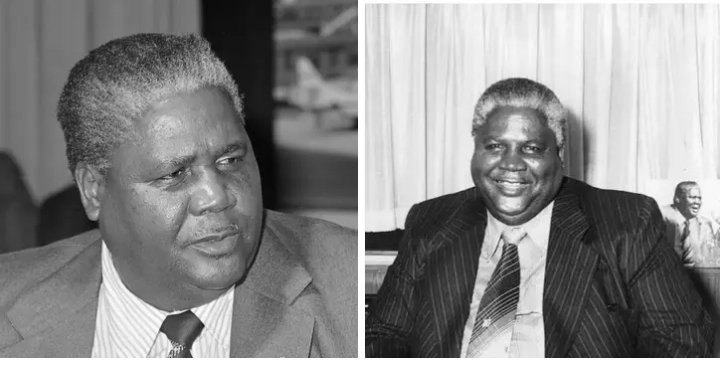
THE NIGHT JOSHUA NKOMO WAS HUNTED, 10 KILLED IN COMMANDO RAID IN 1979
The bloody road to the 1980 elections that ushered Zimbabwe
Rhodesia sent raiders into neighboring Zambia and Botswana in April 1979 to attack command centers of guerrillas who have vowed to disrupt elections in Rhodesia . At least 10 people were reported killed.
In a 3 A.M. strike into Lusaka, the Zambian capital, Rhodesian commandos disguised as Zambian soldiers wrecked several buildings in an attack apparently aimed at capturing or killing Joshua Nkomo, one of the two principal Rhodesian guerrilla leaders.
A bungalow where Mr. Nkomo lives was destroyed in the raid, but the guerrilla leader escaped injury. At first, Zambian officials and guerrilla aides said that Mr. Nkomo had not been at home during the attack, but Mr. Nkomo insisted later that he had escaped during a gun battle.
The report that at least 10 people were killed and 12 wounded in the Lusaka raid was made by Zambian officials, but they did not say whether any senior aides of Mr. Nkomo were among the casualties. There was no official word on Rhodesian losses, but some sources in Salisbury, Rhodesia’s capital, said the raiders returned without casualties. They were ferried across the Zambezi River in LandRovers on pontoons.
Other Rhodesian troops, dressed in the uniforms of the Botswana Defense Force, drove into Francistown on the border at 1 A.M. and captured 14 of Mr. Nkomo’s aides. The officials were in charge of coordinating the passage of guerrilla recruits and refugees from Rhodesia through Botswana into Zambia.
At about the same time, Rhodesian attackers destroyed a ferry that crosses the Zambezi between Botswana and Zambia at Kasungula, the point where Rhodesia, Botswana and Zambia meet. A Rhodesian military communique issued in Salisbury said the ferry had been carrying war materials for the Zimbabwe People’s Revolutionary Army, the military wing of Mr. Nkomo’s Zimbabwe African People’s Union.
A Rhodesian military spokesman refused to say what the principal objective of the Lusaka attack was. But it appeared to be similar to that of raids into Mozambique over the last three years, when military units attempted to seize or kill commanders of the other main Rhodesian guerrilla force, which is led by Robert Mugabe. On each occasion the raiders struck at camps where they believed guerrilla commanders were present, only to find that their intelligence information had been faulty.
There was speculation in Rhodesia that the attacks into Zambia and Botswana were part of a military offensive aimed at blunting guerrilla plans to disrupt elections for a black-led Government which were scheduled to begin. The elections, involving 2.8 million black voters and more than 100,000 whites, are to continue for five days under one of the most elaborate security operations ever mounted in Rhodesia.
The latest drive on the guerrillas began a month before with a series of raids against camps and other targets in Zambia and Mozambique. However, military spokesmen have said that three bombing raids this week against targets in Zambia, which left 350 people killed or wounded, had come too late to have any effect on rebels already inside Rhodesia preparing to disrupt the vote.
A possible motive for today’s attacks could have been to demoralize guerrillas led by Mr. Nkomo and encourage them to defect, as several hundred insurgents have already done under a Government amnesty program. Another motive could be to avenge the deaths of 107 Rhodesian civilians in two Air Rhodesia airliners shot down by Nkomo forces in the past six months.
The attack on Lusaka lifted sagging morale among the 250,000 Rhodesian whites, some of whom compared it to the Israeli raid on Entebbe Airport three years ago. The military command gave few details, but reports from Lusaka indicated that the raiders were probably members of the Selous Scouts, a unit that operates independently of the army’s main force, specializing in assaults across the border.
Witnesses in Lusaka said that some of the raiders entered the Zambian capital in Land-Rovers identical to those used by the Zambian Army, and bearing Zambian markings. Others were reported to have parachuted onto a golf course close to the Nkomo residence.
The attackers were described as blacks. Most members of the Selous Scouts are blacks, but whites blacken their faces for raids across the border. Witnesses said the raiders were dressed in Zambian uniforms.
Source context: The New York Times, April 13, 1979
#history #heroes