

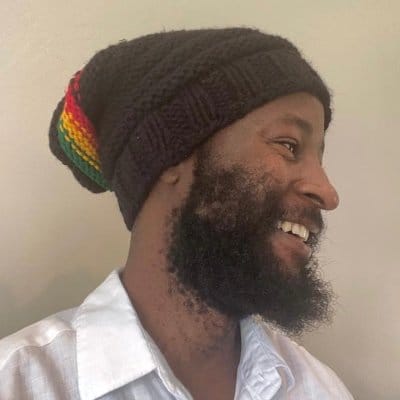
By Sishuwa Sishuwa
The quest for a life presidency: How Hichilema plans to destroy opposition-
Fresh from stealing Zambia’s election, President Hakainde Hichilema has immediately set his sight on destroying opposition as part of a wider goal to promote his ruling United Party for National Development (UPND) as the only party and install himself as life president. Those targeted include the National Reconciliation Party for Unity and Prosperity (NRPUP) which, having won 60 parliamentary seats in last week’s deeply flawed election, has emerged as the main opposition. Others are religious figures from the Catholic Church and ex-military generals who did not endorse him. To achieve his goal, Hichilema has fabricated a story that implicates the three groups – the political opposition, the Catholic Church, and the former military generals – as plotting to overthrow his administration.
Some of those targeted are already in police custody, having been arrested arbitrarily, detained without charge, and without being taken to court. The total disregard for due process is one of the most concerning features of the Hichilema presidency. Lawlessness has been promoted as a governing principle. For Hichilema, the law is what he wants, not what the law says. For instance, over the three few weeks, at least 50 opposition members have been arrested and detained across the country without charge, many of them held far away from their families and prevented from seeing a judge.
These include George Chisanga, Enock Roosevelt Tonga, Davies Chisopa, Dr. Ngoma, Bishop Trevor Musonda Mwamba, Japhen Mwakalombe, Sebastian Kopulande, Patrick Mwansa, Richard Banda, Simon Phiri, Francis Mulenga, Lukas Simumba, Moses Ng’andwe (Chester), Felix Mangani Phiri (Felix Ndangeni Inshila), Winston Ngosa (IDC Light Comedy), Benard Chewe, Simon Phiri, Jackson Mutyoka, Soko Brazil, and many more. These political detainees are about to be joined by many more people who are earmarked for detention. The plan to arrest prominent political, religious, and ex-army generals was hatched earlier this month when the government abducted three opposition members who were returning from Russia where they had been sent for a weeks-long professional training in physical protection. The members were part of a small team that had been sent to Moscow by the NPRUP for training in Parallel Vote Protection (PVT) and VVIP security.
Members of the PVT crew returned to Zambia a week before those in the security detail who were to protect Brian Mundubile during the election campaigns as the party feared that its presidential candidate would not be accorded protection by the police. On arrival at Kenneth Kaunda International Airport, State agents abducted the returning graduates and detained them in an undisclosed location, denying them access to legal representation and communication with their party officials or family members. Appeals for their release from the NPRUP were met with silence. A well-placed government insider disclosed that the trio was given a script on how to secure their freedom: they needed to frame several prominent people belonging to Mundubile’s party as members of a militia group that plans to usurp state power:
“This mafia story was created by President HH. He is working with Martin Phiri, the president of Resolute Party who endorsed him before the election. Phiri was with Makebi Zulu before the election as part of the TONSE alliance, but he was offered lots of money to leave bena Mundubile. That is how he went to the UPND and told them about the team that had been sent to Russia for training on how to handle PVT and VVIP. That is how the government ambushed those three people at the airport. The state told them that they will not be free unless they agree to frame some people and say they were sent to Russia for other things. After the three were badly treated, they reluctantly agreed to the scheme. They have been tasked to work with Mr Phiri to legitimise this militia story…. Mr Phiri will be given airtime to say that the militia story is true, that as president of RP he was privy to all the arrangements including the decision to send those people to Russia, and that Valden Findlay funded it. Mr Phiri has been given a lot of stuff to say by the President, all to justify picking up the so many people they want to arrest.”
Enter the Secretary to the Cabinet Patrick Kangwa.
The unveiling of the fabrication
The fabrication that a militia is preparing to overthrow the Hichilema administration was publicly launched on 17 August when the country’s topmost civil servant unveiled it in a televised national address. Patrick Kangwa claimed that the government had uncovered a plot involving opposition members and other people who plan to seize state power through an armed insurrection. Kangwa’s carefully worded statement set the stage for the coming mass arrests. A government insider who asked to remain anonymous provided illuminating context that explain why it was the Secretary to the Cabinet rather than the President, army commander, or Inspector General of police who read the statement:
“Ba Kangwa did not know much about that statement. That was President HH’s statement, but Ba Kangwa was chosen to read it because the president said he wanted the government to be the one to respond so that the public do not see the politics behind it. Initially, they asked Vice-President Mutale Nalumango to read it, but she refused saying, ‘I am a political candidate, so people will see through it’. They did not want to use the army commander or the police IG because both are seen as President HH’s people. So, they settled for Ba Kangwa. It was felt that the public seem to easily believe Ba Kangwa and that it is better if the statement was read by a northerner. The plan was for the SC to raise it first, then for president HH to take it up, and then use News Diggers to start a smear public campaign that frames BM [Brian Mundubile] as guilty of this militia story. The arrests would then follow, possibly starting with Ba Archbishop [of Lusaka Archdiocese Alick Banda] who they want to link to money laundering as part of this scheme.”
To avoid mispresenting Kangwa, it is worth quoting his statement at length:
“Government wishes to inform the public that on the night of 13th August 2026, the Zambia Police working on a tip off from vigilant members of the public, led a joint operation to apprehend suspected militia and Persons of Interest in an operation that was conducted at a premise in Lusaka’s Kabulonga area.
The Persons of Interest have been under surveillance over the last few years and more recently in the last few months, additionally, some of the individuals involved were connected to military plans involving foreign nationals and illegal military training camps, thus pausing (sic) a serious threat to State Security!
The individuals in issue were found in possession of high grade military weapons, ammunition and other materials for use in armed insurrection. The operation resulted in seizure of restricted high grade weapons and the apprehension of suspected members of the militia and other persons found at the scene, while others fled, and there (sic) whereabouts are unknown.
During the operation, the occupants of the premises fired shots at the Law Enforcement agencies which resulted in an exchange of fire. Others found on Scene where senior members of certain political parties in Zambia.
Among 11 persons apprehended from the scene of crime who face various criminal charges include
George Chisanga
2.Dr Bishop Trevor Mwamba
Simon Phiri
Richard Banda
Francis Mulenga
Patrick Mwansa
All of whom are held in lawful custody at various police stations in Lusaka. The suspects have been charged and access will be given to their families and their lawyers. It is also important to mention that Mr Brian Mundubile presidential candidate for the NRPUP was also found on the scene. Investigations are ongoing and the nation will be kept updated accordingly.
I Thank You.”
Source:
https://www.facebook.com/story.php?story_fbid=1411520087746619&id=100066659241624
Hichilema takes up the fabrication
A day after Kangwa raised it, the militia story was then taken up and amplified by Hichilema. Delivering his acceptance speech after the Electoral Commission of Zambia gave him the victory, the President claimed that the opposition were trying to introduce an alien culture of armed militias, one that he would not allow:
“We should not allow our country to degenerate into bands of armed militias. To bring a culture of guns in our country, militia type behaviour, what we see in other regions, is alien to us…. And I return to this militia thing that is emerging in our country, you can’t use militias to seek public office, to acquire public office”, said Hichilema.
The following day, on 19 August, the fabrication was taken up by News Diggers, a private newspaper that sometimes defends Hichilema more than the state-owned publications. In an editorial, the newspaper claimed that the militia story “has more than meets the eye”:
“TODAY we would like to focus on the unfolding story about a shootout between state security officers and an alleged militia at a house that belongs to Mr Brian Mundubile. This story is the biggest development coming out of this election…the evidence that will emerge from this can either leave a serious dent on the UPND government or it can prove that Mr Mundubile indeed had links to militia and was plotting something. Whatever the case, this is a matter that citizens must take serious interest in….To understand this story better, our approach is that we need to backtrack to a fortnight ago when we first heard about some individuals whom the NRPUP claims it had sent to Russia for military training in order to protect Mr Mundubile during this period. In tomorrow’s edition, we will unpack that story and show how it provides a lead into what transpired at Mr Mundubile’s house.”
Under the equally authoritarian era of Lungu, News Diggers was one private publication that could be relied upon to defend public interest. Under Hichilema’s authoritarian rule, the paper defends the indefensible, serves as a sledgehammer for undermining the opposition, and provides platform for these orchestrated state-led schemes that not only undermine public interest but also further and consolidate Hichilema’s one-man rule. In truth, the statement by the Secretary to the Cabinet is as bogus as Hichilema’s election victory and does not stand to scrutiny for several reasons.
, the operation was conducted on 14 August, but Kangwa claims it was a day earlier, on election day. Evidence that is available in the public domain shows that on 14 August, Mundubile met election observers from regional bodies such as the COMESA, SADC and the AU. The NPRUP presidential candidate did so in the company of his spokesperson George Chisanga, party finance chairperson Mutotwe Kafwaya, United National Independence Party (UNIP) president Trevor Mwamba, former president Edgar Lungu’s son-in-law Patrick Mwansa, and his bodyguard Richrd Banda. Later that day, he addressed the public on the decision by the ECZ to suspend the vote count, calling for transparency in the handling of results. If the country’s topmost civil servant does not even know when the state carried out the raid on the opposition leader’s house, then what does he really know?
Second, Kangwa claims that the government had been conducting surveillance on the arrested for years but only carried out the operation after a tip from members of the public. Both statements cannot be true. Why would the security services need a tip from members of the public if, for years, they were already tracking or closely following the suspects?
Third, Kangwa claims that some of the suspects ran away from the scene. How was it possible for anyone to escape from a house raid conducted by a joint team of security officials in a very closed area? Are the country’s security forces this incompetent? And why is the government not hunting for those who are alleged to have escaped?
Fourth, if the exercise was a joint military and police operation, then why wasn’t the statement issued by the people who conducted it – the police or military? Was, as the source cited earlier stated, the intention to conceal the political motivations behind the operation since the top two government officials who could have read it –Hichilema and Nalumango – were both candidates in the election? Or perhaps the police refused to participate in what was essentially a military exercise?
In fact, it is fair to say that Kangwa lied when he claimed that this was a joint exercise because it was not. The police were not part of the raid. The evidence for this conclusion came from the police itself. When the affected family members of the very people that Kangwa was to later list in his statement as having been arrested by the police asked for clarity on the whereabouts of their relatives, the spokesperson of the state security institution categorically stated that the opposition members in question were neither arrested nor in the custody of the police. In his statement, the Secretary to Cabinet wrote that “the Zambia Police…led a joint operation” but stopped short of explaining what exactly made it a joint exercise. Joint with who? Why did Kangwa fail to mention that it was commandos and officers from the Zambia Intelligence and Security Services who carried out the operation? Why was he keen to conceal the involvement of the army?
Fifth, where is the evidence that the raid followed due process? No one has the right to raid a private property without a search warrant. Can Kangwa tell the public the name of the judge who signed the search warrant and when it was issued? Can the country’s top civil servant also confirm if the joint military operation was authorised by the army commander and President Hichilema? If authorised, what were the rules of engagement? Did such rules allow them to shoot at anything that moves?
Sixth, the government claims that it has been conducting surveillance on the alleged plotters for years. How was this possible when those arrested only started working together recently when, following the state’s manoeuvres to block some of them from standing for election, they endorsed and began to support Brian Mundubile?
There are so many holes in the government’s story, but all that matters to Hichilema is the achievement of his objectives.
The objectives
The militia story, like the election result, is bogus, but Hichilema created it to achieve five principal objectives.
The first is to provide cover for what was, in effect, a botched-up abduction. The abduction of the opposition leaders occurred a day after the election when Hichilema learnt that he was losing. To pave the way for the manipulation of the results, the president got his allies in the electoral body to stop the count. Following external pressure, including from diplomats, the electoral body reversed the suspension of the vote count. The reversal came after Mundubile, his party officials and other opposition alliance members met election observers from regional bodies.
To facilitate the completion of the vote rigging exercise without any undue disruption from his political opponents, Hichilema directed security services to quietly remove Mundubile and his team from circulation. Not long after the opposition leaders arrived back home from their meeting with the regional election observers, a team of officers from the military and intelligence services broke into Mundubile’s house. After beating some of those they found inside and shooting at others, the officers abducted everyone including Mundubile’s youngest nephew. All were initially taken to ‘safe houses’, not police stations, which made it difficult for families to find their illegally detained relatives. Their phones and other electronic devices were confiscated, making it impossible to communicate with the abducted or know what had happened to them.
When people pointed an accusing finger at the government, Ministry of Information Permanent Secretary Thabo Kawana denied that the abductees were in the custody of the state, claiming the opposition had staged the disappearances of their colleagues to make Hichilema look bad. Initially, the plan was to keep them in prolonged and unlawful detention without disclosing their whereabouts to the public until after the announcement of the election results, but external pressure forced a change of plans.
One of those abducted was Trevor Mwamba, a retired Anglican Bishop of Botswana and president of the party of Kenneth Kaunda. After former Botswana president Ian Khama raised concern about Mwamba’s whereabouts, the government decided to deposit the abductees in various police stations across Lusaka. It was at this point that they were transformed from Hichilema’s political opponents to ‘persons of interest’ or members of a militia in preparation for slapping them with the charge of attempting to overthrow the state through insurrection, otherwise known as treason, was concocted. To date, however, the opposition figures remain in detention without charge. Neither have they been taken to court. However, by presenting the abductees as people who were arrested only after a joint operation between the police and the military, Kangwa was attempting to manage the government’s earlier denial about their whereabouts and explain how they found themselves in police detention.
The second objective is to cover the state from blame for the alleged cold-blooded assassination of Mutotwe Kafwaya, a former cabinet minister under the Lungu administration, who, as earlier stated, was among several senior figures who were with Mundubile when the army stormed his house. He was shot at by the invading commandos during the raid and reportedly taken to Maina Soko military hospital where he succumbed to gun-shot injuries and excessive bleeding after surgery. According to hospital sources, the authorities directed that no records about Kafwaya’s admission should be reflected in the system to prevent any evidence of the state’s involvement in his death:
“The government wants to cover itself by creating a fake story that when the commandos stormed Mundubile’s house, Mr Kafwaya shot and killed one of them and injured another one, and that the commandos shot him in self defence. But they are worried that the public won’t buy the story. I do not think Mr Kafwaya even knew how to operate a gun. He was an elder in the church. So the government does not know how to explain the issue. It will be interesting to see what the state would say in response if the wife or a relative of Mr Kafwaya went to court and applied for habeas corpus [a judicial order forcing law enforcement authorities to produce a suspect or person they are holding].”
The source added that the authorities were however undecided on the question of whether to dismember and dissolve Kafwaya’s body in sulfuric acid or simply bury it in an unmarked, secret grave, as they were afraid that returning it to his family would generate anger against Hichilema and the government. In claiming that ‘the occupants of the premises fired shots at the Law Enforcement agencies which resulted in an exchange of fire’ and that some of the suspects escaped from the scene and that their ‘whereabouts are unknown’, Kangwa is trying to conceal the death of Kafwaya and the involvement of the state in it by making it look like the former minister was either among those who ran away or were killed in the exchange of gunfire.
The third objective of Kangwa’s statement is to provide pretext for the planned mass arrests of prominent political, religious, and military elites who are perceived as having supported Mundubile in one way or another during the just rigged election. Sources in security services revealed that about 27 innocent people are earmarked for arrests starting anytime from now. Among the targeted victims include ex-military generals such as former Zambia Air Force commanders Eric Chimese and David Muma, ex-army commander Solomon Mumbi, former Zambia’s ambassador to Angola Lawrence Chalungumana, Lusaka Catholic Church Archbishop Alick Banda, and journalists from private media station that Hichilema perceives as having prioritised his main rival’s campaign.
There are also plans to arrest senior figures from Mundubile’s party such as Mundubile himself and his running mate Makebi Zulu. Other party figures such as Secretary General Chris Zumani Zimba have reportedly been assured of freedom if they encouraged Mundubile to concede defeat and call for unity. As one of the sources put it, “the planned arrests are a show of power by the President meant to weaken the opposition and punish anyone who caused him stress or embarrassment. He feels it is payback time. People like the Archbishop may be picked any time from now because the President has long sought his arrest, but he also wants to punish Mr Zulu whom he blames for the state’s loss in the Lungu burial case.” At the time of writing, Mundubile and Zulu were reportedly in hiding.
The planned mass arrests are designed to achieve four things. The first is to give credence to the concocted story of a militia, one that is not currently believed by many people outside hardcore supporters of the ruling party. Hichilema hopes that arresting a few ex-military generals would convince people that the fabrication is real. To embellish the story and turn the public against the arrested, the government plans to fabricate evidence by producing weapons from the inventory of civil wars in Zambia’s neighbours as arms that were recovered from Mundubile’s home during the raid. The second is to destroy what is likely to be the main opposition to his rule, the NRPUP.
By arresting its leadership on trumped-up charges, the president is, in the short term, hoping to weaken its capacity to organise protests against his sham election and, in the medium to long term, laying the groundwork for capturing and controlling the now main opposition party in a manner that is similar to how he destroyed the former ruling party, the Patriotic Front (PF). The third is to discredit the standing of the Catholic Church, another potential source of opposition, by implying that its senior bishops are now working with militia to subvert the state. Few things will give Hichilema illicit pleasure than the detention and possible removal of Archbishop Banda. The fourth is to intimidate the wide public into submission by sending a message that anyone who attempts to protest the stolen election will be crushed. Nothing frightens the public more than the spectacle of seeing its military, political and religious leaders arrested.
The fourth objective is to prevent the losing opposition party from filing a legal challenge against Hichilema’s sham election. Article 103 of Zambia’s constitution provides that “A person may, within seven days of the declaration of a president-elect, petition the Constitutional Court to nullify the election of the president-elect on the ground that the person was not validly elected or a provision of this Constitution or other law relating to presidential elections was not complied with.” This means Mundubile, Zulu, and their team have until next week Monday to petition Hichilema’s fraudulent election. Having packed the ConCourt with his loyalists just before the election, Hichilema knows that any case brought against him will likely fail, no matter the evidence adduced in support. What he fears though are two things.
The first is vacating the presidential seat. Once a petition is filed against his election, the law requires Hichilema to relinquish and hand over power to the Speaker of the National Assembly, who will exercise executive functions until the petition has been decided. The second thing he fears is the potential demonstration, before court and the public, of the evidence of the fraud that led to his re-election. In seeking to arrest NPRUP leaders over a concocted story of armed insurrection, Hichilema is out to frustrate the filing of a possible petition by preventing them from having sufficient time with the legal team. His desperation to secure the arrest of the two opposition leaders should be understood in this context.
If the plan to arrest Zulu and Mundubile fails, Hichilema has another plan on his sleeve: take over the control of the NPRUP. In the run-up to the election, Hichilema excluded many people from participating in the elections using the Registrar of Societies, the government office that registers and regulates political parties. A well-placed source in the Ministry of Home Affairs stated that the president is now trying to take over the leadership of the new main opposition party using the same office: “In the records, the president of NPRUP is Mr Ezra Tembo. Because the government blocked Mr Mundubile from running on FDD ticket, he ended up running on the NPRUP, so Ba HH is talking to Mr Tembo so that they can concede defeat, congratulate him on his re-election, and distance the party from Mr Mundubile and Mr Zulu, if they file a petition.”
The fifth objective is to divert public and international attention from the reality of Hichilema’s sham election to the false claim that his opponents are using a militia to seek public office. In truth, there is no militia. Hichilema is the real militia. He has shown that he is the law unto himself and that there is no institution including elections that he cannot manage to sort his personal interests and those of his foreign backers. In any society in which public trust in state institutions is eroded, the risk of chaos and violence is greater. By presiding over the descent into state lawlessness, Hichilema has, in effect, become not only the primary risk to state security in Zambia but also a clear and present danger to the country’s democracy, constitutional order, nationhood, and future. By subverting peaceful and democratic means of removing him from office and disregarding constitutional norms and democratic principles, he is driving the country towards instability.
Well, there you have it! Who will stop Hichilema?
By Sishuwa Sishuwa
There will be NO life president in Zambia, fullstop.
Dear Sishuwa
After reading your long long article i have observed the following:
1. You have realy made it sure that every President elect in Zambia is your oponent why?
2. You have made it a point that the democratic space we have in Zambia is not suitable in your mind as you would want it. You really admire dictator type of governance where there is acrimony always.
3. Where on earth can Zambians think of restoring a one party state already tasted in some cases.
4. Do you tthink zambians can go your way you are suggesting that HH can, which you have always linked every president elect to be desiring to be, zambia has moved on sir.
5. Your articles are always negative of the every leadership we have had i have never known of you appreciating any of our presidents elect starting from FTJ to HH the idea of Zambians enjoying freedom of others in a country are not preferable.
6. HH or any other in the current democractic dispensation cannot declare one party state himself where will yourself and the other lawmakers be? Some of these insunuation should be ignored and be out of your mind sir.
Come back to your senses put your energy on constructive criticisms other than persuing the path of confrontation.
Every democratic leadership have flaws that need correction but that does not mean calling for military intervention in the manner you have always suggested sir.
Zambia is a peaceful Christian nation, no evil plan shall ever succeed. God loves this country and he will not allow it to descend into chaos.
Respect the GOVERNMENT OF THE DAY and you’ll have a peaceful life.
Let’s move please,eh people are losing their lives over this,its people like you who are contributing to these happenings.You cannot just let it go….
Your unfulfilled desire to be appointed to something makes you the wrong person to comment on anything. Better go back to reading history, you have no value to Zambia.
Dr. Sishuwa has a very fertile imagination. What has happened with Mr. Kafwaya is unfortunate and the State’s story is not adding up.
However, his article is full of conjecture and unverified allegations, pouring fuel on a raging fire.
His imagination is in overdrive.
Sishuwa Sishuwa shouldn’t be given space to air his unwarranted unverified stories that are unnecessarily long to read. If let loose like he has been, this guy is capable of putting Zambia on fire easily. Why he hates Pres. HH with passion nobody knows…in fact the government should ban him from commenting on anything government. Or he risks being locked up for a long time where he can continue to educate perhaps those behind bars. This is ridiculous.
Sishuwa tell us what you going to do with ECL’s body now that the Court of Appeal ruled in your favor. Go ahead..! Why haven’t you guys buried him yet. Tell us why. Let’s start from there.
FYI, there will be no stone left unturned in pursuing the truth behind this malicious militia group by the government. You cannot fight State Security…you cannot fire at Law Enforcement Officers….or you will be killed. Take a chill pill for once and stop the nonsense.