

THE STRATEGIC IMPERATIVE FOR THE RE-ORIENTATION OF ZAMBIAN MILITARY DOCTRINE: A MANIFESTO FOR THE ESTABLISHMENT OF ZAMBIA DEFENCE UNIVERSITY
Comrades, Scholars, and Strategic Thinkers,
The formalisation of the Zambia Defence University (ZDU) under Statutory Instrument No. 3 of 2018 which structurally transitions the Military Training Establishment of Zambia (MILTEZ) into our nation’s apex defence and security institution marks a critical juncture in our national statecraft. As a movement deeply rooted in the rigorous study of military science and doctrine, we view this transition not merely as an administrative reorganisation but as a profound ideological necessity.
History demonstrates that a military apparatus devoid of a progressive, anti-imperialist ideology is reduced to a tool of ruling-class hegemony, and a state without an indigenous strategic doctrine is perpetually vulnerable to subversion and foreign manipulation.
I. The Geopolitical Context: Regional Security and Non-Alignment
We must critically evaluate the security paradigm that necessitates this university. The contemporary global political economy is defined by sharp imperialist competition, resource-grab manoeuvres, and asymmetric security vulnerabilities. Traditional defence metrics, focused strictly on troop numbers and conventional hardware, are insufficient to address the complexities of modern conflict. Zambia sits at a vital geopolitical intersection within the Southern African Development Community (SADC) and the broader African Union (AU) landscape.
The rising security and political instabilities in neighbouring regions ranging from violent extremism to resource driven proxy conflicts demand indigenous preparedness, strategic foresight, and autonomous operational capability. For too long, African defence architectures have remained overly reliant on imported, Western-centric strategic frameworks.
Furthermore, we must explicitly reject the insidious encroachment of foreign military architectures, specifically the United States Africa Command (AFRICOM), which has aggressively established an Office of Security Cooperation within Lusaka. We must view these developments not as “benign cooperation” but as a serious error that compromises our sovereignty and threatens to turn our defence forces into a springboard for extra-continental geopolitical aims.
The establishment of ZDU must serve as a structural barrier against this trend. It must be the primary incubator for a sovereign, non-aligned Zambian military doctrine that aligns with the SADC Protocol on Politics, Defence and Security Cooperation and reinforces the AU’s African Peace and Security Architecture (APSA). We must champion an architecture of collective, African-led self-defense that rejects neo-colonial tutelage and imperialist alignment.
II. Elevating Our Commitments within the SADC Standby Force
Zambia has a long, honourable history of tactical contributions to international stability, deploying troops to UN missions like MINUSCA and regional security initiatives like the SADC Mission in Lesotho (SAPMIL). However, the future of our regional obligations requires a transition from mere troop provision to intellectual and strategic leadership.
The SADC Standby Force, anchored by the SADC Brigade launched right here in Lusaka, is rapidly evolving, as seen in the construction of the regional logistics depot. ZDU must become the intellectual engine room for these regional frameworks. Rather than sending our battalions to be trained under foreign military frameworks, ZDU must design the advanced pre-deployment doctrines ranging from asymmetric containment strategies to crucial human rights and institutional accountability frameworks ensuring Zambia commands from a position of sovereign expertise.
III. The Strategic Imperative of Military-Civilian Cooperation
To achieve this level of strategic autonomy, ZDU must break down the historical, inherited colonial barriers that isolated the military barracks from the broader civilian population. We assert that true defence depth requires an organic, dialectical relationship between civilian scholarship and military planning. A modern military officer cannot operate effectively without a sophisticated understanding of civilian governance, constitutional law, international relations, and macroeconomics. Conversely, civilian policymakers, diplomats, and academic researchers must master military science and tactical realities to formulate coherent, patriotic national defence policies.
By operating ZDU as a high-level “common user facility,” we unify existing disparate structures including the Defence Services Command and Staff College and the Defence School of Health Sciences into a singular, cohesive national brain trust. This integration optimises scarce state resources, fosters deep cross-disciplinary synergy, and prevents the costly, fragmented duplication of engineering, logistical, and medical research facilities across separate civil and military lines.
IV. The Epistemological Role of Postgraduate and Advanced Research
The ultimate metric of ZDU’s success will not lie in basic tactical drills but in the rigorous, dialectical output of its postgraduate and advanced research programmes. The university must be a vanguard institution for indigenous knowledge production, specifically focused on countering multi-dimensional and hybrid threats. We demand an academic curriculum rooted in:
Master of Arts/Science in Defence & Security Studies: Cultivating a cadre of strategists capable of analysing regional flashpoints, evaluating the efficacy of SADC standby forces, and crafting localised conflict-resolution mechanisms that protect national and regional sovereignty.
Aeronautic, Cyber, and Systems Engineering: Research frameworks dedicated to achieving domestic technological self-reliance, including the development of sovereign drone technologies, robust cryptography, and independent communications infrastructure designed to resist foreign electronic espionage.
Military Medicine, Epidemiology, and One Health: Conducting advanced research on battlefield trauma, infectious tropical diseases, and biosecurity in direct collaboration with civilian medical faculties and the AU’s healthcare frameworks.
Strategic Geopolitics and Non-Alignment Economics: Critical postgraduate research aimed at shielding Zambia’s strategic mineral wealth and sovereign assets from international financial coercion and geopolitical blackmail.
V. Conclusion: A Call for Strategic Autonomy
Our interest in military science is driven by one unshakeable conviction: Zambia’s sovereignty, dignity, and peace depend entirely on our collective capacity to think for ourselves, innovate technologically, and defend our own people. The Zambia Defence University must not become an elitist echo-chamber or an outpost for Western military fraternisation. It must be a bastion of revolutionary academic excellence where uniform-wearing comrades and civilian intellectuals stand side-by-side, intellectually and strategically equipped to defend the Zambian masses, uphold our regional obligations within SADC, and advance the liberation and unity of the African continent.
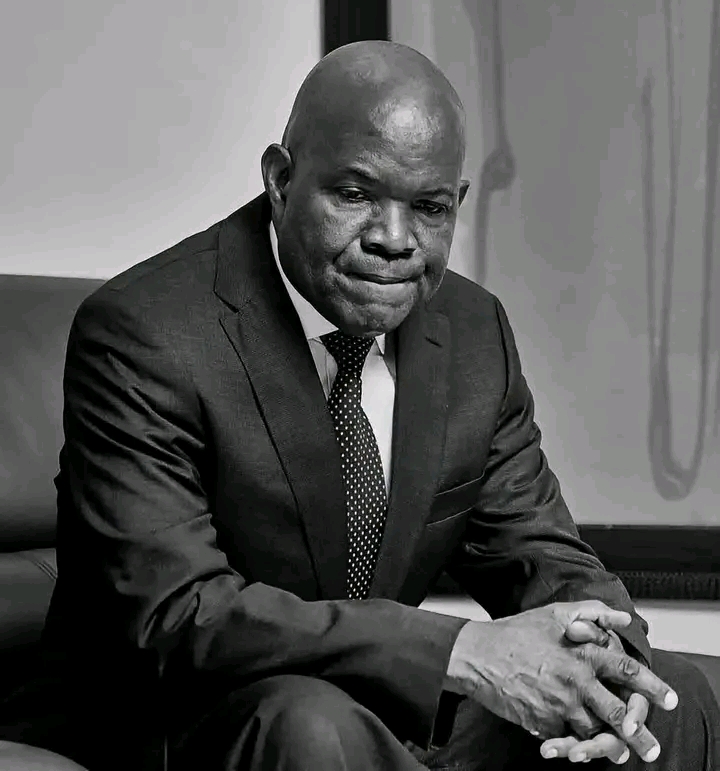
Fred M’membe
SP President
What is this infatuation for arms by Membe.He is just from being bullocked by the army PR but he back with another foolish piece
Membe alinantota.Afunika ku nyowa, Cambodian soldier uyu