

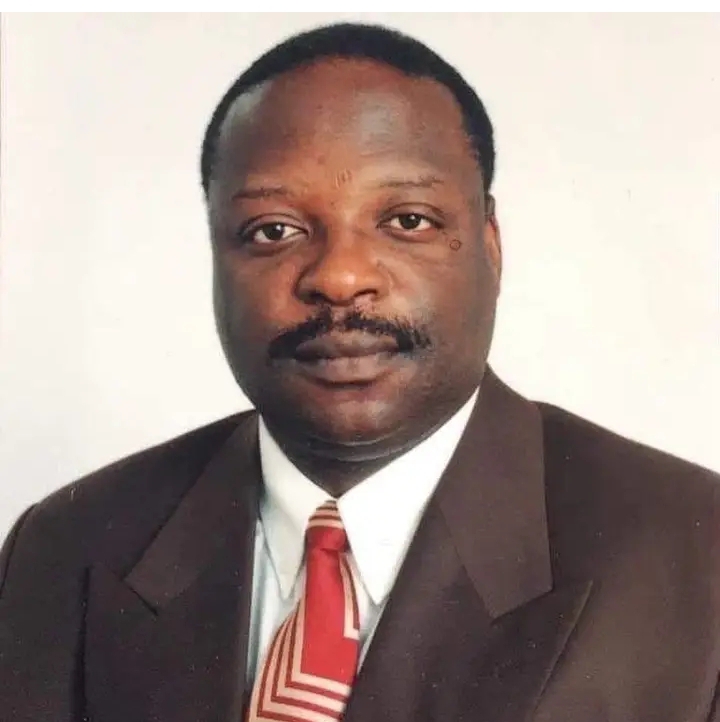
The unsolved assassination of Paul Tembo.
By: Moses C Kuwema
On the night of July 6, 2001, Zambia lost one of its most intriguing political figures under chilling circumstances.
Born on March 22, 1960, Paul Simon Tembo began his career as a teacher before working for Zambia Railways.
He entered politics with the MMD wave of 1991, winning the Kabwe Central parliamentary seat by a landslide with 16,592 votes, defeating UNIP’s Andrew Dingwall, who managed 2,559.
His rise through government was swift. Within two years, Tembo served as Deputy Minister of Commerce, Trade and Industry, then Deputy Minister of Finance, before being transferred to the Office of the President in the same capacity.
But politics can be unforgiving.
In the 1996 general elections, Tembo lost his parliamentary seat to independent candidate Captain Austin Chewe.
Rather than disappear from the political scene, he became one of President Frederick Chiluba’s closest allies, serving as campaign manager for the controversial third-term project. He was serving as deputy national secretary of the MMD.
When the MMD convention of April 2001 failed to elect a party vice president and President Chiluba instead appointed Enoch Kavindele, Tembo felt sidelined.
He resigned from the ruling party and crossed the floor to the newly formed Forum for Democracy and Development (FDD), joining its executive.
On July 7 2001, Tembo was expected to testify before a tribunal investigating allegations that $625,000 in public funds had been diverted to finance the MMD convention.
The inquiry involved senior ministers Katele Kalumba (finance), Peter Machungwa (home affairs) and Godden Mandandi (works & supply).
He never got the chance.
Armed men stormed Tembo’s Ibex Hill home a night before.
According to his lawyer Mutembo Nchito, three assailants forced their way into the house, assaulted Tembo, marched him to his bedroom, forced him onto his bed, and executed him with a single gunshot to the back of the head while his wife watched.
“It looks like a political killing,” Nchito told CNN.
Another lawyer, Sakwiba Sikota, argued that Tembo possessed information capable of sending “a good number of powerful people” to prison over corruption allegations.
The government through its spokesperson Vernon Mwaanga dismissed the claims of state involvement, insisting such a killing would have been illogical with Zambia preparing to host the Organisation of African Unity (OAU) Summit just three days later (July 9 to July 11).
By the way, this was the second murder of a prominent politician recorded in the same neighborhood (Ibex Hill) following the assassination of former finance minister Ronald Penza in 1998.
A year later, in 1999 Major Wezi Kaunda would be murdered in neighboring Kabulonga.
Anyway, back to Tembo’s murder, the mystery only deepened.
Months after the murder, in October 2001, former convict Chrispin Mwale reportedly confessed to assassinating Tembo and claimed he had been recruited while in prison as part of a network tasked with eliminating opposition politicians.
He allegedly named other intended targets, including Edith Nawakwi.
Then came another astonishing twist.
In March 2002, police charged Tembo’s widow, Clara, with his murder, alleging she shot her husband after a domestic dispute and later disposed of the weapon.
But before the case could proceed, tragedy struck again. Two key prosecution witnesses including the arresting officer were killed when the police vehicle transporting them collided with a truck on the Ndola–Kabwe Road.
Without its principal witnesses, the State withdrew the case. In October 2002, the Lusaka High Court discharged Clara, bringing the prosecution to an abrupt end.
A quarter of a century later, the assassination of Tembo remains one of Zambia’s most haunting political mysteries.
The gunman was never conclusively identified, no one was convicted, and the question that has lingered since that July night in 2001 remains unanswered.
Who really killed Paul Tembo?
25 years later, that question remains unanswered.
The five children he left behind deserve the truth. His family deserves closure. And Zambia deserves to know who ordered and who carried out the assassination of a man whose death continues to cast a long shadow over the country’s political history.
Justice delayed for a quarter of a century is justice still denied.
First find Clara Tembo and bribe her for information.Am sure she must be very broke and ripe for capital
This was just a robbery gone wrong no one was assassinated.