

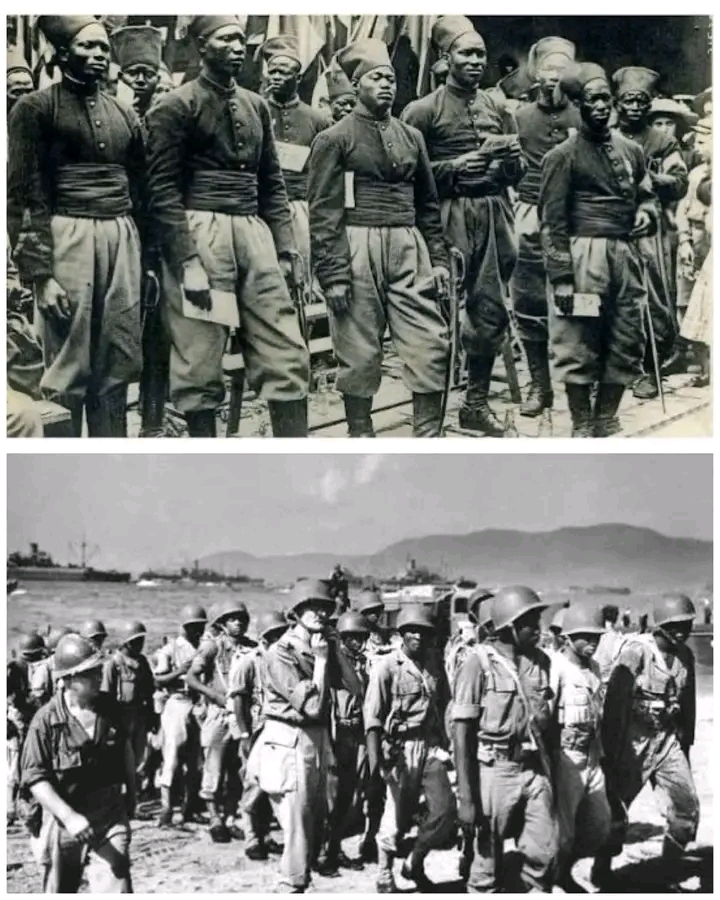
THEY FOUGHT FOR FRANCE IN WORLD WAR II, RETURNED TO AFRICA DEMANDING THEIR UNPAID WAGES, AND FRENCH SOLDIERS OPENED FIRE ON THEM.
On 1 December 1944, African soldiers who had fought for France during the Second World War were massacred by the very army they had served.
Their crime? Demanding the money they had earned.
They were known as the Tirailleurs Sénégalais, African infantrymen recruited from France’s West African colonies. They came from territories including Senegal, Mali, Burkina Faso, Guinea, Côte d’Ivoire and Benin.
Many had been captured by German forces in 1940 and spent years in prisoner-of-war camps before being liberated and repatriated to Africa.
When they arrived at the military camp in Thiaroye, near Dakar, Senegal, they expected their outstanding wages, allowances and demobilisation payments.
The money did not come.
They protested. They demanded what they had earned through years of military service. Instead of receiving their payment, they faced French military forces.
On the morning of 1 December, French troops surrounded the camp and opened fire.
Men who had survived the battlefields of Europe and years of German captivity were shot by the army they had fought for.
And the injustice did not end with the killings. Survivors were arrested, tried and imprisoned. For decades, French authorities portrayed the incident as a mutiny to justify the violence.
How many were killed? The original French military figure was 35. Later records referred to 70 deaths, while several historians believe the actual number could have been between 300 and 400. The full death toll remains unresolved
In November 2024, French President Emmanuel Macron officially acknowledged the events as a massacre, 80 years after the killings.
Think about that. These men were good enough to fight and die for France, but when they demanded the wages they had earned, their own army turned its guns on them.
Their names deserve to be remembered. Their families deserve the truth.
Share this story. How many Africans know what happened at Thiaroye on 1 December 1944?