

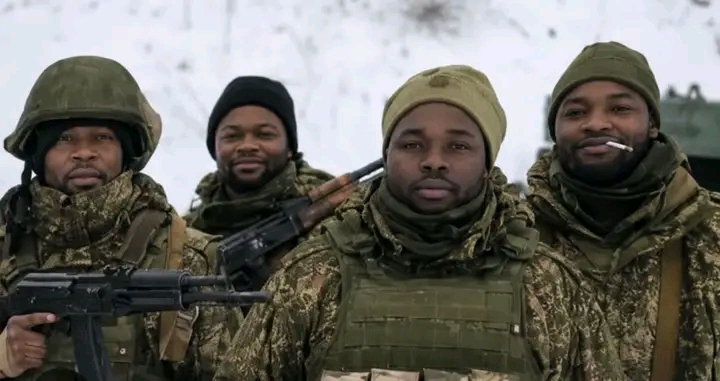
“They Go And Die In Ukraine, But Won’t Fight For Zimbabwe?” — Sikhala Blasts Men Risking Death For Russia
HARARE — Opposition politician Job Sikhala has sparked fierce debate after questioning why some Zimbabweans are willing to risk death fighting in Ukraine for Russia, while not taking a stand against President Emmerson Mnangagwa’s government at home.
“I get astounded by such characters who gather this courage to go and get killed in Ukraine for Russia when these same people don’t raise even a finger against the destruction Emmerson Mnangagwa and his criminals have done in our country,” Sikhala wrote on X.
“There are many I know who got chopped in those forests of Ukraine. They are not prepared to fight and free their country but opt to go and die in Ukraine!!!”
Sikhala’s post touches on a growing national tragedy that the Zimbabwean government itself has now acknowledged.
In March 2026, Information Minister Zhemu Soda confirmed that 15 Zimbabweans had been killed after being recruited to fight in the Russia-Ukraine war, while 66 others were still alive and trapped on the frontlines. Government spokesperson Nick Mangwana later said the death toll had risen to 18.
Authorities say many of the men were not volunteers for war in the traditional sense.
They were lured by fraudulent employment agencies using social media, promised lucrative civilian jobs as firefighters, truck drivers or security guards, with signing bonuses of up to US$37,000 and monthly salaries of around US$4,000.
On arrival in Russia, officials say, their passports were confiscated and they were coerced into combat.
Four men — Obert Hlavati, Tonderai Maphosa, Tanaka Malcolm Gwarada and Edson Dudzayi Nyamudeza — appeared in a Harare court in March facing human trafficking charges, accused of working with a Russian national known only as “Ivan” to traffic Zimbabweans to Russia.
The issue returned to the headlines this week after nine Zimbabweans were arrested in South Africa on November 8, allegedly as they prepared to leave to join the war.
Five were arrested at OR Tambo International Airport in Johannesburg and four at a hotel in Bruma.
They appeared in court in Gauteng charged under South Africa’s Regulation of Foreign Military Assistance Act. Authorities have not said whether they intended to fight for Russia or Ukraine.
Information Ministry Permanent Secretary Nick Mangwana has since warned Zimbabweans against joining the war, saying recruiters “want you dead so they keep every penny” in salaries and benefits owed to those killed.
Online, Sikhala’s post drew sharply divided reactions.
Many agreed with his central point, writing that it made no sense to fight for people they did not know instead of confronting problems at home. “Instead of fighting our government they are going to fight for pple they don’t even know,” one commenter wrote.
Others blamed Zimbabwe’s collapsed economy, saying poverty and unemployment had left young men with no real choice. “If our economy was good hapana kwaiendwa,” one user wrote, while another said life at home had become so unbearable that the risk seemed acceptable.
Some defended the men’s right to choose, citing historical ties to Russia and the need to provide for families. Others shared personal grief, saying relatives had gone to Russia and never returned, with bodies often not recovered.
A smaller but persistent thread in the comments asked for recruitment links, despite repeated warnings from survivors.
Co In a widely shared interview this week, Zimbabwean prisoner of war Tatenda Tarwi, 37, said he was recruited on Facebook with promises of US$2,500 a month, only to witness 50 to 60 deaths a day on the battlefield. “No one is coming back home,” he warned.
Ukrainian officials have estimated that more than 1,700 Africans have been recruited to fight for Russia, a pattern also reported in Kenya, South Africa, Ghana and Nigeria.
For Sikhala, however, the issue remains political as much as humanitarian: courage shown on a foreign battlefield, he argued, should be shown in the fight to free Zimbabwe.