

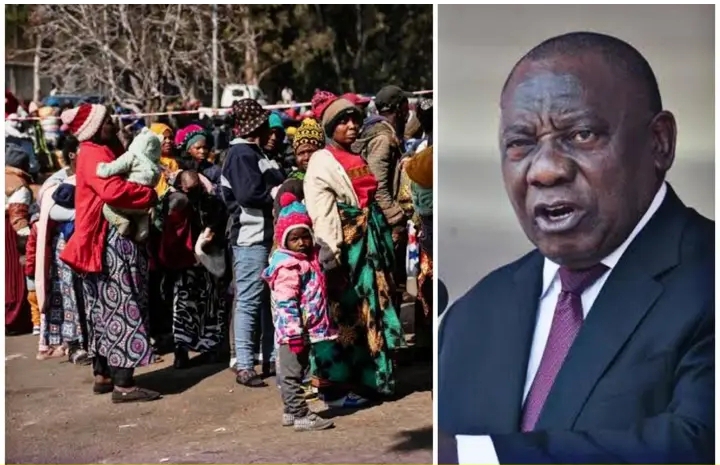
Thousands of foreign workers were driven out of South Africa, and joblessness got worse, not better
South Africa’s unemployment rate climbed to 33.6 percent in the second quarter of 2026, up from 32.7 percent in the first. Stats SA says the number of unemployed people rose by 345,000 to 8.5 million, while the number of people actually employed fell by 16,000 to 16.7 million. Youth unemployment worsened specifically, up by 264,000 to 5 million unemployed young people, even as youth employment fell too.
Now hold that against what this same country was doing for the two quarters before this data was collected. Through June and July, thousands of foreign nationals, Malawians, Ghanaians, Nigerians, Zimbabweans and others, were driven out of South Africa.
Some fled under threat after mobs marked the 30th of June as a deadline for undocumented foreigners to leave. Others were formally repatriated in droves by their own embassies after businesses were looted and at least one Ghanaian citizen was killed. The core promise behind that entire movement was economic. Get rid of the foreigners, and South African jobs will open up for South Africans.
The data just answered that promise directly. The foreigners left. Unemployment did not fall. It rose. Youth unemployment, the group the anti-migrant movement claimed to be protecting most, got sharply worse in the very quarter this was happening.
This is not a small statistical footnote. It is the entire theory failing its own test, measured by the government’s own numbers, in real time. The jobs that xenophobic violence promised to return to South Africans were never actually being held by the migrants who were chased out. Employment fell across seven of ten sectors in this same quarter, in construction, trade, mining and beyond, sectors with no meaningful concentration of undocumented foreign labour driving the collapse. The real forces at work are structural, a shrinking formal sector, weak growth, and an economy that has kept unemployment above 30 percent for more than five years regardless of who is or is not in the country
Chasing out your neighbours cost South Africa its international standing, cost Ghana and Nigeria their citizens’ lives and property, and cost the country a presidential visit that was cancelled over the fallout. And it did not create a single verified job.
The theory promised relief. The numbers delivered the opposite. Someone owes 8.5 million unemployed South Africans an honest explanation for why the plan failed, because blaming their fellow Africans clearly was not it.