

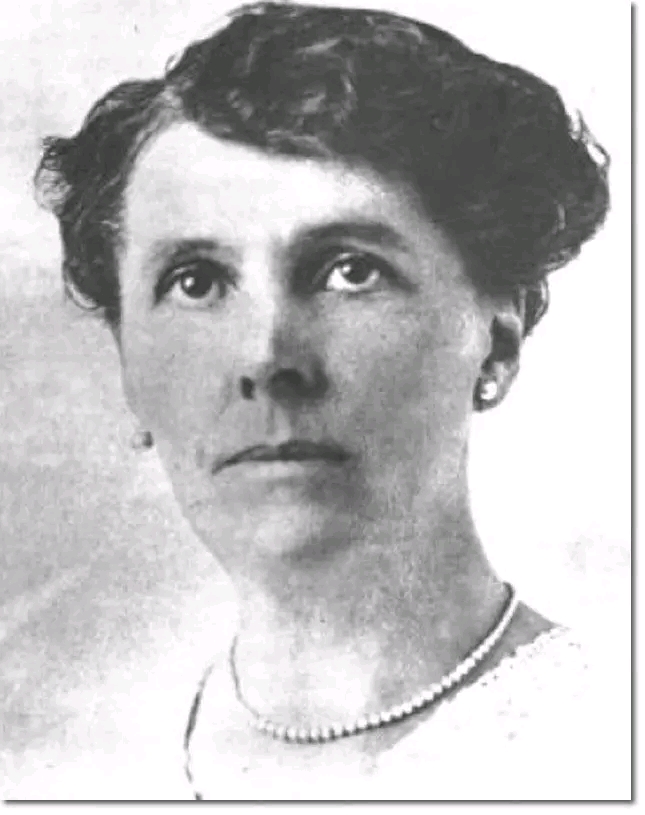
THREE WHITE WOMEN EVER WON RHODESIA PARLIAMENT SEATS — MURIEL ROSIN MADE HISTORY IN FEDERAL PARLIAMENT
Rosin paved way for Chitepo to open private practice in town
By Fanuel Viriri
Only three women ever made it into the colonial Rhodesia parliament, and among them Muriel Ena Rosin holds a unique record.
She was one of only three white women to ever win a seat in her own right in the House of Assembly, and she remains the only woman ever to have served in the Federal Parliament of Rhodesia and Nyasaland between 1953 and 1963.
The first woman MP was Ethel Tawsie Jollie. Affectionately called by her (Muriel Rosin) colleagues “the only man in Welensky’s Party”, her journey into what was then a male preserve began not out of her own ambition but at the urging of her husband, the renowned surgeon Kipps Rosin, according to historical records.
She was born in London in 1909 to a Jewish family, trained as a secretary and translator in England, Switzerland and Germany, came to Southern Rhodesia and built a formidable reputation as chair of the Salisbury Women’s Council for ten years, founder chair of the Salisbury Union of Jewish Women and the National Soroptimists, the first woman ever appointed to a Government Board in Rhodesia and the only woman on the inaugural board of the University College of Rhodesia and Nyasaland. An MBE in 1949 marked her community work.
Her husband was asked to enter politics and declined and suggested the United Party ask Muriel instead. She joined the United Party Action Group in 1945 and in 1946 agreed to stand in what she knew was a losing seat, Salisbury South, a white artisan Labour stronghold held for 40 years by Colonel Walker. She lost with 295 votes, only 43 behind Walker, topping all six women who contested and coming 43rd out of 99 candidates.
She put it down to gender, saying “They didn’t want women in parliament that is why I lost. The Speaker threatened to resign if I was elected, ” she told the Rhodesian Herald.
She missed 1948 but won Marimba for the United Rhodesia Party in 1954 and served in Garfield Todd’s liberal parliament, then fought for the United Federal Party nomination for Salisbury West in the Federal Parliament against conservative Harry Reedman. In 1958 at 65 she became the first and only woman in the Federal Assembly, winning again unopposed in 1962.
What she is most remembered for on the ground is what she did about housing and about the colour bar in the professions. In Mbare she took the Beatrice Cottages and turned them into something entirely new. The cottages had been built south of the city as a camp for Italian prisoners of war during World War Two and for interned families of South African Germans, women and children only. After the war they sat as temporary accommodation.
Rosin, who sat on the committee looking into African housing, convinced the government not to demolish them but to convert them into a house ownership scheme where middle-class blacks could own or occupy property for the first time in Salisbury. That was a considerable advance because under the Land Apportionment Act blacks could not own freehold in white areas. She pushed for private bathrooms and kitchens and carports to replace the communal facilities of the camp, and for a revolving fund to be set up so families could actually purchase the houses.
The scheme became the model for what followed. That model was Highfield, the second large high-density township, which she was instrumental in establishing as an owner-occupier suburb. Where earlier locations were municipal rental, Highfield gave title. For a black family to get title and ownership in the 1950s was radical, and Rosin was part of the committee that drove it through.
It was the same Land Apportionment Act that blocked Herbert Chitepo. Chitepo had returned from London as Zimbabwe’s first black advocate, called to the bar at the Inns of Court, but he could not open chambers or practice in the white central business district because the Act reserved the city centre as a white area and prevented black professionals and businessmen from operating there.
Even black Federal MPs had to live on the outer boundaries in Highfield. Rosin is credited for participating in the debates and helping to pass the legislative change in the Federal Parliament that broke that barrier, allowing Chitepo to practice law in the city and open offices in areas previously the sole preserve of whites.
It was a direct inroad into the colour bar, and it allowed Chitepo to become the country’s first black advocate before he later became ZANU’s national chairman and a central figure in the liberation war. For Rosin, who believed merit should rise regardless of colour or gender, it was a practical demonstration of what she meant by partnership.
That liberalism on race defined her and cost her. In the House she sat on the Licence Control, Pensions and Gratuities and Public Accounts Select Committees, but her mark was in bringing what was seen as the private feminine sphere into the public male sphere.
Her first speech was on Children’s Protection and Adoption, arguing children adopted outside the colony should get birth certificates in their adopting parents’ names. She drew attention to child marriages including a 13-year-old, pushed through a motion improving women’s rights in wills and inheritance, and campaigned for the Roads and Road Traffic Amendment requiring safety helmets, so associated with her they were nicknamed the “Muriels”.
She worked closely with African MPs, most notably Chad Chipunza, travelling with him on Federal and party duties in Highfield and Mbare, then Harare townships. “Women here at home were horrified that I should be travelling about with a Black man! I thought it perfectly natural and still wonder what all the fuss was about,” she told historian Diana Mitchell.
Because Africans were on a separate voters’ roll and nationalist leaders denounced participation, getting black voters onto the roll in Highfield was hard, but some told her they felt comfortable bringing issues to her as their member.
Her liberalism was also tested over mixed race laws. She privately believed everyone had the right to sleep with whomsoever they wanted, but was approached by every women’s organisation who wanted it to remain illegal, saying “after all, our daughters wouldn’t be safe.” To protect her seat she compromised and went along with the law making interracial marriage illegal.
When black nationalist Lawrence Vambe married first a coloured wife then a white woman and had to go into exile because the law barred them from white areas, she was criticised for not opposing it, but said she had to express the views of her white women constituents.
On federation itself she believed it was a mistake not to make African Affairs a federal responsibility, arguing the separation of ministries on racial lines with Europeans as the privileged class gave Africans the impression federation was meant to perpetuate white supremacy. She saw it as “an important step in building a Black middle class” but said Africans felt cheated.
When federation ended in 1963 she lost her seat and said “My seat in the Federal Parliament was no longer in existence. Not only was I of the wrong political persuasion, being regarded as far too liberal, but I was also a woman!” She did not quit. She headed the Women’s Wing of the Rhodesian Constitutional Association, distributing small gold crown insignia for loyalty to the Crown, campaigned with the Centre Party against Ian Smith’s 1969 Constitution, lost the 1970 referendum, stood for the Rhodesia Party in Mt Pleasant in 1974 in a field of 35 who all lost.
She became “top of the losers”, and in 1977 when the Centre Party, Rhodesia Party and The Pledge merged into the National Unifying Force she led the women’s effort and was unanimously appointed President of the Rhodesia Party – “the grandma who leads a political party”.
She criticised the one-sided media, urged Smith to accept the irreversibility of majority rule, and fought to have the Land Apportionment Act repealed while the Rhodesian Front ran adverts asking “If Black people lived next to you would you like it?” She called those fears entirely unfounded.
With independence in 1980 she resigned, having won three elections and lost three, a woman who carried motherhood into the public sphere and tried to rise above the racial prejudices of her time. #history #politicsnews